(Note: I’m typing this in a text editor locally so an Internet glitch here doesn’t vanish all my text into the bit bucket. Because of that, I can’t write italics or bold, so I use upper case for emphasis. I’ll try to go back and edit, if I have time, once I upload this text, but if you see upper case, that’s what’s going on.)
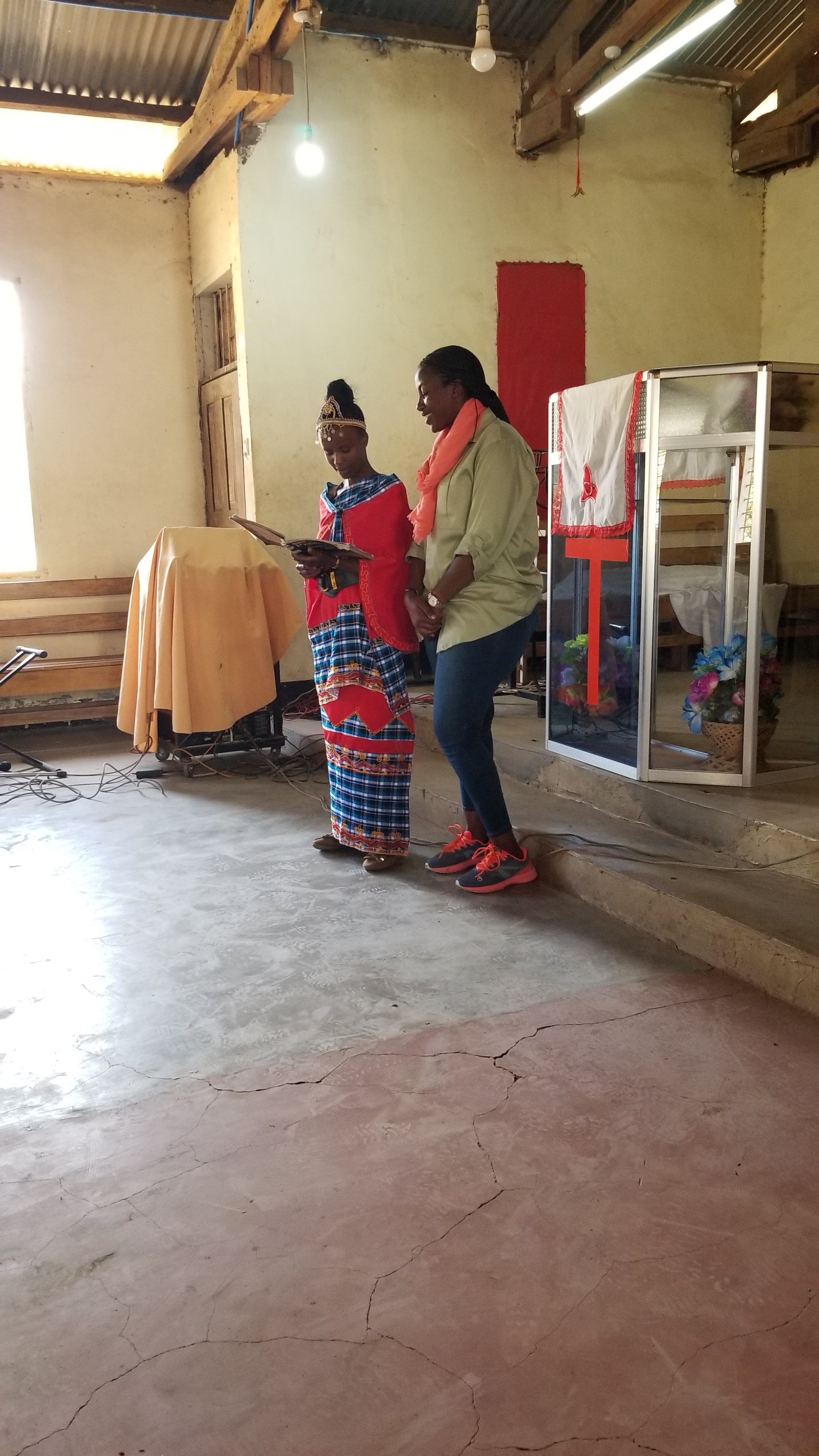
Today, we visited our group, Inuka, together with a group partnered with Harbor UMC in Wilmington. They are Maasai, and some of them were wearing traditional (or traditional-looking) Maasai clothing. Inuka’s pastor, named Lightness, gave a homily focusing on confidence, regardless of one’s background. She mentioned the following verses (I think I got them right, but there was some doubt):
- 1st Sam 17:32 — “David said to Saul, ‘Let no one’s heart fail because of him; your servant will go and fight with this Philistine.'”
- Prov. 28:1 — “The wicked flee when no one pursues, but the righteous are as bold as a lion.”
- Acts 4:13 — “Now when they saw the boldness of Peter and John and realized that they were uneducated and ordinary men, they were amazed and recognized them as companions of Christ.”
- Philemon 1:8-9 — “For this reason, although I am bold enough in Christ to command you to do your duty, yet I would rather appeal to you on the basis of love”
- Heb 10:35 — “Do not, therefore, abandon that confidence of yours; it brings a great reward.”
- Heb 3:6 — “Christ, however, was faithful over God’s house as a son, and we are his house if we hold firm the confidence and the pride that belong to hope.”
- 1 John 5:13 — “I write these things to you who believe in the name of the Son of God, so that you may know that you have eternal life.”
- Acts 4:31 — “When they had prayed, the place in which they were gathered together was shaken; and they were all filled with the Holy Spirit and spoke the word of God with boldness.”
There was a beautiful Maasai call-and-response song, with the call in that unique high, nasal, quavering African voice that is so stereotypical. It was extremely impactful to be in the presense of people who simply do this as a matter of course, as opposed to a touring group in a theater in the U.S. I wish I had recorded it, but (1) I was completely enthralled, and (2) it was kind of a hymn during the worship-and-homily service part of the program and I didn’t think it would be appropriate to just whip out my cell phone and start recording, even though I said I’d try to be a better tourist.
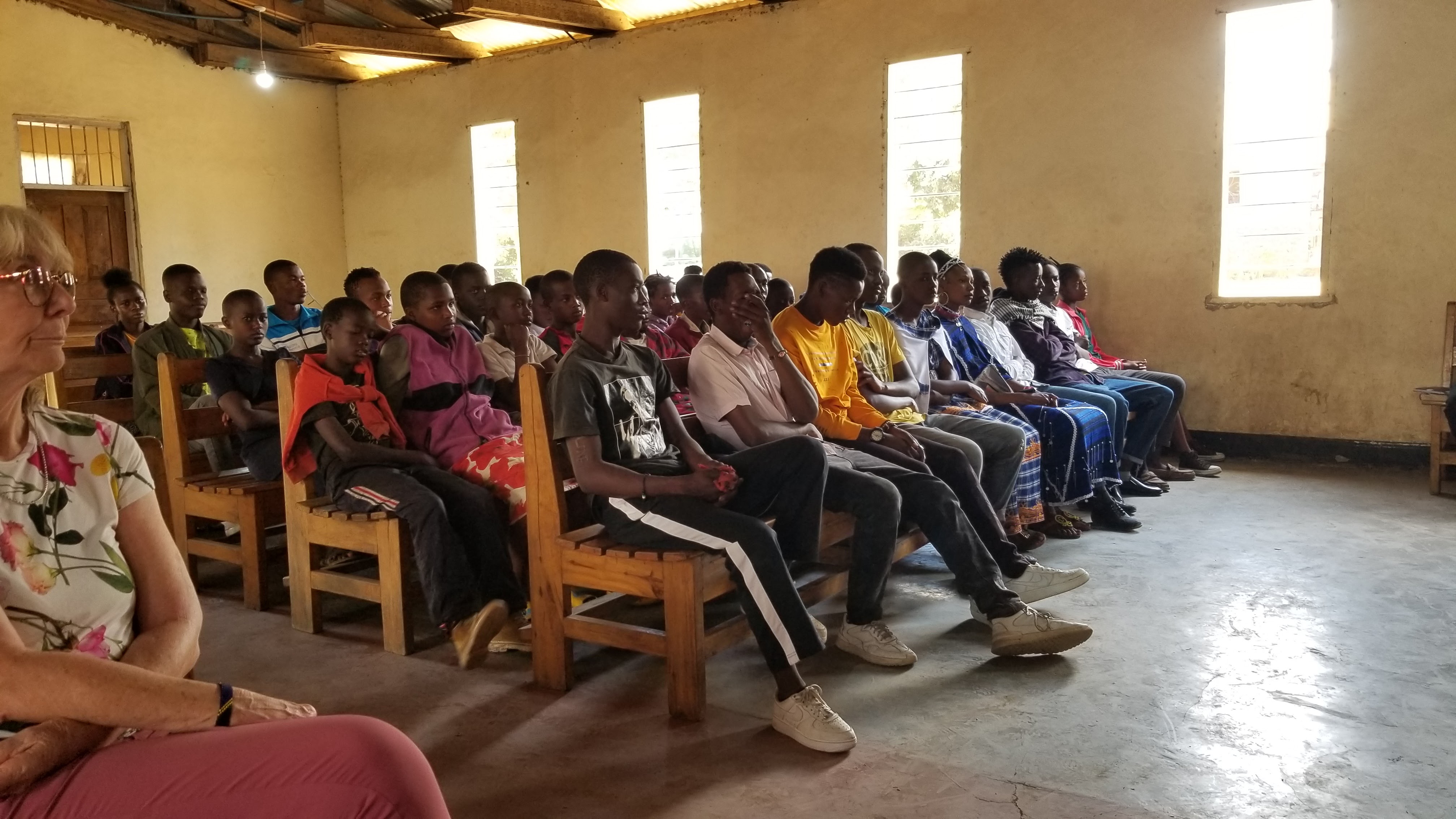
Then we heard from each family head in the two groups. I counted 42 people. Some of the children reporting were appearing on behalf of their elder brothers and sisters, which I took to indicate that their elder brothers and sisters were working. Each individual report had the same structure, specifying the speaker’s name, age, number of siblings, which group they were in and what the major thing each family head was doing. The activities of the members included (all told):
- selling chickens and eggs;
- selling goats;
- burning music and movies to USB sticks in “studios”;
- hair salons and hairdressing;
- brick-making;
- selling firewood;
- selling livestock;
- selling utensils;
- vehicle and motorbike mechanics;
- selling soft drinks;
- selling rabbits;
- farming;
- selling tea leaves, sugar and powdered and bar laundry soap; and
- vehicle and generator mechanic (that was Stella).
(A word on Stella: she’s the chairman of the Inuka group and she is a dynamo. She kept the group focused and energized during the program we were part of today, and when we went out to visit the members’ various businesses, she helped. She helped Lebahati when he was demonstrating how he makes bricks. We heard from the facilitators that she knows and (I think) visits each family.)
After the individual reports, we got a report from the Inuka group secretary, Esuvat. We heard the normal list of things they were trained on; hygiene, entrepreneurship, legal rights, vocational training, community-building. But, a couple of things struck me.
- They got seeds as a grant after their agricultural training on how to grow their own food. I don’t think I’ve emphasized that very much in the past, but the seeds are a grant from Zoe. In a very real sense, part of what we give to Zoe is seed money.
- There was particular emphasis, which I’ve never heard before, on women’s sexual rights: on rape; female genital mutilation (a.k.a. female circumcision), a particularly barbaric practice; and early marriage. In particular, the children are taught who to report violations to, which actually includes various government bureaus. They’re also taught that if the bureaus they report to (and there actually are government departments for women’s affairs and men’s affairs) don’t respond promptly, they should also go to the police, who are instructed and trained to handle these issues. I was impressed with the concreteness and detail of this information — this is not an empty formality.
The Inuka group (again: just starting their third year) has achieved the following:
- All group members have multiple businesses;
- 5 members have gotten their national id cards;
- 3 members have gotten their birth certificates (required to get national health insurance, among other things);
- 3 families have gotten electrical connections;
- 5 families have gotten water connections;
- 7 members have opened personal money accounts;
- 1 member has shifted to a better house with electricity;
- 1 member has acquired further training (in hairdressing)
This last bullet might not be quite accurate. I heard from several members that they had been able to afford further vocational training. Zoe provides initial training, but for a second (or third) vocation, I think the youth pay for that training themselves.
Then Joshua, the secretary of the Upendo group, made his report for the group. It was very similar, so some of the highlights were:
- Multiple members have taken second trainings;
- 15 members use M-PESA (electronic personal banking via cell phone (text message, I think));
- 2 members have gotten water connections;
- ALL siblings are in school.
Finally, we heard from Inuka’s mentor, Belinda. Upendo’s mentor had just had a baby two weeks earlier, so she wasn’t there, although we did meet her later. Unfortunately, I took no notes and don’t remember what she said. But she clearly had an interest in the well-being and progress of the group, as did her counterpart.
After these reports, we took a stretch break led by Stella.
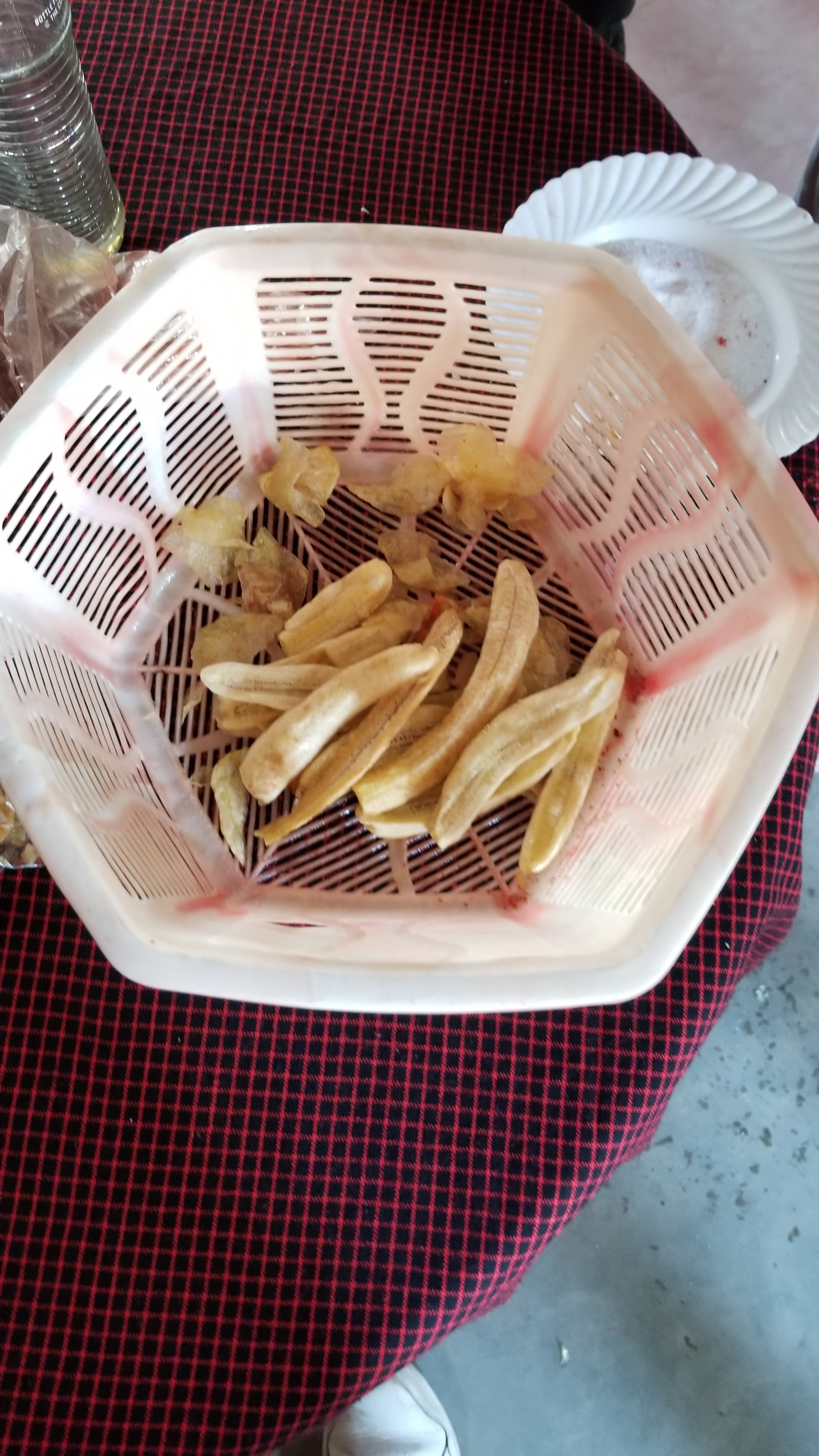
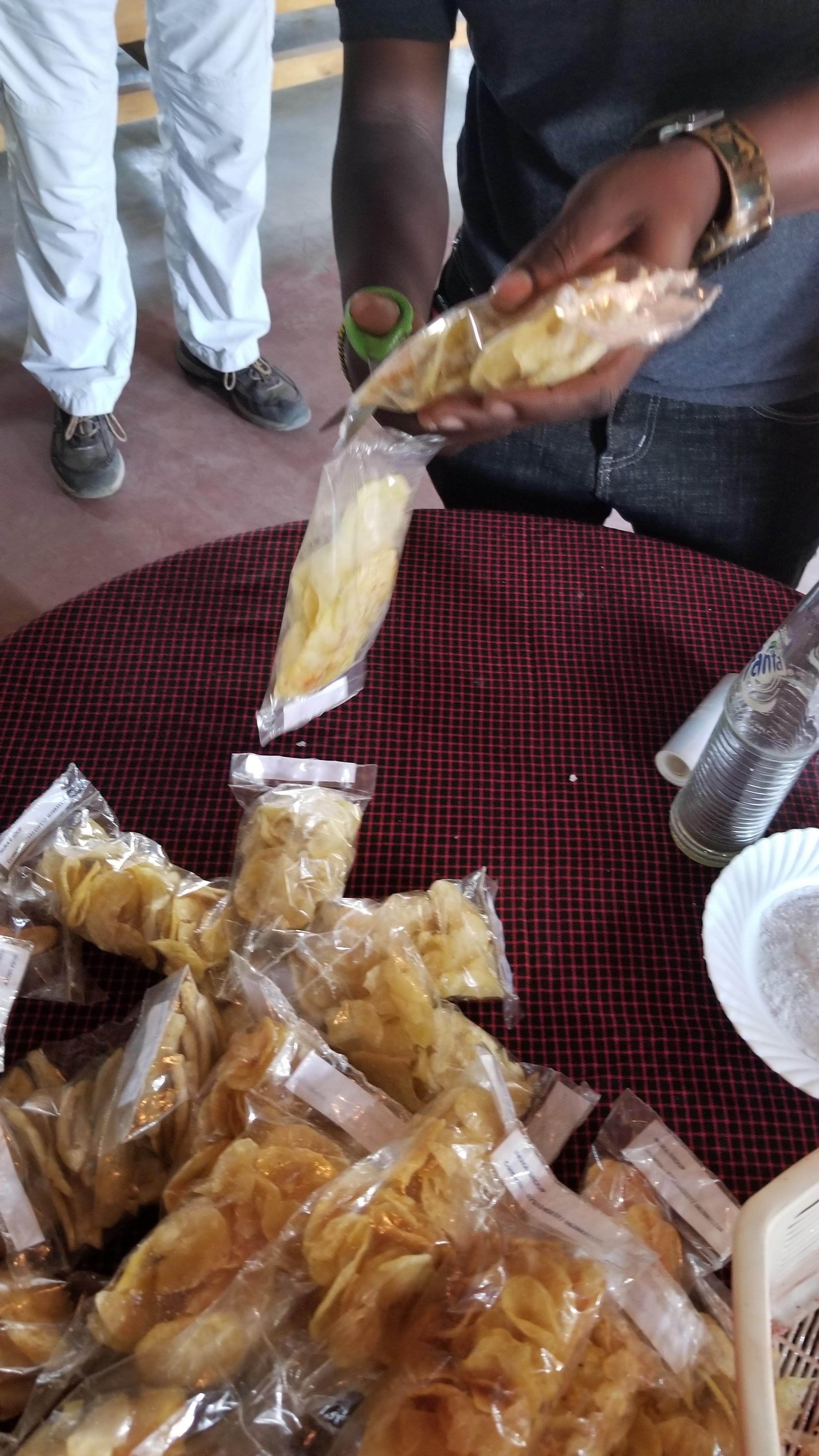
Two or three of the members demonstrated how they fry potato chips. This includes sealing plastic bags by folding them over and melting the edge into a thin line using a candle flame, which makes it look as if it had been sealed by a hot machine. (Stella did the sealing.) They also fried bananas, and we tasted both of them. They were delicious.
We played a game the group introduced us to, in which we are supposed to keep our hands behind our backs, inflate a balloon inside a Solo cup and pick up four more cups using only that inflated balloon, and stack them together. I couldn’t inflate the balloon without using my hands, so I “had” to cheat there, but after that, I did manage to do it. (Erika has video.) The kids were able to do it fairly easily and they were very competitive (although it was all in fun).
Some of the boys danced for us, showing local, non-traditional dance moves. They were just as impressive as traditional dance moves. Stella joined in, matching the boys in their skills and creativity.
Then, several of the kids gave more personal testimonies about their past, before Zoe, and how Zoe had helped them create a better life for themselves. They didn’t dwell too much on their before-Zoe lives, but they weren’t pleasant. They did concentrate on telling us that Zoe had essentially helped them turn their lives around.
They gave us gifts of scarves and bracelets that they had made.
Finally, they invited us to speak. If you ever go on a Zoe trip, you may find yourself standing in front of a group of 15-to-20-year-olds who have just told you of heartbreaking difficulties and amazing recoveries, so be prepared. :) Several of us spoke, which is good, because we all said different things.
At the end, they asked one of us to close in prayer.
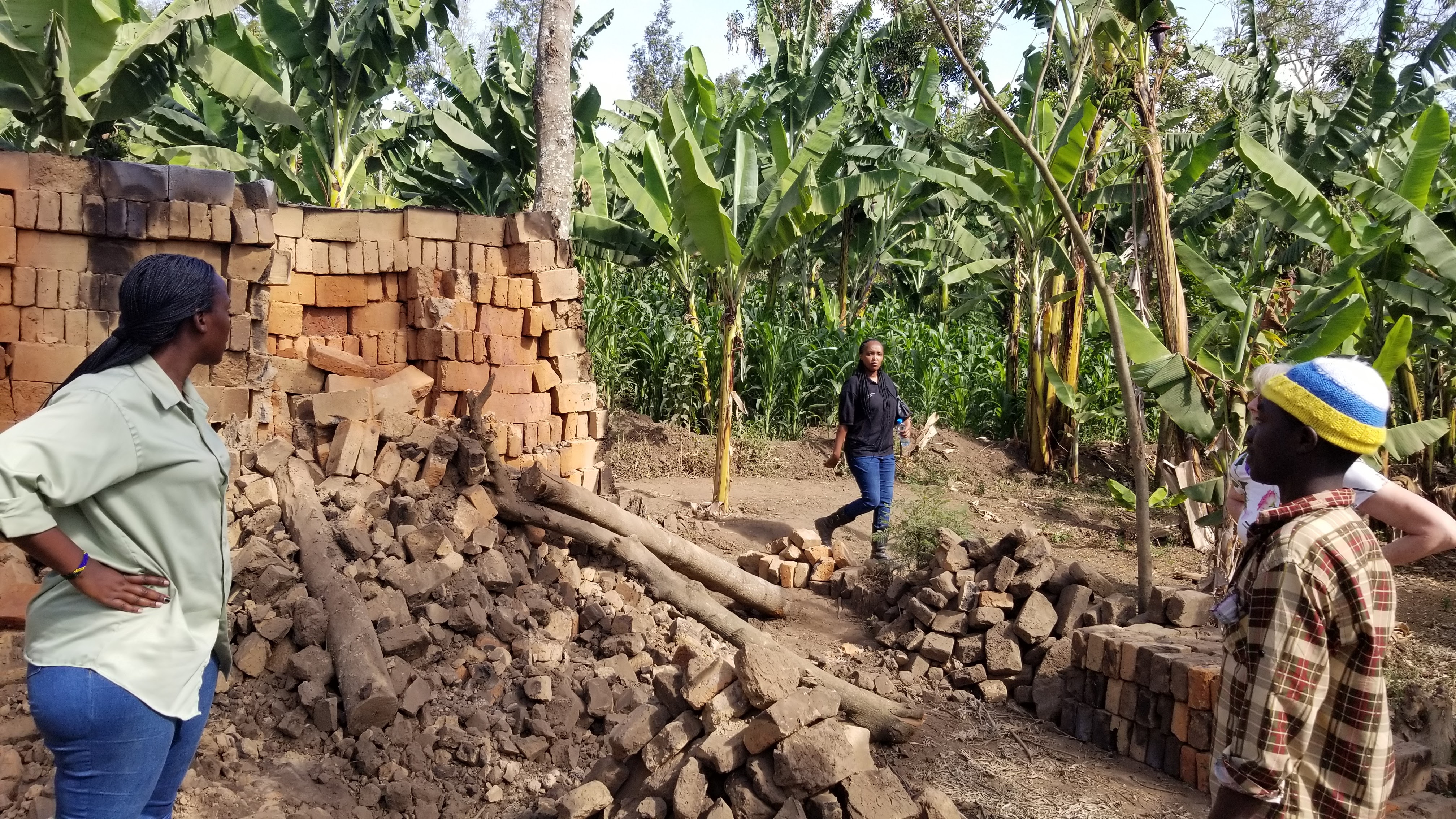
The Inuka group’s community project is brickmaking. There is a fair amount of construction in the area (something akin to gentrification, actually), so there is a demand for bricks. They sell each brick for 200 Tanzanian shillings, which is a little less than a dime.
We visited some of the group members’ houses and businesses.

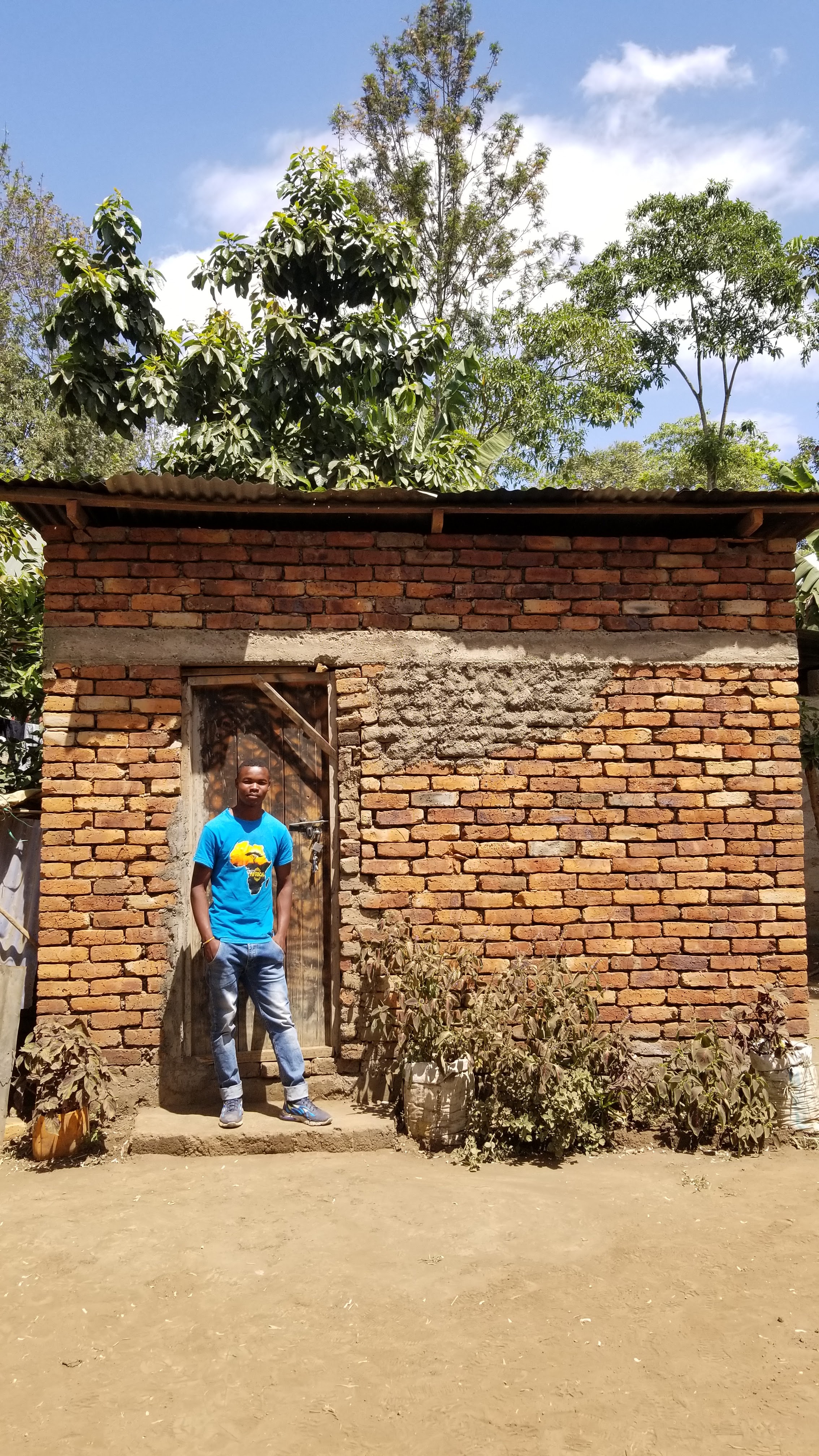
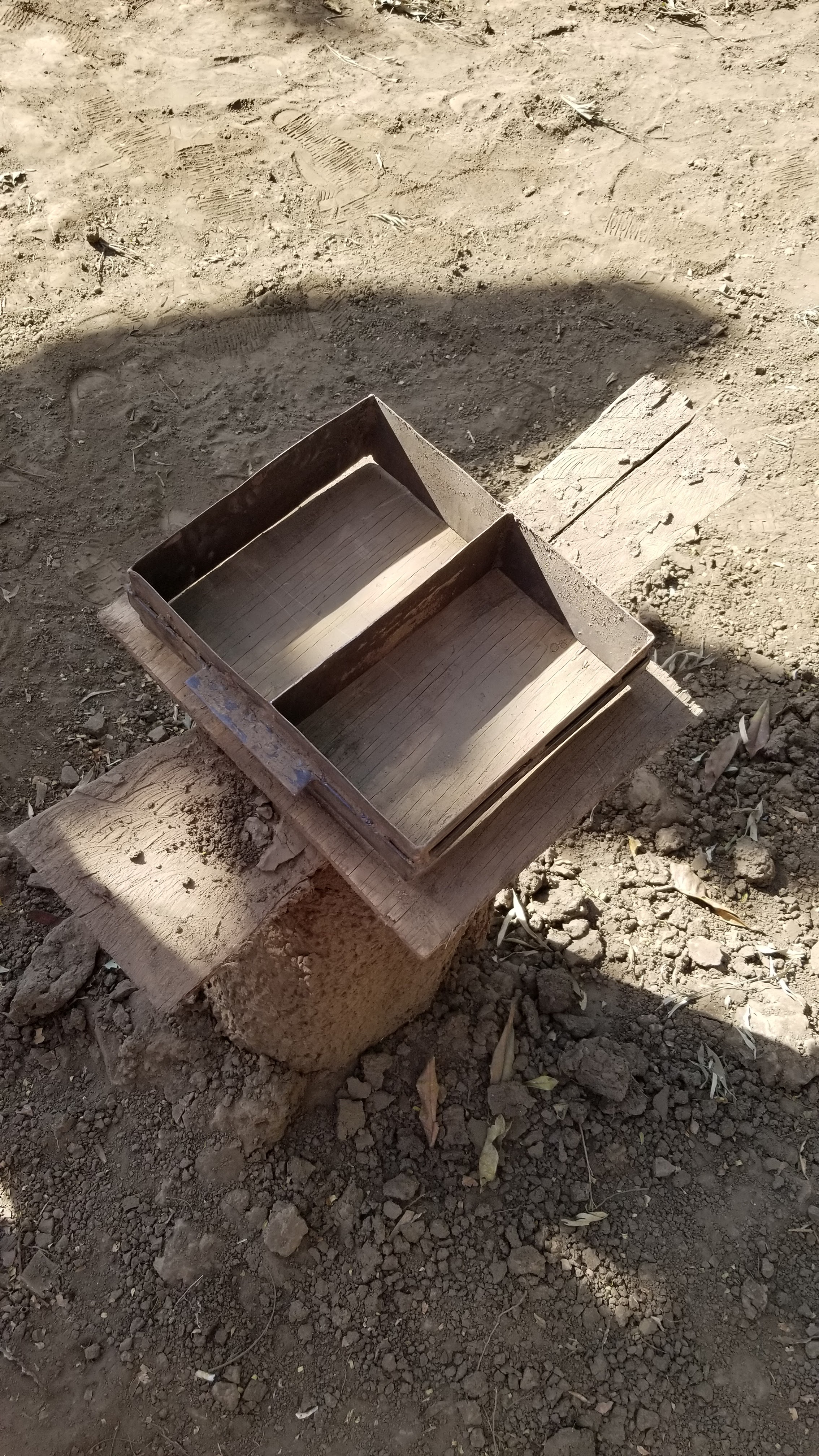
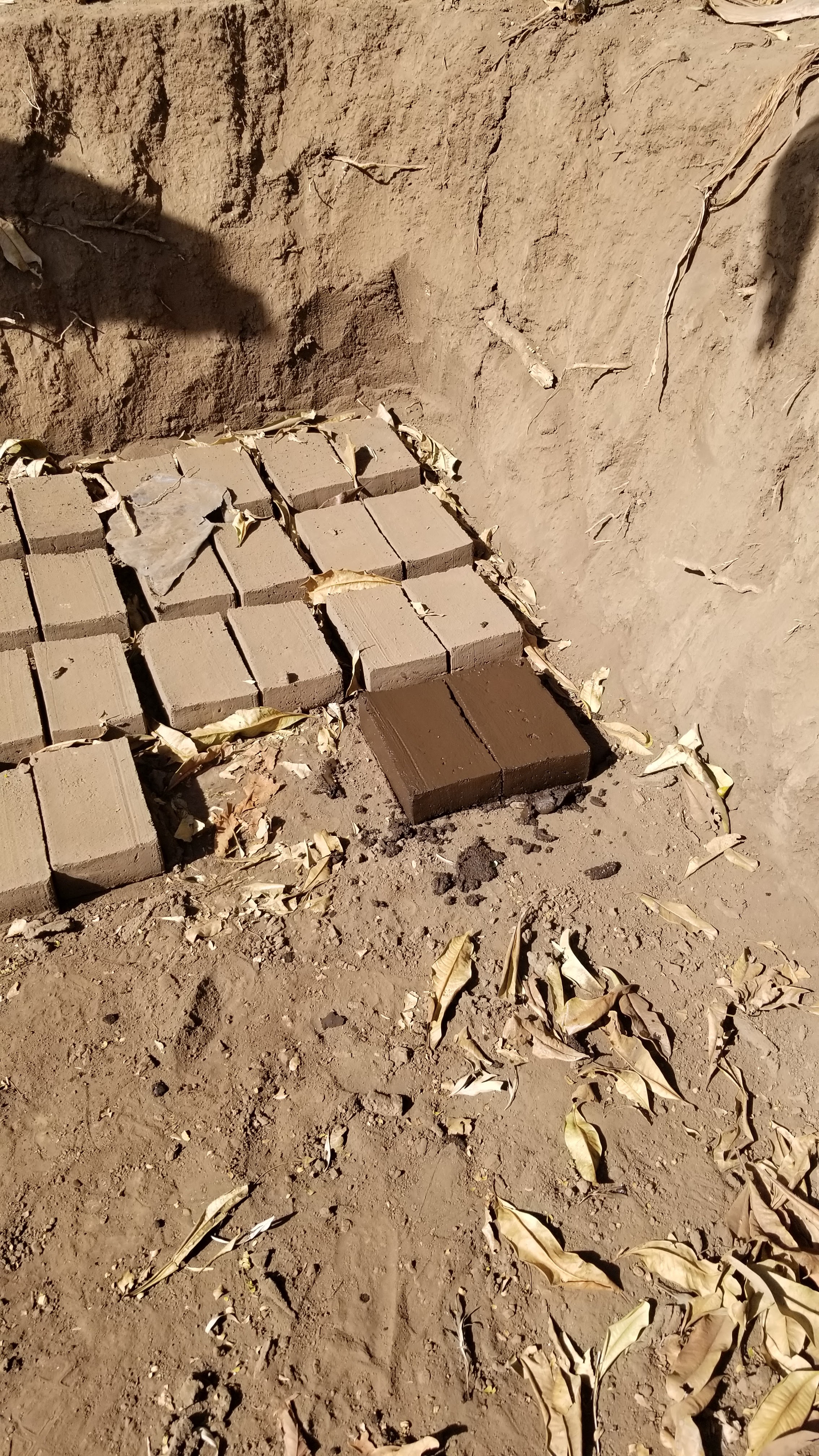
We started with Joseph, to see his brickmaking operation. The fun thing about the brickmaking is that it’s done mostly with materials on site. Local dirt (which is pretty fine) is mixed with imported sand and local water to make mud, essentially. Then, the mud is packed into a mold, and the resulting bricks are dried. After drying, they are stacked into an immense pile with sort of a tunnel (or more) passing most of the way through. The tunnel is filled with wood, and the bricks are fired. After that, imperfect bricks are removed and the remaining pile of bricks is the responsibility of the buyer to pick up. So, there’s plenty of labor for the brickmaker, but at least s/he doesn’t have to worry about transporting the bricks.
We also saw the new house he built for himself with some of his bricks, with the help of someone he hired (N.B.: in two years, these kids have transitioned from living at starvation level to having businesses profitable enough to allow them to hire others). He is still working on it, but he has a very nice space now.
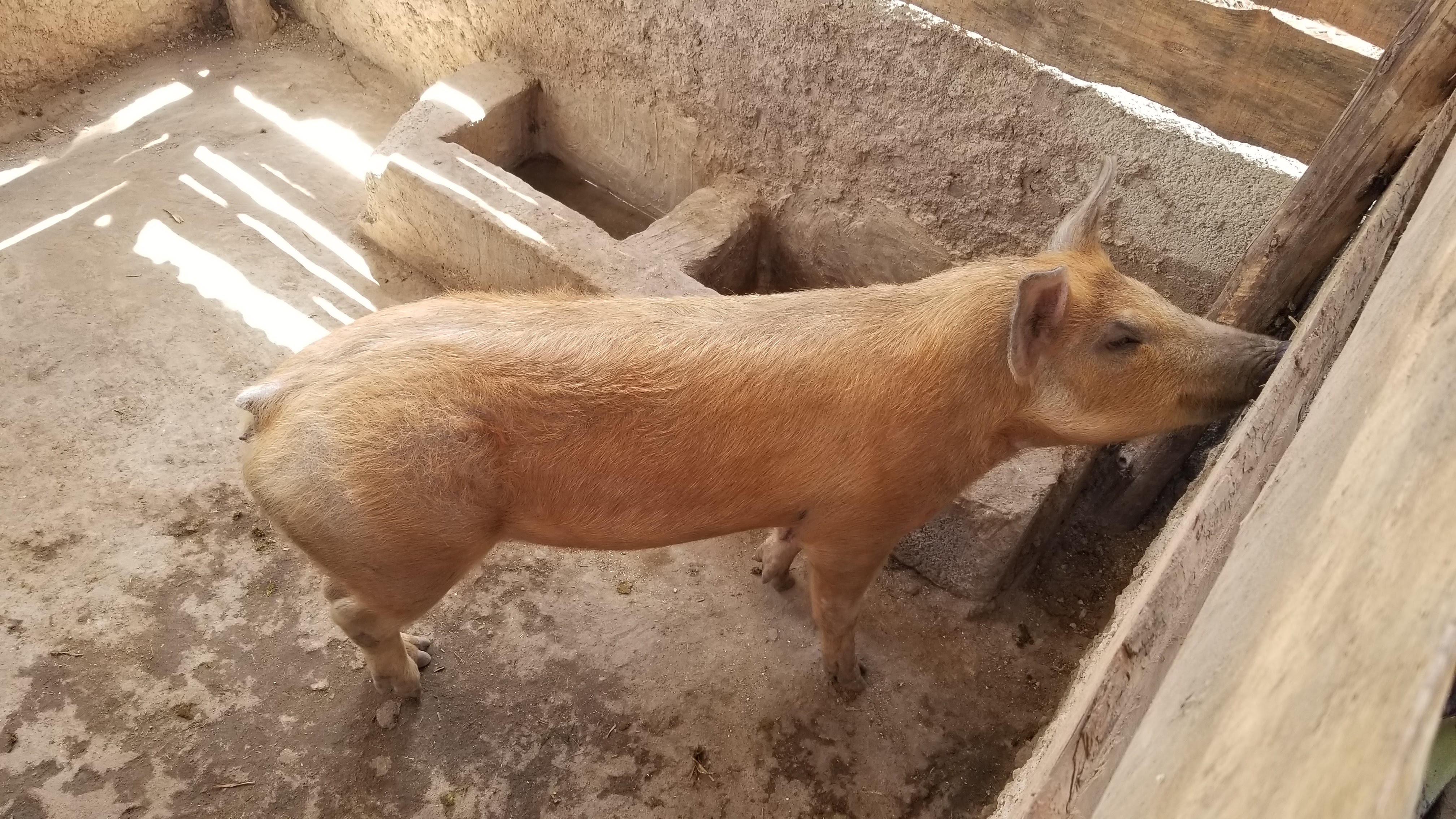
We walked to see Upendo group’s pig project. They have bought a 3-month-old female pig of a breed that bears at least ten piglets every three months for $200. They are raising it to breeding age (after training from a local agricultural extension agent), and then they will rent a male for $100 for a week (I think; although I might be wrong about the figure, apart from the fact that it’s not cheap). When she bears a litter, each member family of the group will receive one of the piglets. Obviously, there won’t be enough piglets for every family to get one, so the group will vote on who gets piglets. That gives everybody enough time to prepare a space for the piglet (and, eventually, pig). This represents good money for the families, since they will then eventually be able to sell pigs for $200 each, which is quite a lot of money. Or they could raise the pig to full maturity and sell to a butcher for a lot more.
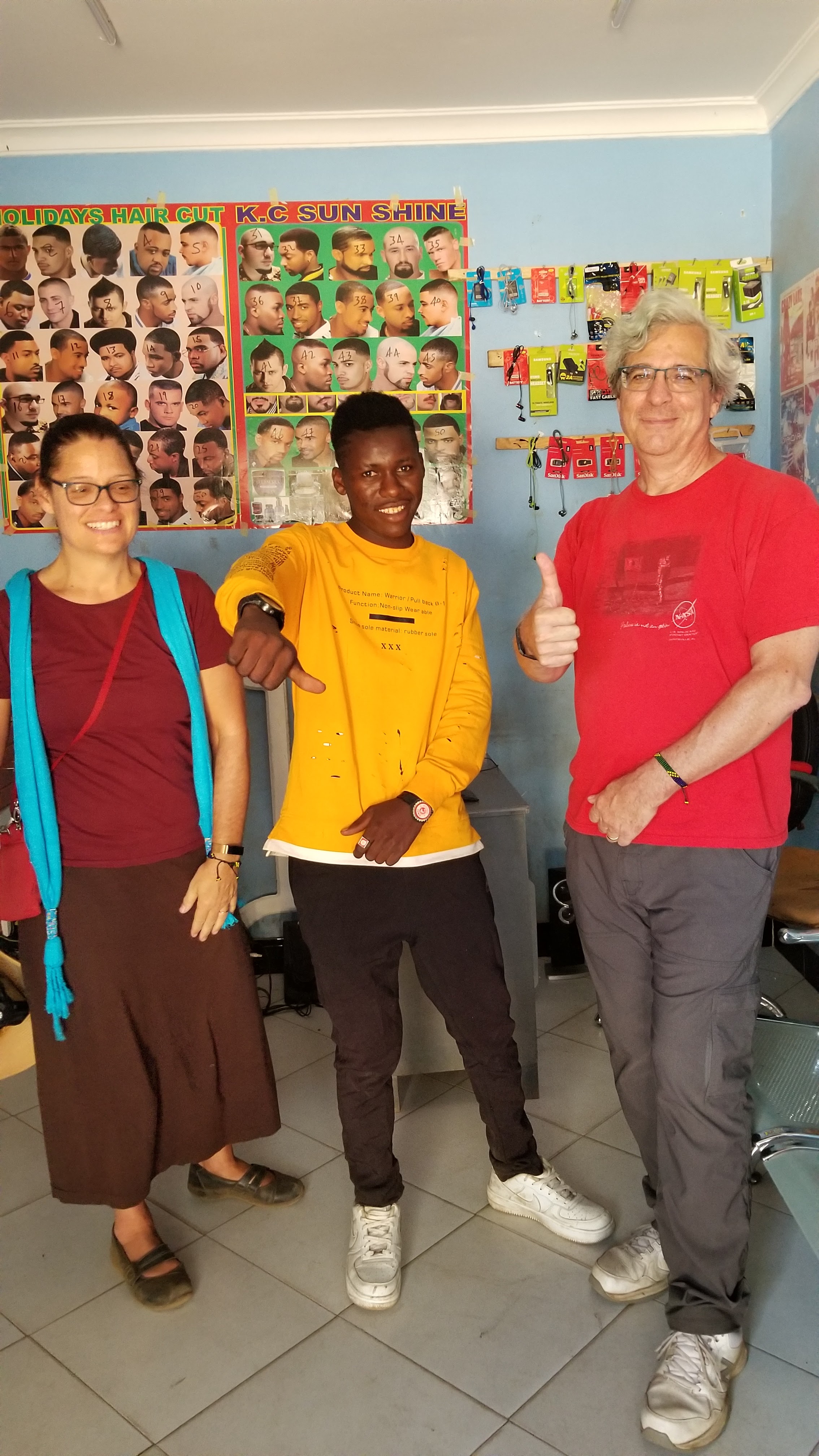
We visited Dennis, who has a combination barbershop and movie/music “studio”. That means he downloads music and movies onto a USB drive his customers supply (or buy from him), for a fee.
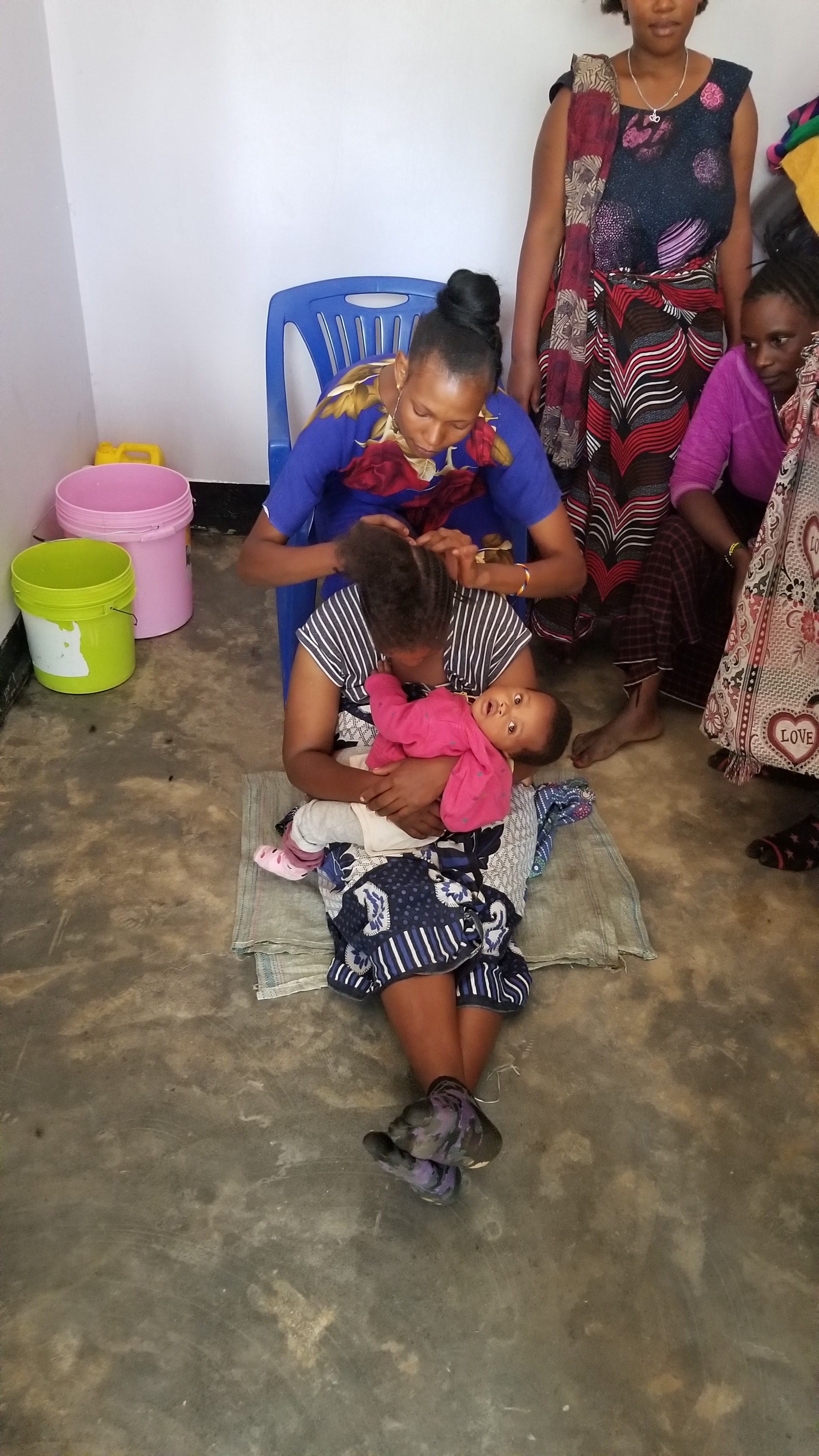
Lightness has a salon, in which she braids or washes customers’ hair. She charges more for washing because she has to pay for water, shampoo, and the electricity to dry the hair. Part of her entrepreneurship training includes learning how to calculate what her expenses will be, and price the wash correctly.

Lebahati showed us his firewood and brickmaking business, and he demonstrated how he makes bricks. I have a series of videos which constitutes a mini-documentary, which I MIGHT get uploaded by the time I post this blog entry.
He’s been working on an 8,000-brick pile since July 15. It’s pretty immense. If every brick comes out perfect, he’ll earn (/ (* 8000 200) 2500) = $640, approximately $320/month and $10/day. That seems like pretty big money to me, although he has to pay for sand and (probably) water and firewood, and he has to pay himself a decent wage.
So, that’s about it for the day. (Sadly, the videos have not yet uploaded. It may take some time, so I’ll have to make a separate blog post containing them.)
 UUMC ZOE Trips