All posts by John Lusk

Zoe and HIV

In this modern world, HIV remains a fact of life. There are some Zoe working-group members that are HIV positive. I understand that the treatment to keep it in check is covered by the national health insurance of several African countries in which Zoe operates, but there are still challenges. The primary one is social stigma, but there’s also the difficulty, sometimes, of getting transport to whatever clinic is administering the treatment. (Those two things might be related, since you might not want to just pop down to your local village pharmacy to pick up a bottle of pills that can only have one use.)

Zoe ensures that each group member is tested and they get what they need to stabilize themselves, and it’s all handled discretely.

One Last Day Three Visit Squeezed In At The Last Minute on the Last Day

There was one last visit we made to the business of a 2nd-year group member that we had intended to make on Day Three, but ran out of time for. (Running out of time is par for the course on a Zoe trip, I understand — when you go, your days will be long and full, as they should be, so be prepared.)

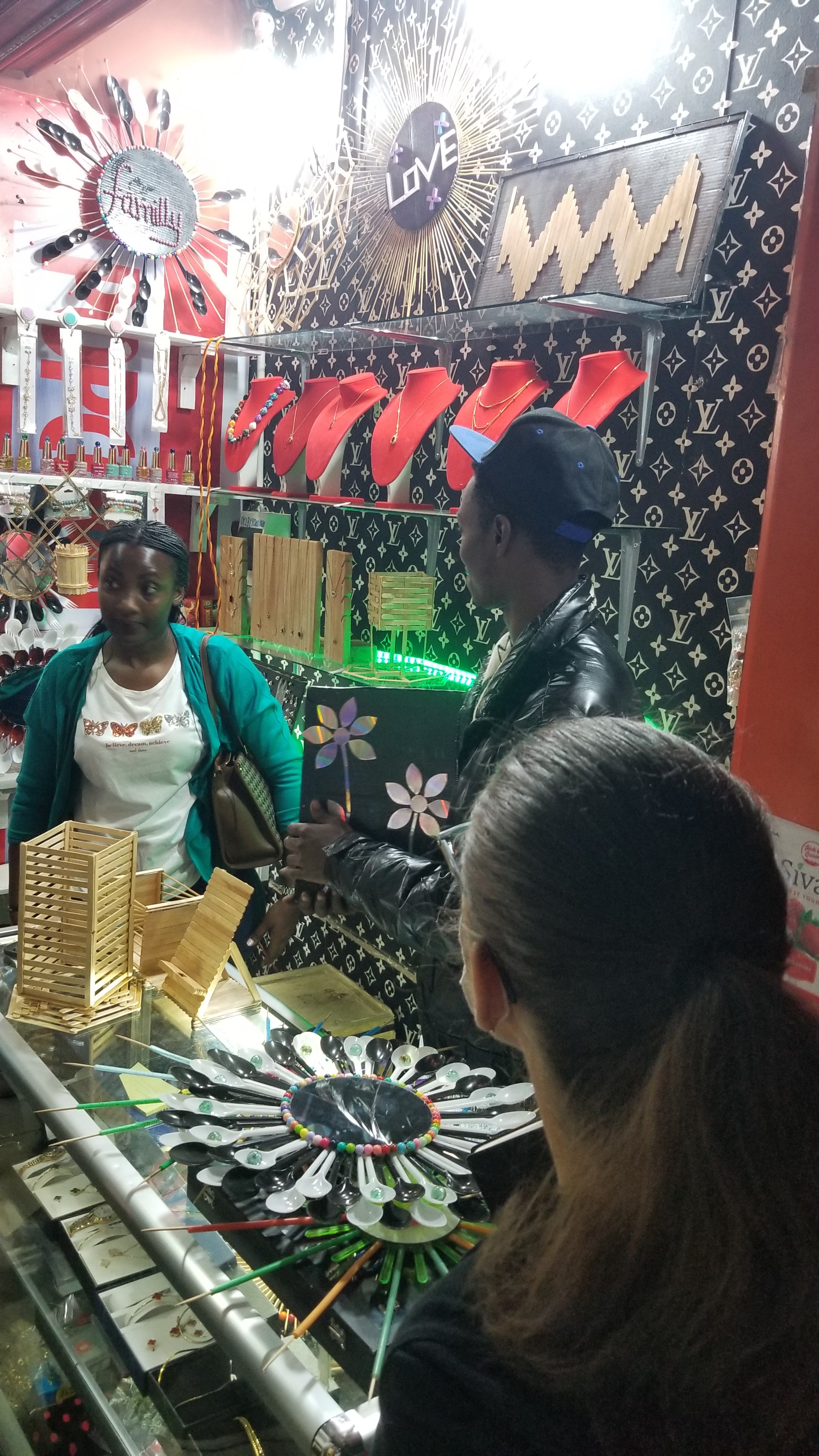
This young man has a tiny shop nestled in an alley buried in downtown Arusha. And when I say “downtown Arusha”, I mean the part that is full to the brim with hustle, not the more-upscale Central Business District (which has still got plenty of hustle, but in nicer buildings). The alley itself was its own kind of amazing: it started off a regular alley between buildings (one of which is a hotel), and then somebody decided it was big enough to put a row of three-foot-deep shops protected by roll-up metal doors along one side, so now it’s barely wide enough to walk down straight-shouldered, and if you meet someone going the other way, you both have to turn sideways to pass. In spite of the density in this part of the city, there were no unpleasant aromas (unlike, say, on some days on Franklin St. in Chapel Hill). In fact, the hotel started cooking lunch, I think, and by the time I was done, I was ready for some onion-and-bok-choy soup, or whatever it was.

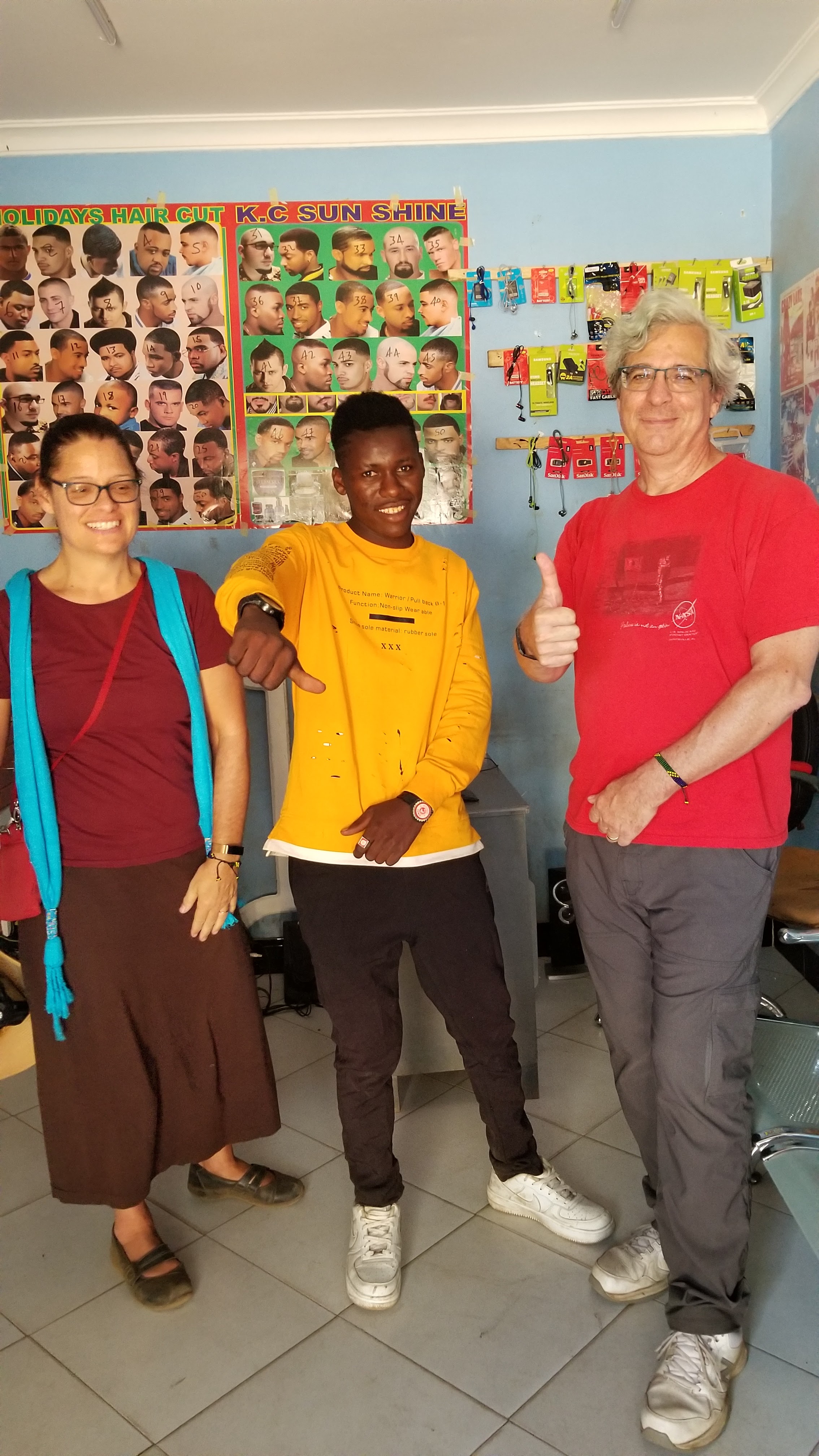
But I digress. The young man (whose name I didn’t get, unfortunately; although someone may correct me later) sells a variety of things including jewelry and creative wall hangings he makes using plastic utensils. Here’s a picture of him, with Claudine (our chief facilitator) listening to a question from one of us to translate to him:

(That glass case was sticking out into the alley a little. I think it must be on wheels or something and he just pushes it out when he rolls up the door.)

One of the questions was: “Since you’re buried so deep in this alley [he really was at least three storefronts down], how do you get business?”

And the answer was twofold:

  1. Social media advertising.
  2. He goes out and stands on the street, drumming up business.

These Zoe “kids” never cease to amaze me. I hope I never get blasé about them.

Day Five videos and pictures

Looks like I may have finally gotten my videos uploaded.

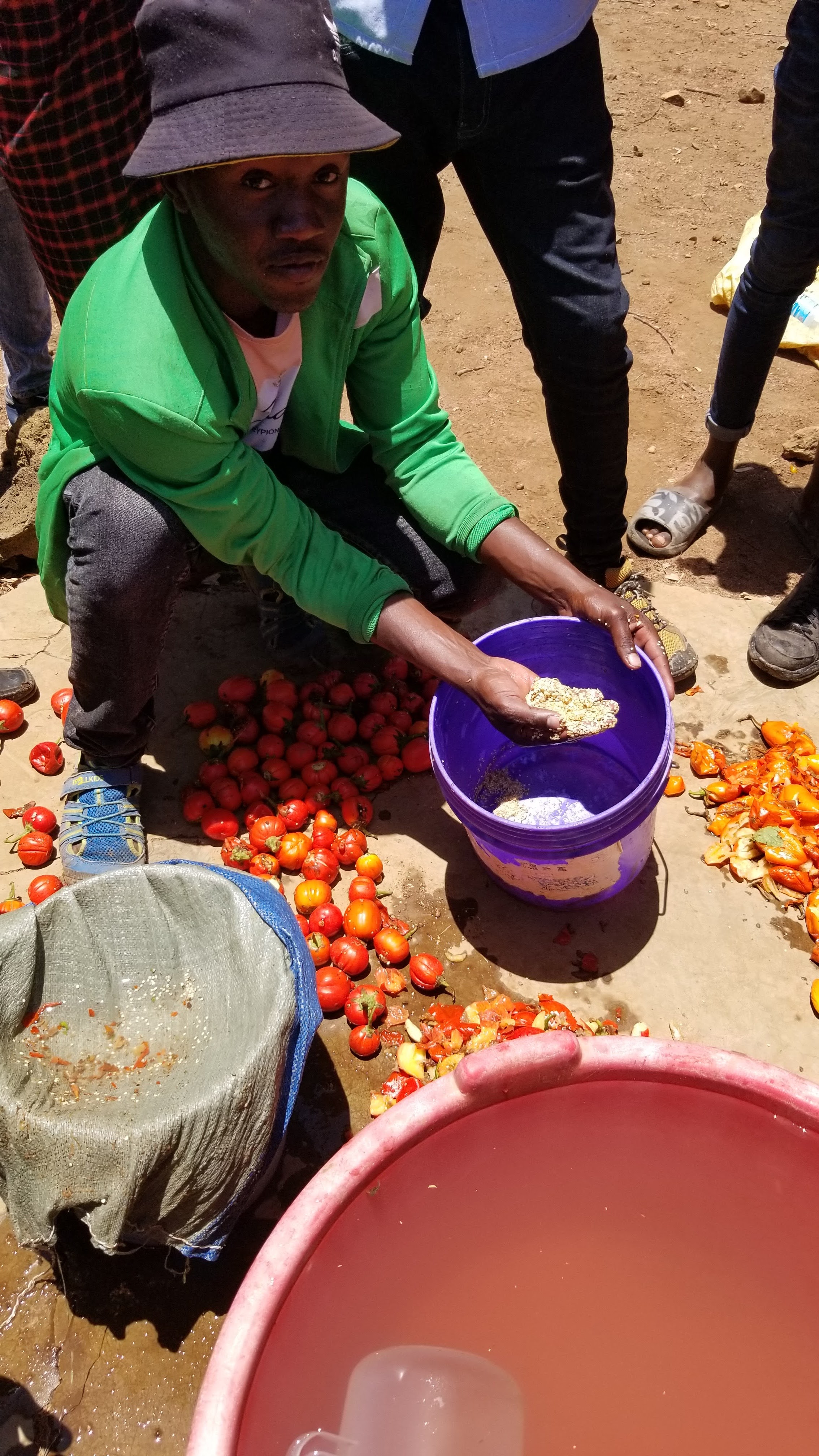
Here is the demonstration by our Lukundane group of how they extract seeds from the eggplants. They actually grow three kinds of eggplants: bitter, sweet, and big/purple. We’re only used to the last type, I think.

The extracted seeds:

Then, they spread them out to dry, which takes about a day, depending on sunlight:

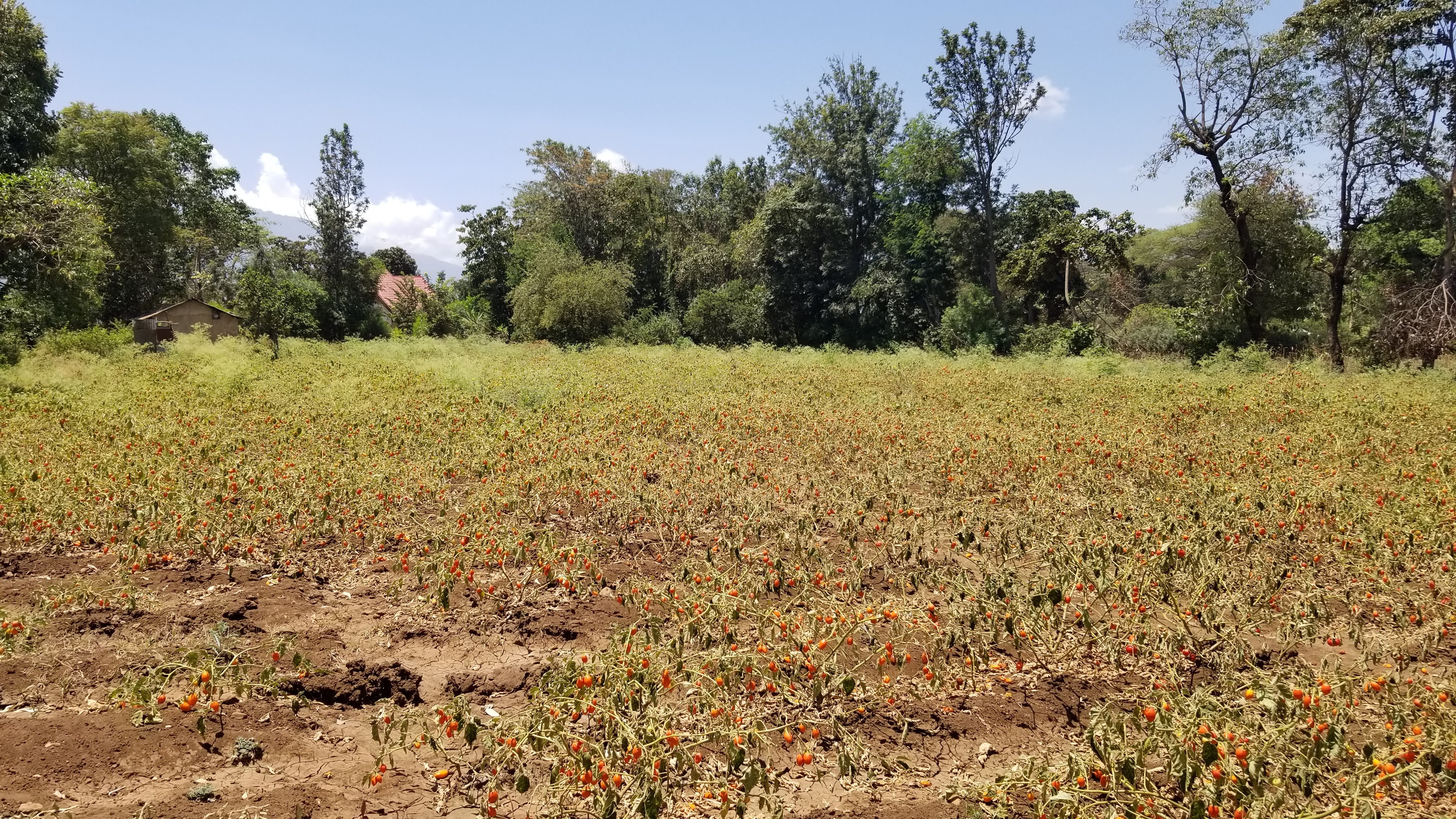
A field of eggplants. I don’t know if it was our group’s, but this is what they look like growing:

Pictures of some of our group members’ places of business:

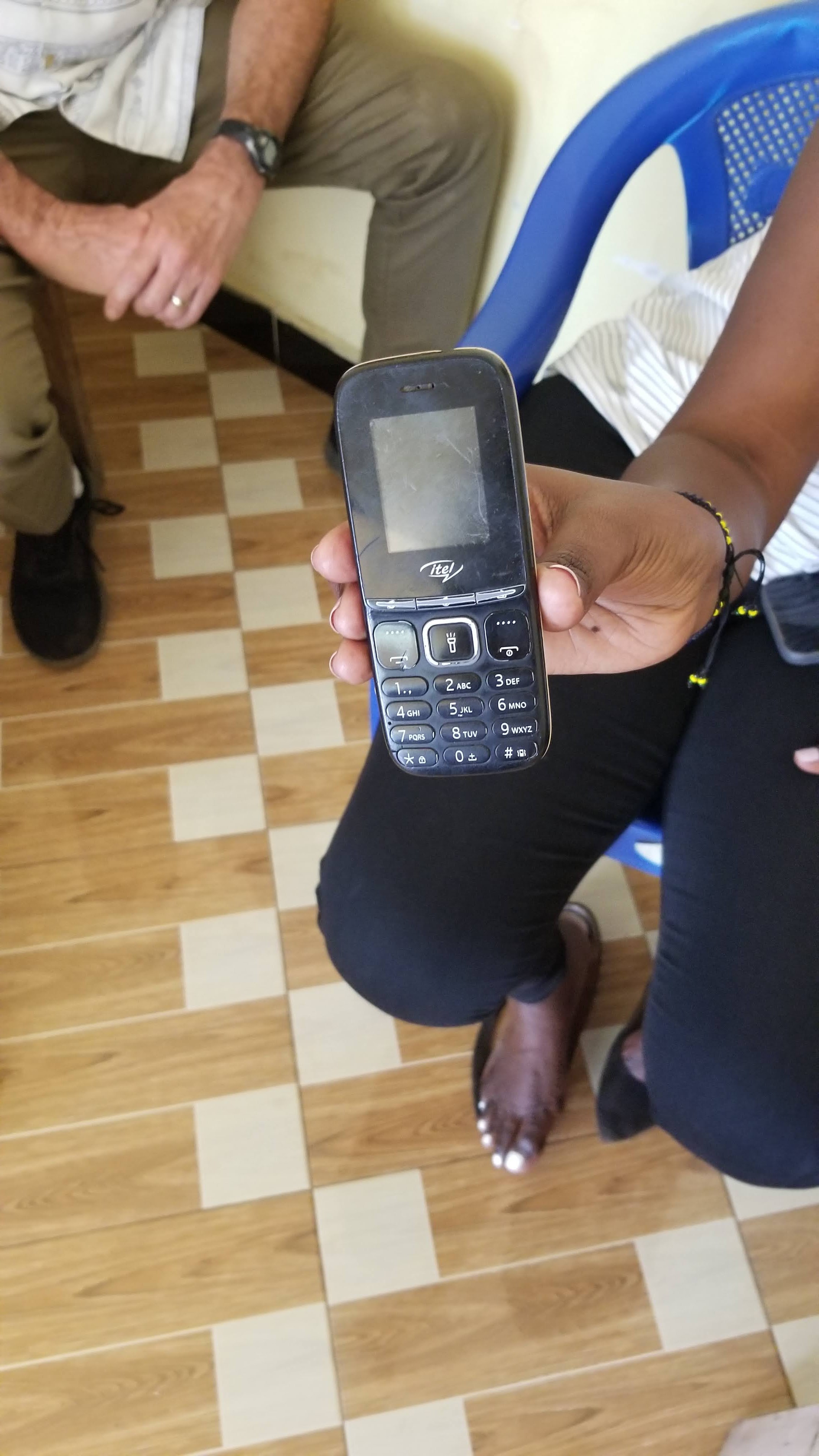
Gift runs a studio. He says many of his customers are kids who watch entire movies on this kind of phone:

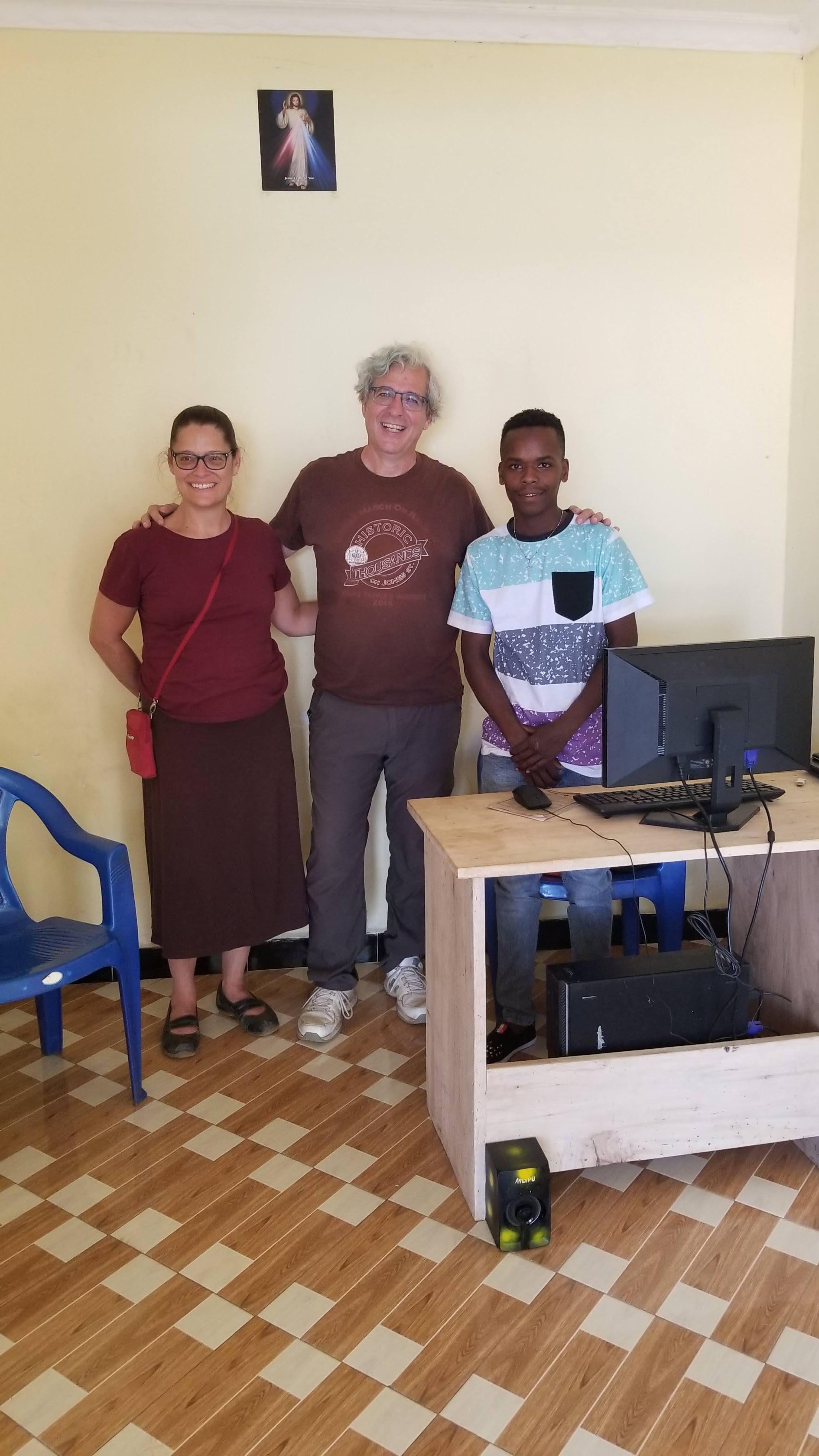
Gift’s studio:

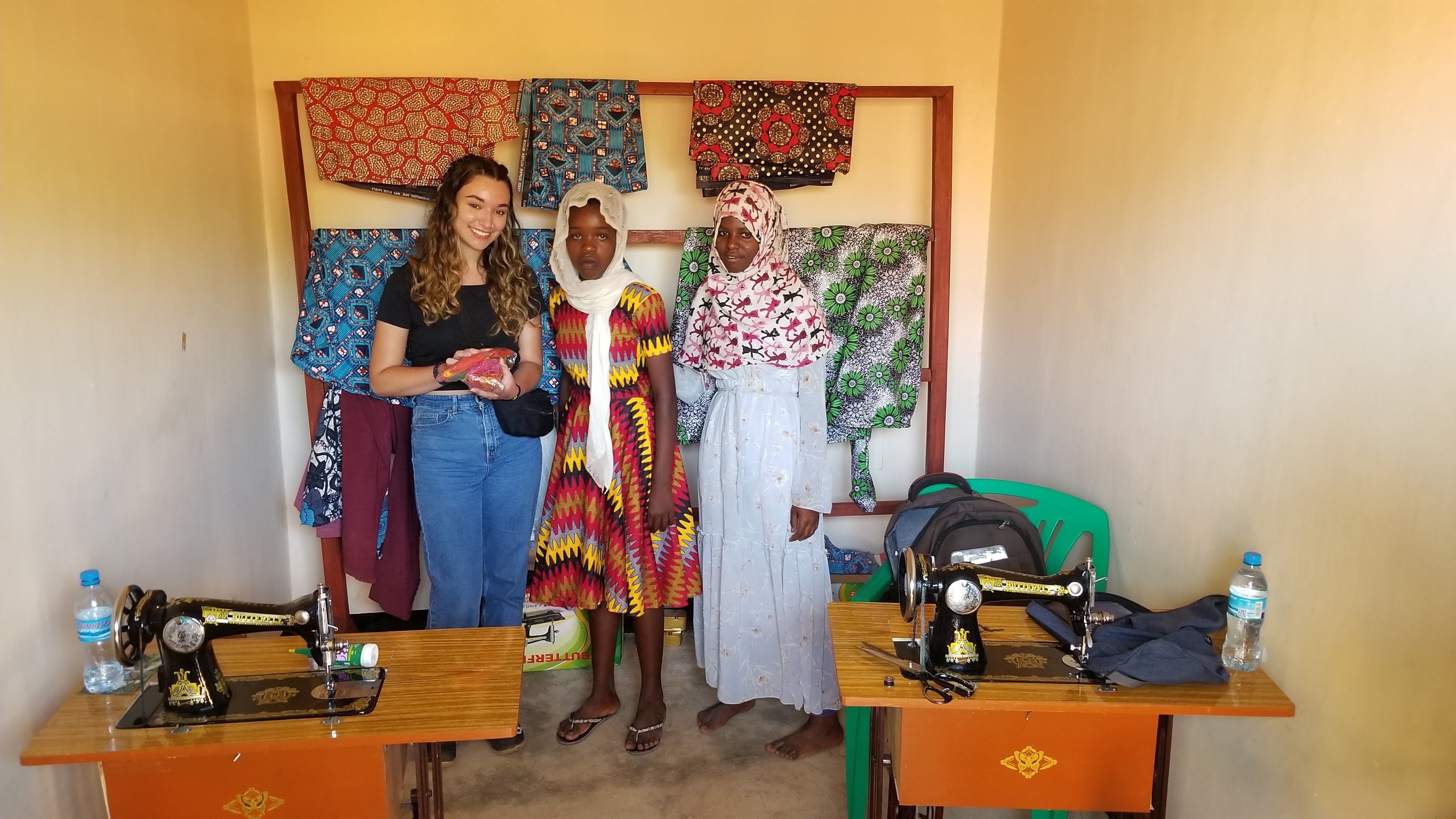
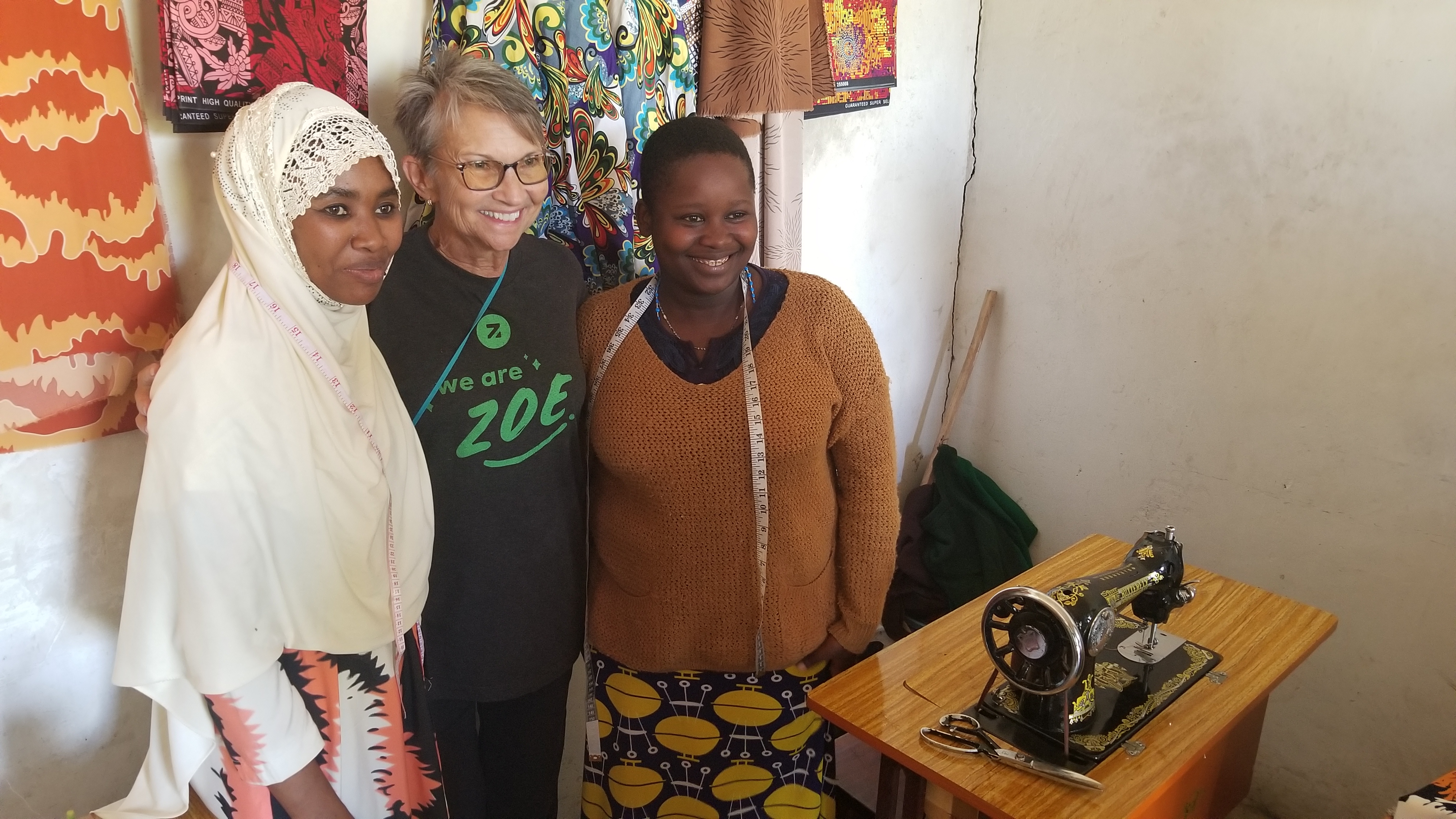
Then to Angel and Moanisha’s tailor shop. They have not been in business very long, but their next dream is to learn how to tailor men’s clothes.

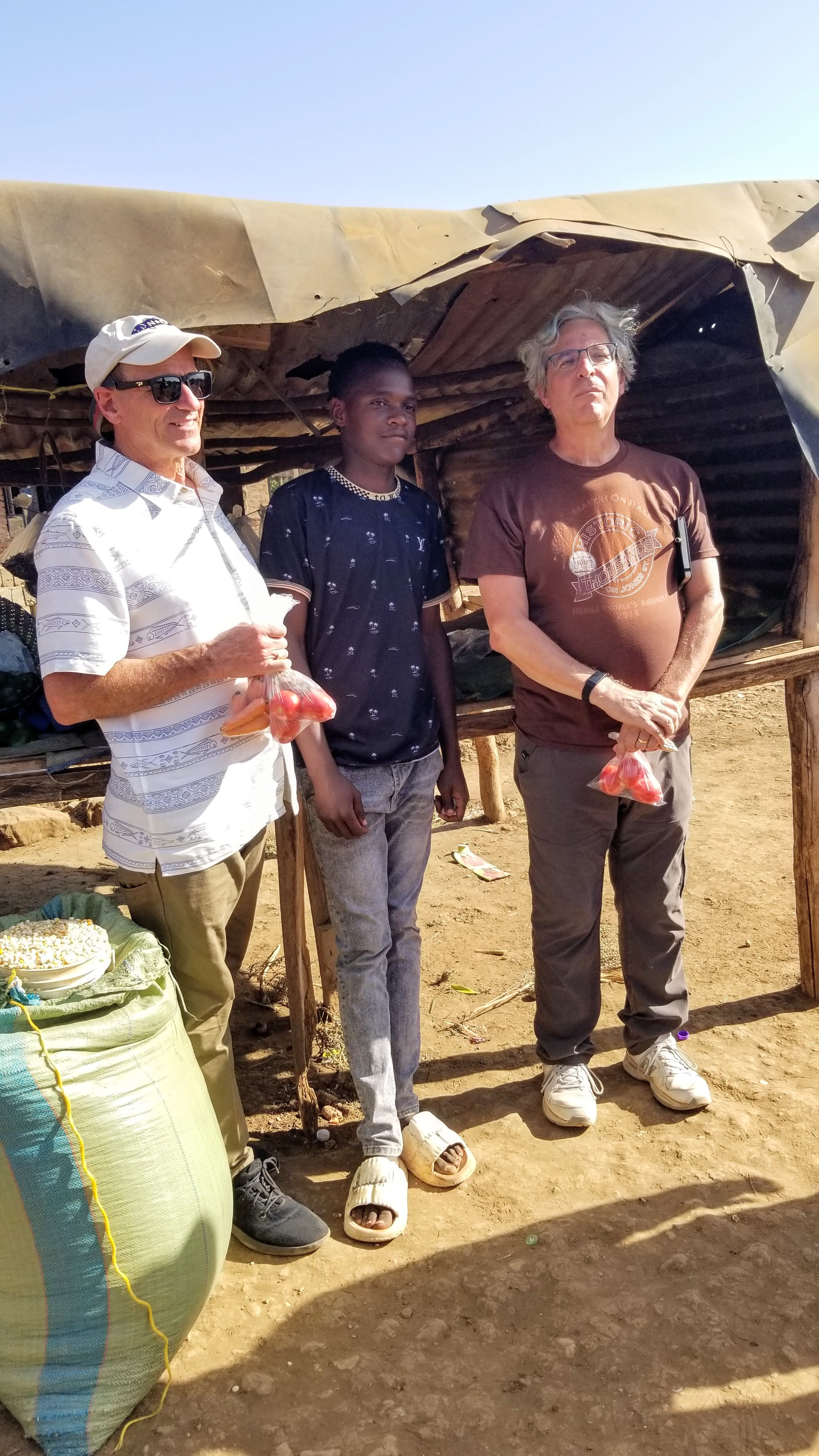
Then, a produce stand. I’m sorry I did not catch the young man’s name. Also, I might have been a little bit tired. We bought tomatoes, expecting to eat one at breakfast on toast (but we forgot, so I gave mine to the kitchen (at least, I hope they made it back to the kitchen)). I also bought a small quantity of dried ocean sardines (as opposed to small fish from Lake Victoria). They were delicious.

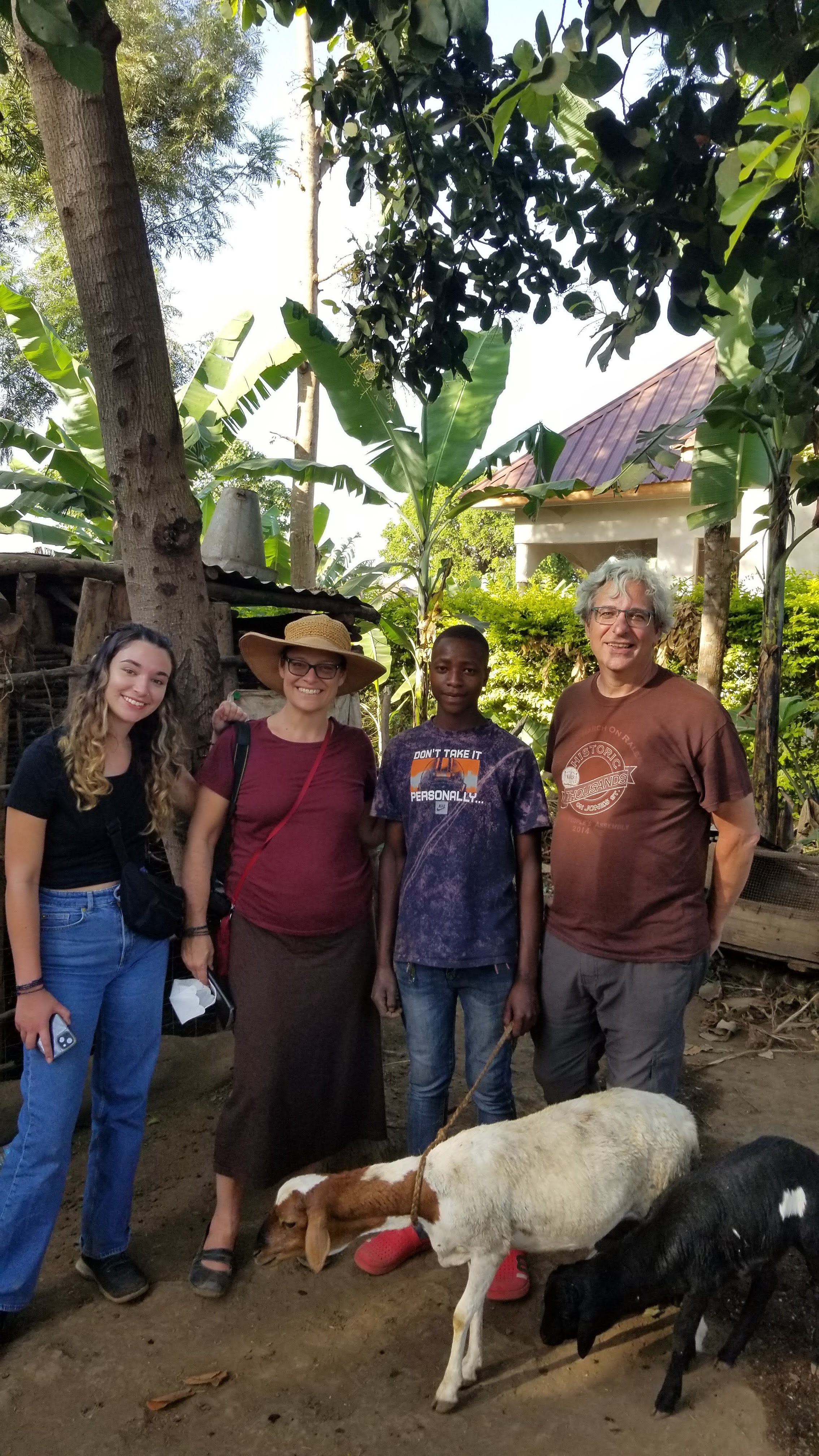
Next, Jordan’s father’s house, where Jordan raises rabbits, chickens, and goats. Also, he had a small box of cute:

Jordan and his goats:

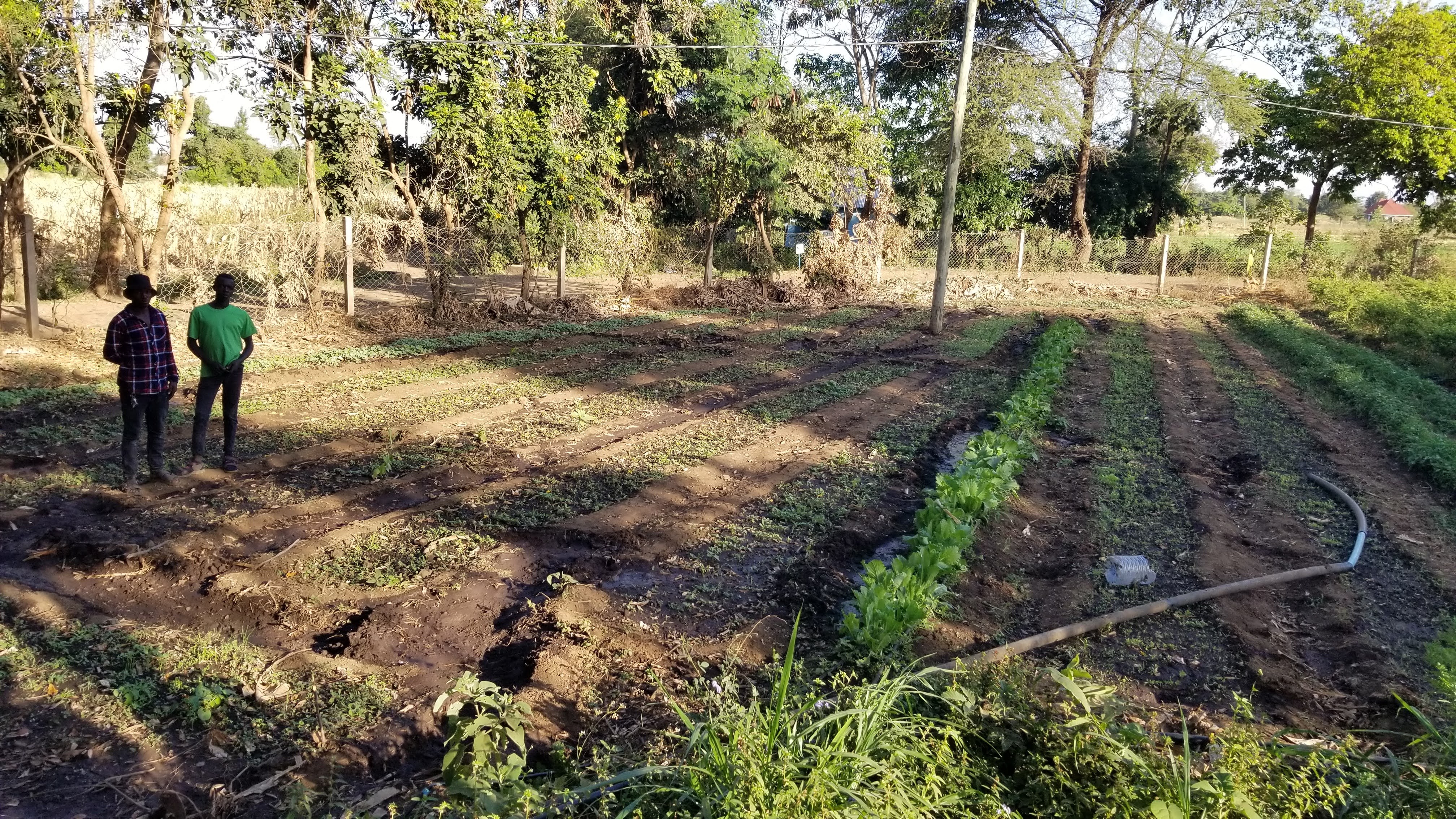
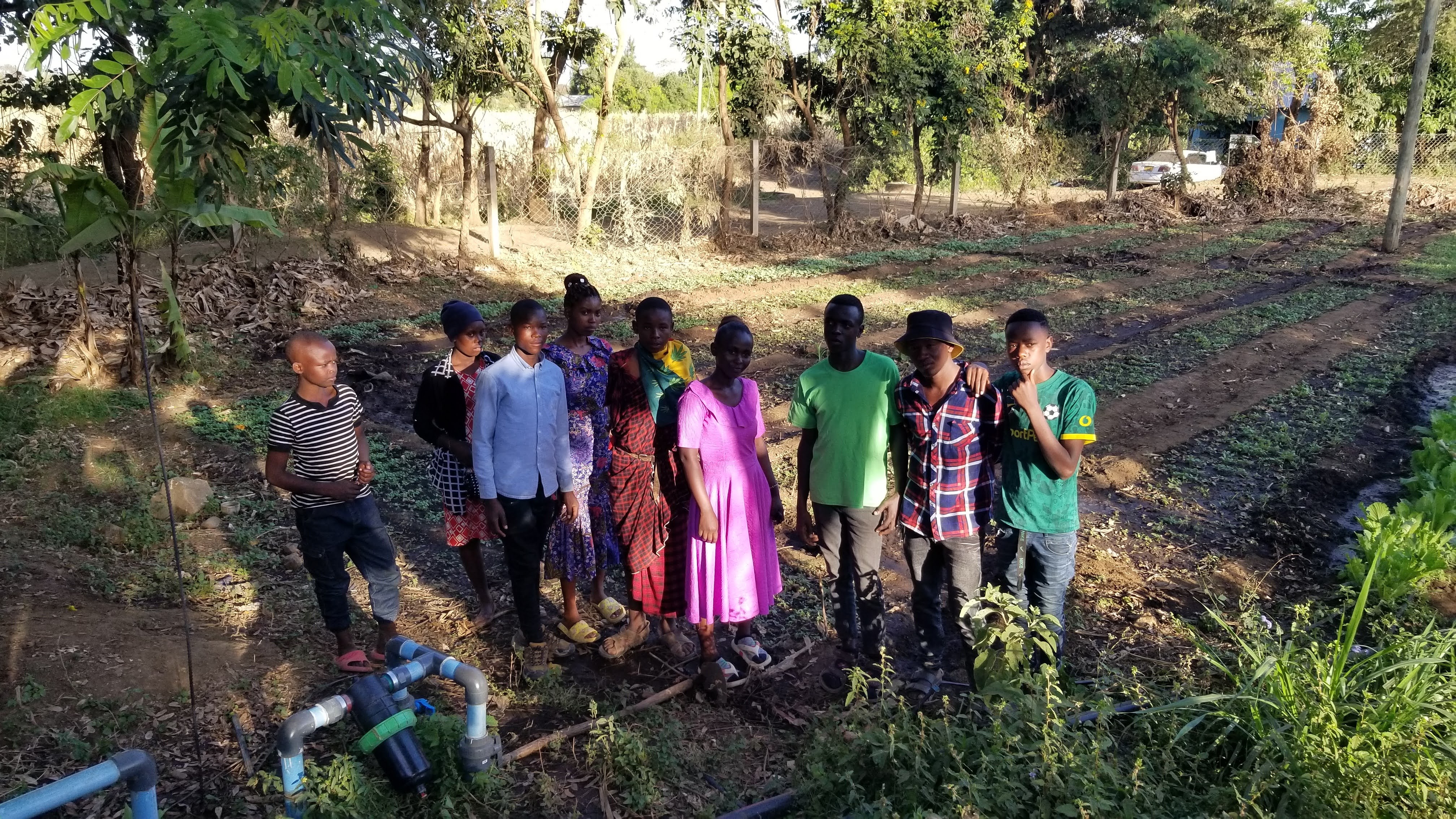
Finally, the group project, which, in addition to extracting eggplant seeds is growing eggplant seedlings:

Day Five — Groups early in the program

Today, we visited the Lukundane (“Love One Another”) group that Erika and I, along with Erika’s parents, are partnered with. They are eight months into the program.

They greeted us with dance, and we danced together.

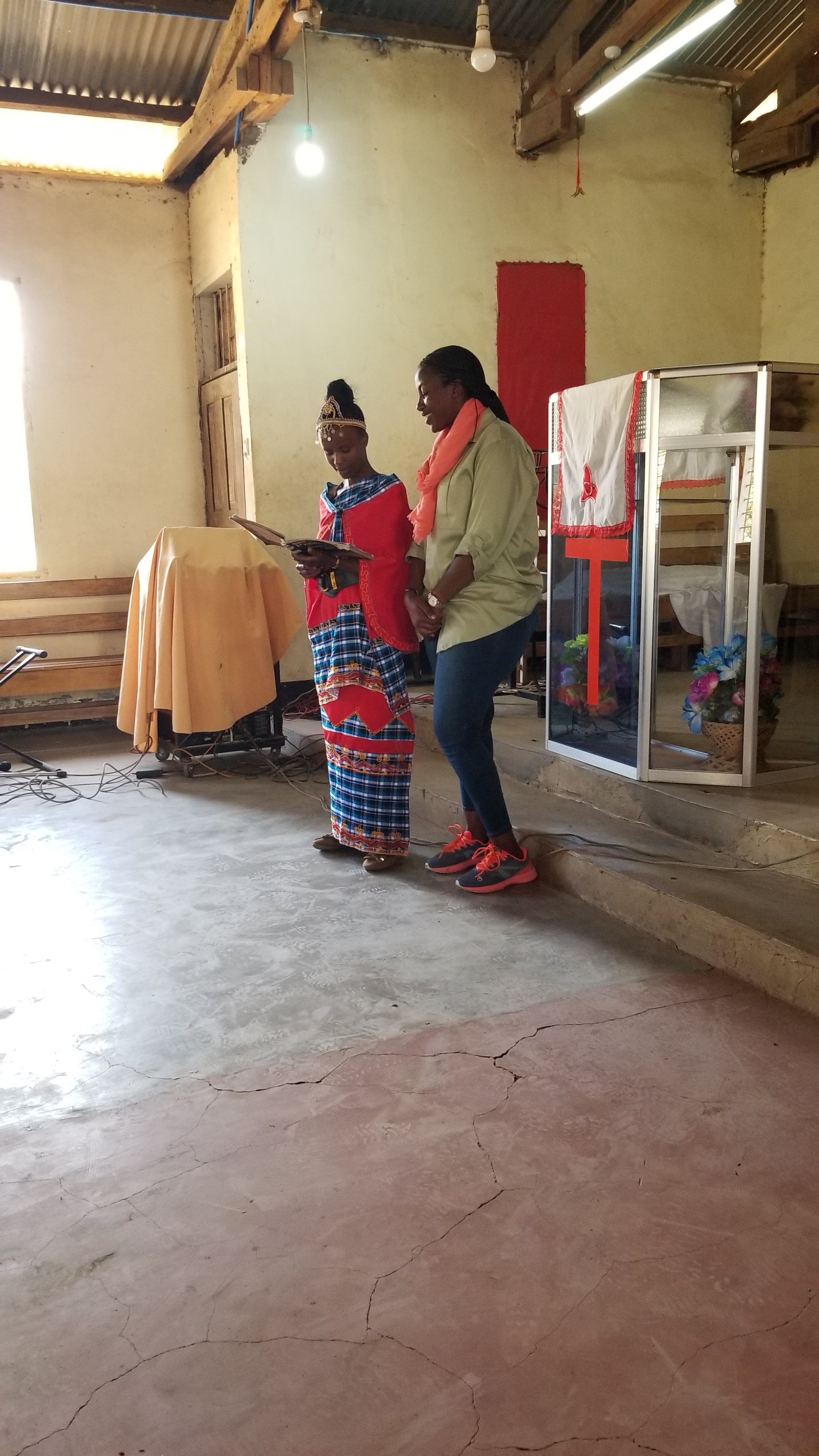
Then, we had a homily from the group pastor, in which she said “don’t let anyone look down upon you because you are young.”

In eight months, the members of this group have finished their training and opened their first businesses. (Group members, as you probably know already, start multiple businesses. This is an intentional feature of the Zoe program, to give kids practice at starting businesses, and to increase their resilience, in case one business is not successful.) They have opened an M-KOBA account, which provides a group savings account like M-PESA (banking by text message). These M-KOBA accounts provide transparency: each member of the group can see the balance and all transaction. I believe they are also controlled in that multiple signatures are required to disburse funds from the account. (This is also true of more traditional group savings accounts.)

They have chosen a group project, and that is to grow eggplants and sell the seeds and also seedlings. They have made projections of how much profit they will get from this activity, and they plan to reinvest their profits.

Then, we heard testimonies from some of the members.

Gift told us that before Zoe, he was a street kid, with no direction, no hope, and no job. He would work as a day laborer in construction jobs, but he frequently did not get paid. (That’s a common theme among the members: they put in a day’s work and then get cheated.) After he joined the Zoe program, he was able to open his own business, with a more reliable income.

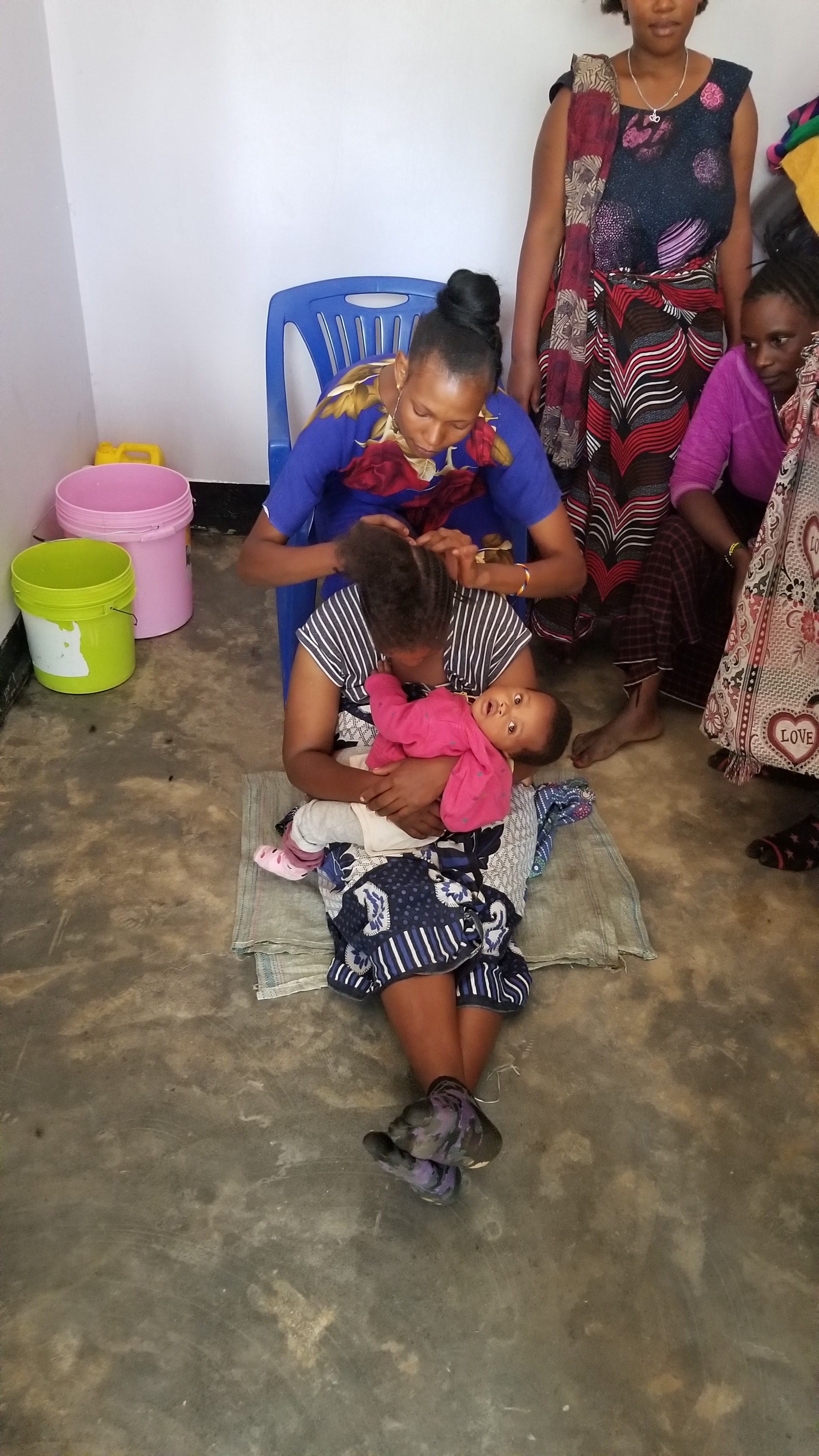
Esther told us that before Zoe she was a housemaid who was unpaid and mistreated (more than simply being cheated out of her wages). She worked for a year as a housemaid but was only paid for six months. Then, a boy came along, and, as happens to often, she trusted him and became pregnant. When she told him, he abandoned her. She stayed with a friend during the pregnancy and gave birth, caring for the baby at the friend’s house. However, after a while, the friend kicked her out, and she returned to her parent’s house (I think she only had her mom). Then she heard about Zoe. Zoe asked her what she liked to do, and her answer was hairdressing, so they gave her hairdressing training. Now, she runs a salon, and can support herself, her baby and her siblings.

Mwanaisha (spelled phonetically by Erika, who did a better job of capturing the name than I did) was also working at someone’s home. She was unpaid and received no food. She says she became patient and stayed there, because she could at least sleep there. When she heard of Zoe, she quit her “employ” and joined the group. She received training in tailoring and was able to open and grow her own business. Now, she is able to eat.

Alfan Mohammed was a vulnerable child, who took day jobs weeding crops. His only parent lives far away, so he was homeless. The family situation arose after his father died, there was some family conflict (I’m a little unclear about this), their house burned, and his mother abandoned him and moved away (I can only imagine that scene). After he joined Zoe, he received barbering training and was able to open a barbershop. He has now found God and can care for himself and his siblings.

We heard from their mentor, Tumaine, who is himself the chairman of a second-year Zoe group. Tumaine said that the village where they were (which was pretty far out of Arusha) was fortunate in that it had good water. We also heard that some of the members’ fathers were alcoholics and had sold the family houses to rich people who were then growing crops on the members’ former land.

He went on to say that a particular challenge in the village was the Maasai culture of expecting children to fend for themselves at the age of ten. That doesn’t necessarily mean they are kicked out of the house automatically (I don’t THINK they are, anyway), but it frequently means they have to drop out of school and find some work, and they may also get kicked out of the house. It’s not uncommon to see kids this age herding cows, goats and sheep. Some of the kids took on heavy construction work.

However, when the community leaders invited Zoe into the community, the leaders went out and FOUND the most vulnerable and highest-potential kids, and helped to recruit them into the program.

The group members gave us soft drinks and muffins as a snack, and also gifts of Maasai blankets.

Somewhere in the middle of this, we danced some more. They had pretty good taste in music.

After this, they demonstrated how they extract seeds from the eggplants. With luck, I will be able to upload photos and images of this.

In the end, we prayed for the success of the group.


After we said our farewells, we went to visit a group that has only been formed for two months. They live in a pretty arid area, and their church is plastic sheeting and sheet metal attached to dead saplings embedded in the ground. (Although the foundation of a much better one has been laid immediately behind it.) This was the toughest visit of all. They have not yet finished their training. They have written a group constitution, which is required to open a bank account, and I believe they have opened a group bank account with seed money from Zoe.

We heard some testimonies from some of the kids, and they were painful.

One young woman was abandoned by her father when she was nine. She lived with her mom, but had to help by working day jobs. She was frequently unpaid and sometimes they had no food. While she was telling this, she broke down and cried.

Gideon Baracka’s father abandoned him when he was ten. His mother is having trouble supporting him.

Lovelace was in school, but she got pregnant, and the child’s father abandoned her. She gave birth, but then had to work day jobs as a farm laborer with the child on her back. Her dream is to be a business-woman.

Allen’s father died, and he had to help his mother. He got a job as a concrete mixer (mixers also carry the concrete to where it is needed; it is very hard work) because then he would at least get paid. His dream is to be a mechanic.

Dennis Obedi’s father left him with three siblings, and married another woman. However, he also used the family house as collateral, which leave the family vulnerable to being evicted if his father’s business fails (which it might). His mother is extremely stressed. His dream is to become a hairdresser.

At this point, we called a bit of a halt to the testimonials because we didn’t want to put the members through the stress of repeating what is obviously traumatic or shameful or extremely sad in some way. Instead, we asked them to simply tell us their dreams.

Abubaka’s and another member’s dream is to be a professional mechanic.

Frisca Charles’s dream is to be a fashionista.

One member’s dream is to be a big business man.

Josea’s dream is to be a big farmer.

Patience’s dream (her name is actually Swahili, but it translates to Patience) is to have a big salon.

Fabiola’s dream is to be a hairdresser.

Another member’s dream is to be a livestock keeper.

Another wants to be a businessman who buys wholesale and sells retail.

Tumaine (different from the one mentioned in the other group) wants to a professional agriculturalist, to the point of studying it in school.

Goodreason wants to be a house interior plasterer and designer (designs are made in the plaster while it is still wet).

Livingston wants to be a businessman and sell produce.

We also made comments that we hope were comforting and/or inspirational. Then we introduced ourselves, and told them what we do.

And finally, we prayed for them, and said our farewells. It really was a difficult visit.


After this, we visited the businesses of several of our Lukundane group members, and the group projects.

Unfortunately, I’m going to have to write this up another time, because it’s late here and I still need to pack for the short safari trip we have scheduled in the Ngorongo Crater. More tomorrow, if I have coverage.
Day Three videos and pictures

Since I had such a hard time uploading videos and pictures yesterday, here they are.

Dancing:

The woman in orange is Trice:

Musical chairs:

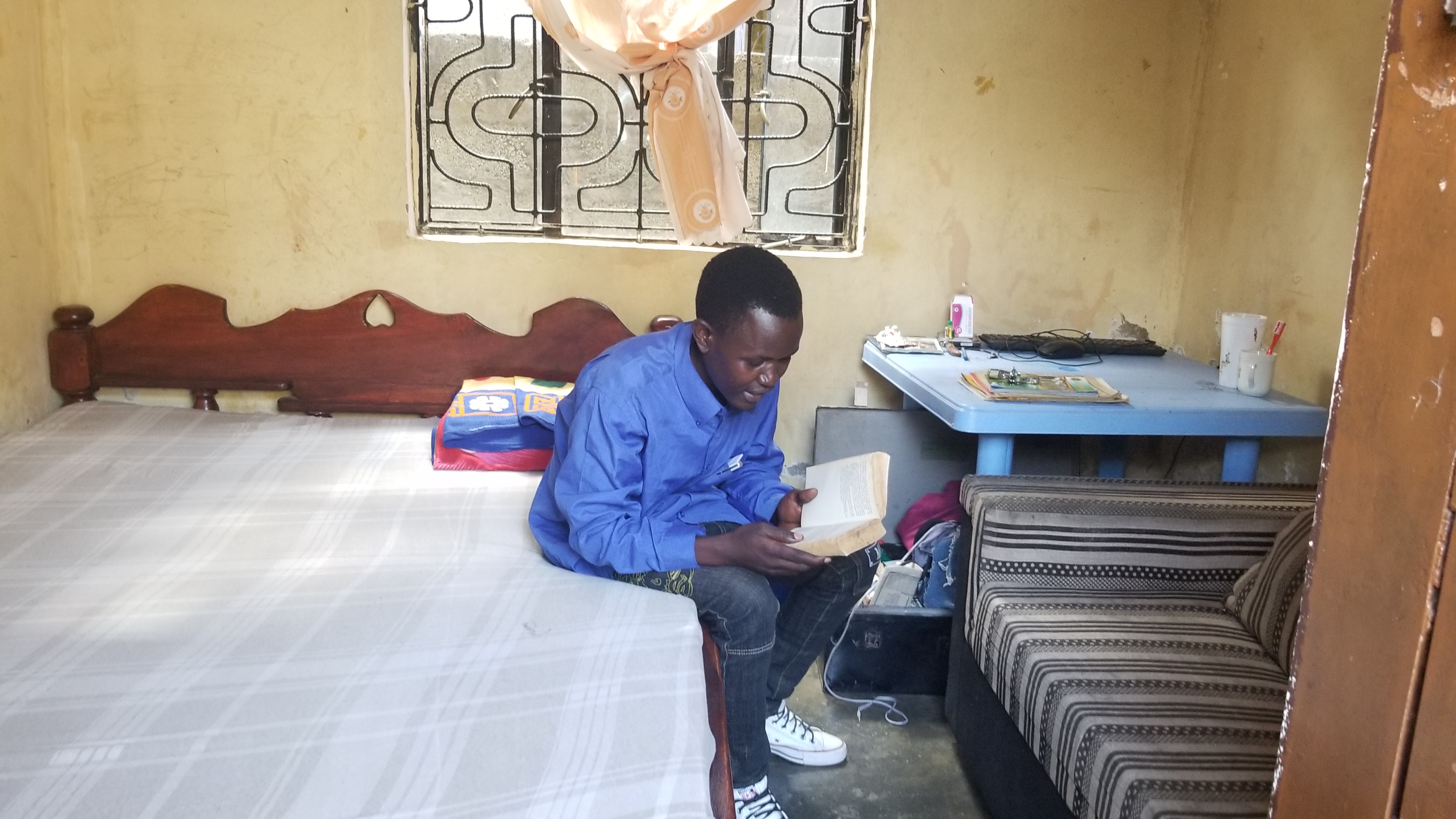
Isaac reading in his room, which he was gracious enough to show us. It was in a quiet courtyard across the street from his studio:

Two of the members in their shared tailor shop.

David answering questions from us at his welding shop:

Day Four — Church!

Today, we went to church. A 3-hour pentecostal service. It was actually a good service, part rock concert and part inspirational exhortation; and it did not feel like three hours. Pastor Trice gave the main sermon, and Pastor Laura Katherine from Apex UMC also gave a sermon.

Laura spoke of blessing, that at the end of Luke, Jesus is taken up to heaven while he was blessing his disciples, and also that the exact words of his blessing aren’t recorded (although they could have been). Which Laura takes to mean that (a) he is still blessing the entire world (as if, the higher he rose, the more people he blessed); and (b) since the exact nature of his blessing is deliberately left indeterminate, his blessing is whatever we need to hear.

Trice spoke of an adjustment in our relationship with Jesus. She started with the passage in Luke where Jesus, at the age of twelve, remained in the temple even as his parents were returning home. She contrasted those people, such as Joseph and Mary, who do their religious duty faithfully and then decide “I have done enough” and go home with those people who figuratively linger in the temple after the necessary duties are completed. She also noticed that Jesus’s parents spent three days searching for him before it occurred to them that maybe he was in the temple, and she suggested that some of us today might search for what we need everywhere BUT the church.

But her main point was that Jesus’s parents thought he should follow them (home after worshipping at the temple), but, really, they should have (and would, later) follow him. She suggested that perhaps some of us need to re-alter our priorities to put Jesus (and his calling for us) first, instead of an “after our other priorities” sort of thing.

It was a good sermon, and very much worth hearing (at least, for me).

After the service, we went next door to Trice’s radio station (Zion Impact Radio) and Trice interviewed us on air, and asked if any of us would like to say something.

Then, lunch at a nice restaurant. I had to try the “black vanilla” ice cream. It was good, but it did actually turn my teeth black. Savannah said I had “pirate teeth”.

After lunch, we went to visit a painter who is a Zoe graduate. His artist name is Lishy and I believe his real name is Elisha. He is part of a painting collective that sells paintings in a very nice park in Arusha. We had actually gone there on the first day, but hadn’t had time to linger. Erika and I bought a very nice painting that the artist took off the frame and rolled up for us to take home.

Elisha was a very quiet, softspoken person and not particularly expressive. When another of our group bought a VERY nice picture of elephants at sunset (the artist basically painted with light), Elisha overheard us discussing it and quietly pointed out the artist, which I thought was particularly gracious. When the facilitators took a picture of him with us and the picture, they tried to get him to smile, and they did. But I am choosing a picture that looks more like the way we saw him normally, when people weren’t trying to make him smile.

Our final stop today was a local market where a member of Trice’s church sold souvenirs and curios. The Zoe staff knew this market had good prices and knew that the church member wouldn’t rip us off.

And then, supper.

I think the Zoe staff are heroic, because they are staying with us all day, including through supper. They are putting in some long days.

(Again, issues with uploading pictures and videos, so more tomorrow.)

Day Three: Smile and Chapakazi (2nd- and 1st-year groups)

Tonight’s blog entry will be especially short (I hope), since it’s 9:30 here.

Today, we met two groups who were at earlier points in the program, partnered with two other members of our group, individually or in a small partnership (i.e., you don’t have to wait for your church to partner with a group).

The two groups were Smile (second year) and Chapakazi (first year). There was a LOT of dancing. When you go on a Zoe trip, get in touch with your rhythmic movement side because you will definitely get a chance to exercise it. (It gets a little bit easier for me every time.)

Some of the things that struck me about the groups’ presentations:

They were urban groups. One member told us he had been able to pay for extended English lessons, and then switched his presentation over to fluent English. The facilitator then translated from English back to Swahili for the benefit of the groups, which made me smile. That young man has a bright future ahead of him. We heard from all the members.

After that, we played musical chairs. The facilitator explained the rules carefully to us.

Karin, the pastor of the Smile group, then gave a full-throated sermon, almost without notes, on vision. The thesis was that if you have vision, you can have confidence and strength of purpose. She said that vision comes from God, and a person’s vision can die if that person does not do what they should do, or if they don’t have good mentorship. Who you surround yourself with is important.

But also, vision can be revived, and we can draw strength from our vision. She really got revved up.

After that, we played a game in which Jeremaiah, Chapakazi group’s facilitator, taught us the Swahili words for some parts of the body:

  • mabega — shoulders
  • masakee — ears
  • tumbu — stomach
  • ndomo — mouth
  • pua — nose
  • [something] — eyes
  • [something] — head

Then we played the game. Jeremaiah stood facing us and few members of the Chapakazi group stood behind him. He would shout out the name of a body part and we were supposed to touch it on ourselves, but the trick was that he would touch a different body part. So, for example, he’d shout “Ndomo!” and grab his stomach. We did not expect that and much hilarity ensued. Eventually, all of us but one were eliminated, because we touched the wrong body part or were too slow.

But we turned the tables and played the same game in English. It was a lot of fun.

Then came the group reports. I heard tuberculosis and UTIs mentioned for the first time (as part of the health & hygiene training).

At least one of the groups visited orphans and sick elderly people in the hospital. We keep hearing stories of “our” orphans reaching out to other people in need. I’ve said “I’m amazed” and “I’m impressed” so often that it must seem repetitive, but… they remain amazing.


(I was hoping to upload pictures and videos, but the internet in the hotel is fighting with me, so I’ll have to do it another time.)

Day Two: UUMC’s Inuka and Harbor UMC’s Upendo groups

(Note: I’m typing this in a text editor locally so an Internet glitch here doesn’t vanish all my text into the bit bucket. Because of that, I can’t write italics or bold, so I use upper case for emphasis. I’ll try to go back and edit, if I have time, once I upload this text, but if you see upper case, that’s what’s going on.)

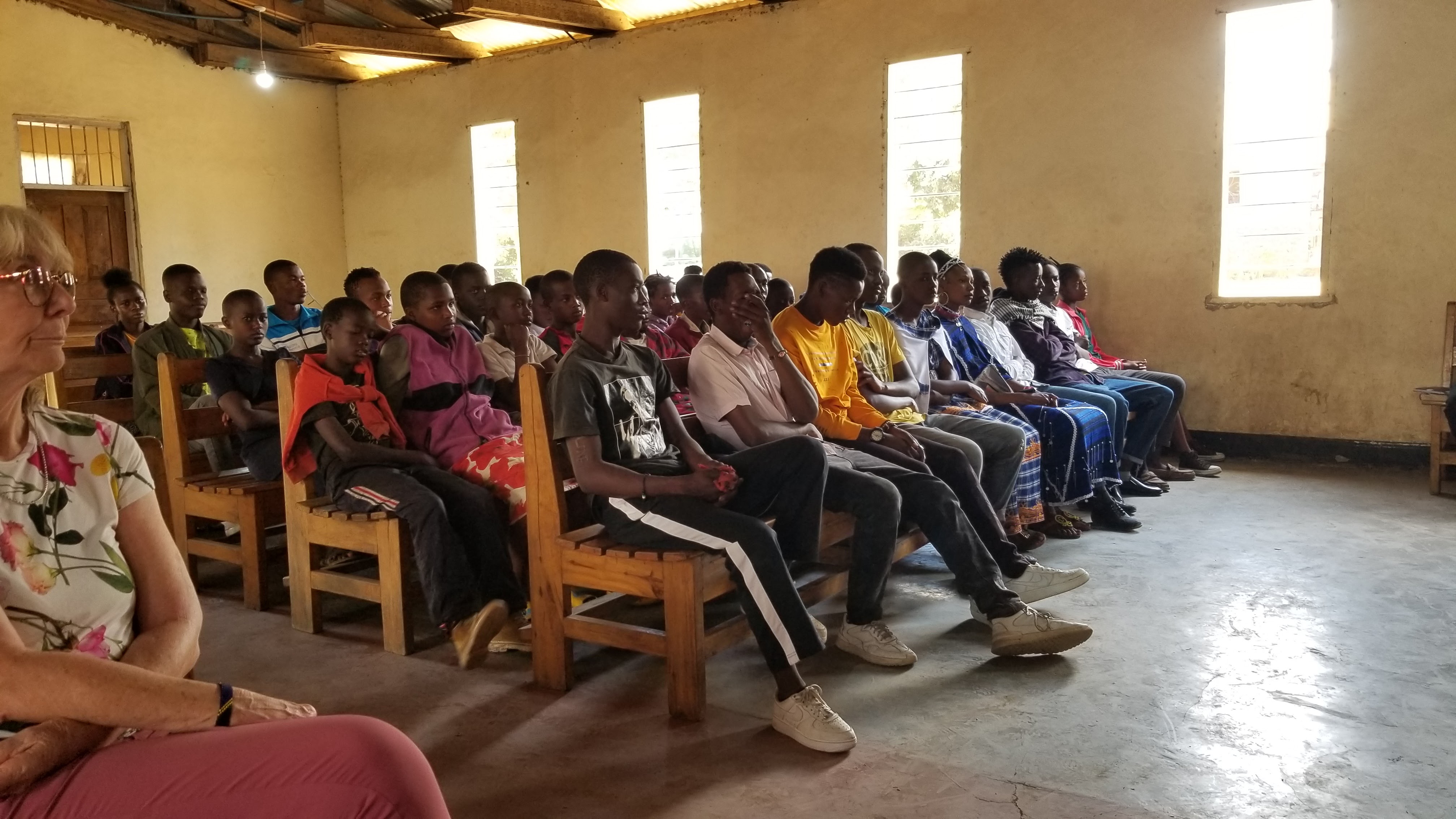
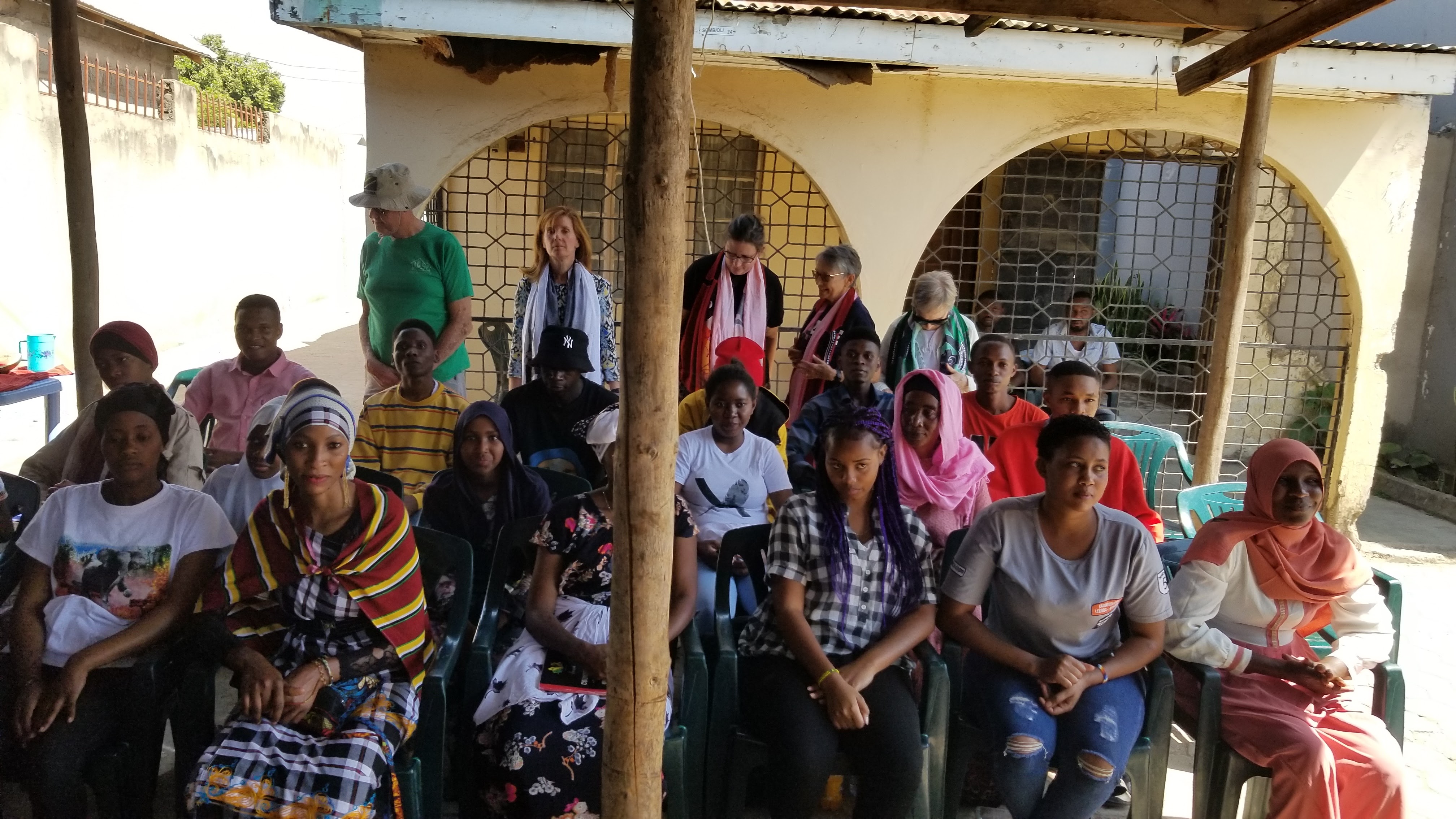
Today, we visited our group, Inuka, together with a group partnered with Harbor UMC in Wilmington. They are Maasai, and some of them were wearing traditional (or traditional-looking) Maasai clothing. Inuka’s pastor, named Lightness, gave a homily focusing on confidence, regardless of one’s background. She mentioned the following verses (I think I got them right, but there was some doubt):

  • 1st Sam 17:32 — “David said to Saul, ‘Let no one’s heart fail because of him; your servant will go and fight with this Philistine.'”
  • Prov. 28:1 — “The wicked flee when no one pursues, but the righteous are as bold as a lion.”
  • Acts 4:13 — “Now when they saw the boldness of Peter and John and realized that they were uneducated and ordinary men, they were amazed and recognized them as companions of Christ.”
  • Philemon 1:8-9 — “For this reason, although I am bold enough in Christ to command you to do your duty, yet I would rather appeal to you on the basis of love”
  • Heb 10:35 — “Do not, therefore, abandon that confidence of yours; it brings a great reward.”
  • Heb 3:6 — “Christ, however, was faithful over God’s house as a son, and we are his house if we hold firm the confidence and the pride that belong to hope.”
  • 1 John 5:13 — “I write these things to you who believe in the name of the Son of God, so that you may know that you have eternal life.”
  • Acts 4:31 — “When they had prayed, the place in which they were gathered together was shaken; and they were all filled with the Holy Spirit and spoke the word of God with boldness.”

There was a beautiful Maasai call-and-response song, with the call in that unique high, nasal, quavering African voice that is so stereotypical. It was extremely impactful to be in the presense of people who simply do this as a matter of course, as opposed to a touring group in a theater in the U.S. I wish I had recorded it, but (1) I was completely enthralled, and (2) it was kind of a hymn during the worship-and-homily service part of the program and I didn’t think it would be appropriate to just whip out my cell phone and start recording, even though I said I’d try to be a better tourist.

Then we heard from each family head in the two groups. I counted 42 people. Some of the children reporting were appearing on behalf of their elder brothers and sisters, which I took to indicate that their elder brothers and sisters were working. Each individual report had the same structure, specifying the speaker’s name, age, number of siblings, which group they were in and what the major thing each family head was doing. The activities of the members included (all told):

  • selling chickens and eggs;
  • selling goats;
  • burning music and movies to USB sticks in “studios”;
  • hair salons and hairdressing;
  • brick-making;
  • selling firewood;
  • selling livestock;
  • selling utensils;
  • vehicle and motorbike mechanics;
  • selling soft drinks;
  • selling rabbits;
  • farming;
  • selling tea leaves, sugar and powdered and bar laundry soap; and
  • vehicle and generator mechanic (that was Stella).

(A word on Stella: she’s the chairman of the Inuka group and she is a dynamo. She kept the group focused and energized during the program we were part of today, and when we went out to visit the members’ various businesses, she helped. She helped Lebahati when he was demonstrating how he makes bricks. We heard from the facilitators that she knows and (I think) visits each family.)

After the individual reports, we got a report from the Inuka group secretary, Esuvat. We heard the normal list of things they were trained on; hygiene, entrepreneurship, legal rights, vocational training, community-building. But, a couple of things struck me.

  1. They got seeds as a grant after their agricultural training on how to grow their own food. I don’t think I’ve emphasized that very much in the past, but the seeds are a grant from Zoe. In a very real sense, part of what we give to Zoe is seed money.
  2. There was particular emphasis, which I’ve never heard before, on women’s sexual rights: on rape; female genital mutilation (a.k.a. female circumcision), a particularly barbaric practice; and early marriage. In particular, the children are taught who to report violations to, which actually includes various government bureaus. They’re also taught that if the bureaus they report to (and there actually are government departments for women’s affairs and men’s affairs) don’t respond promptly, they should also go to the police, who are instructed and trained to handle these issues. I was impressed with the concreteness and detail of this information — this is not an empty formality.

The Inuka group (again: just starting their third year) has achieved the following:

  • All group members have multiple businesses;
  • 5 members have gotten their national id cards;
  • 3 members have gotten their birth certificates (required to get national health insurance, among other things);
  • 3 families have gotten electrical connections;
  • 5 families have gotten water connections;
  • 7 members have opened personal money accounts;
  • 1 member has shifted to a better house with electricity;
  • 1 member has acquired further training (in hairdressing)

This last bullet might not be quite accurate. I heard from several members that they had been able to afford further vocational training. Zoe provides initial training, but for a second (or third) vocation, I think the youth pay for that training themselves.

Then Joshua, the secretary of the Upendo group, made his report for the group. It was very similar, so some of the highlights were:

  • Multiple members have taken second trainings;
  • 15 members use M-PESA (electronic personal banking via cell phone (text message, I think));
  • 2 members have gotten water connections;
  • ALL siblings are in school.

Finally, we heard from Inuka’s mentor, Belinda. Upendo’s mentor had just had a baby two weeks earlier, so she wasn’t there, although we did meet her later. Unfortunately, I took no notes and don’t remember what she said. But she clearly had an interest in the well-being and progress of the group, as did her counterpart.

After these reports, we took a stretch break led by Stella.

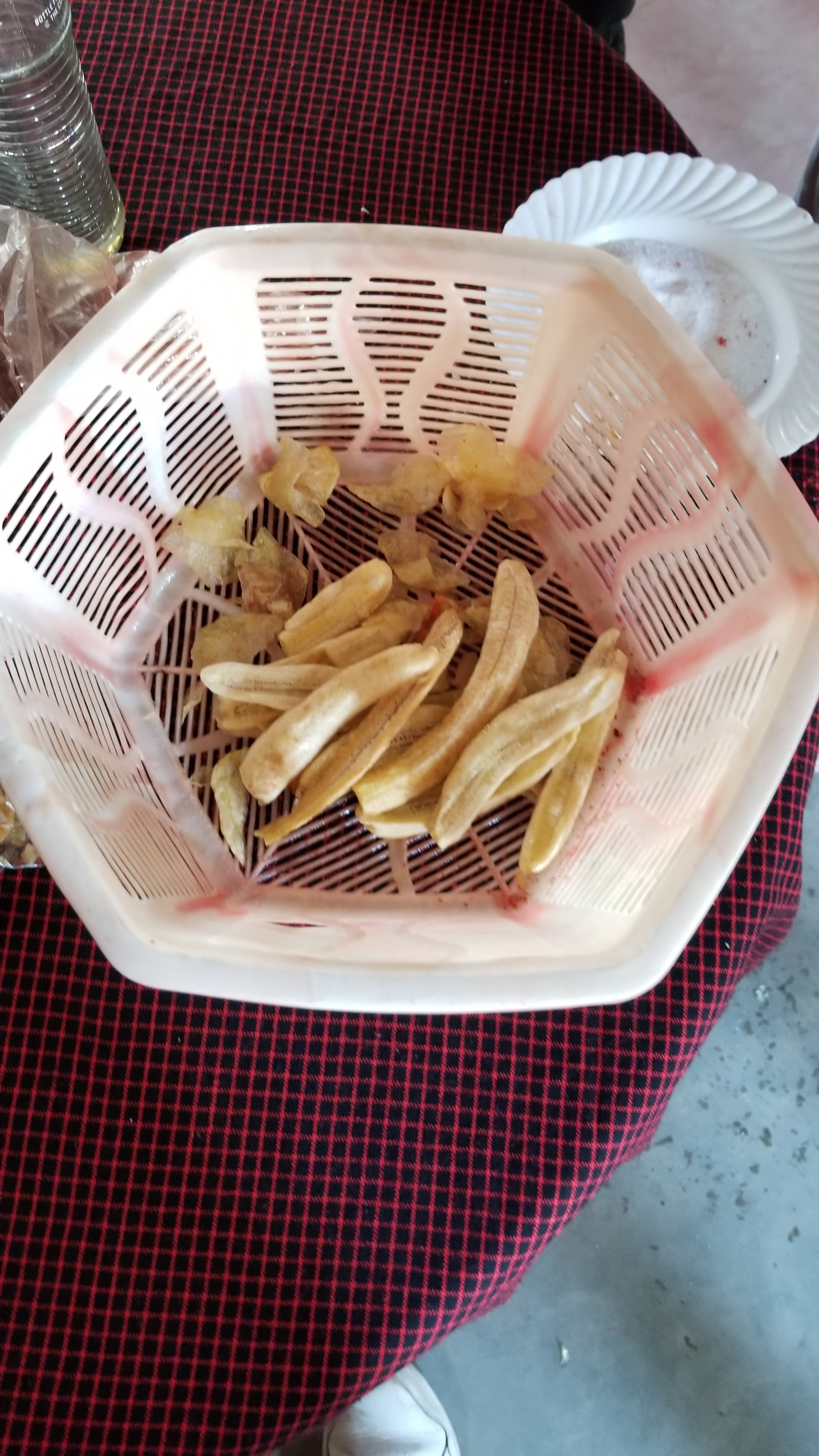
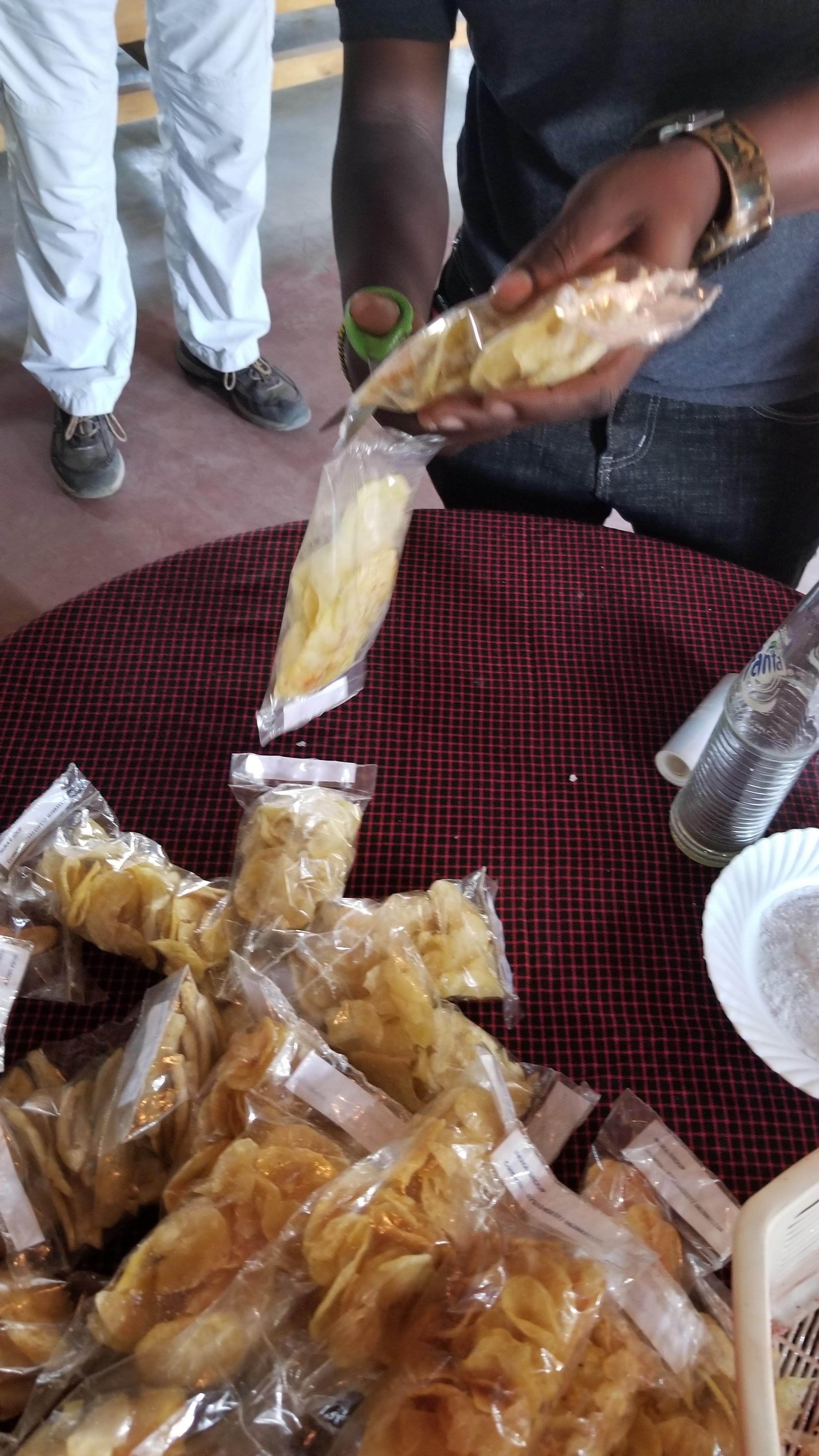
Two or three of the members demonstrated how they fry potato chips. This includes sealing plastic bags by folding them over and melting the edge into a thin line using a candle flame, which makes it look as if it had been sealed by a hot machine. (Stella did the sealing.) They also fried bananas, and we tasted both of them. They were delicious.

We played a game the group introduced us to, in which we are supposed to keep our hands behind our backs, inflate a balloon inside a Solo cup and pick up four more cups using only that inflated balloon, and stack them together. I couldn’t inflate the balloon without using my hands, so I “had” to cheat there, but after that, I did manage to do it. (Erika has video.) The kids were able to do it fairly easily and they were very competitive (although it was all in fun).

Some of the boys danced for us, showing local, non-traditional dance moves. They were just as impressive as traditional dance moves. Stella joined in, matching the boys in their skills and creativity.

Then, several of the kids gave more personal testimonies about their past, before Zoe, and how Zoe had helped them create a better life for themselves. They didn’t dwell too much on their before-Zoe lives, but they weren’t pleasant. They did concentrate on telling us that Zoe had essentially helped them turn their lives around.

They gave us gifts of scarves and bracelets that they had made.

Finally, they invited us to speak. If you ever go on a Zoe trip, you may find yourself standing in front of a group of 15-to-20-year-olds who have just told you of heartbreaking difficulties and amazing recoveries, so be prepared. :) Several of us spoke, which is good, because we all said different things.

At the end, they asked one of us to close in prayer.


The Inuka group’s community project is brickmaking. There is a fair amount of construction in the area (something akin to gentrification, actually), so there is a demand for bricks. They sell each brick for 200 Tanzanian shillings, which is a little less than a dime.

We visited some of the group members’ houses and businesses.

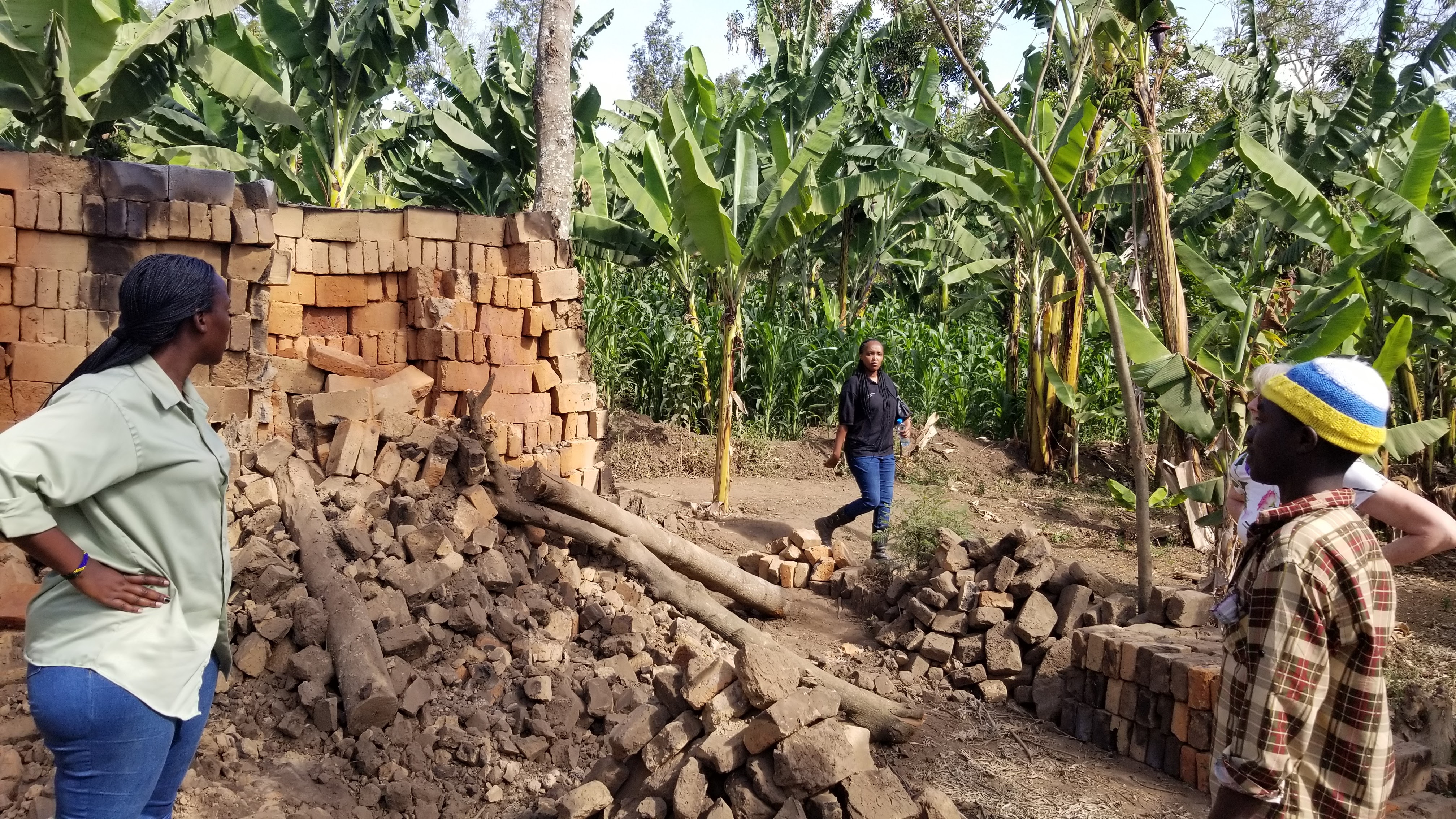
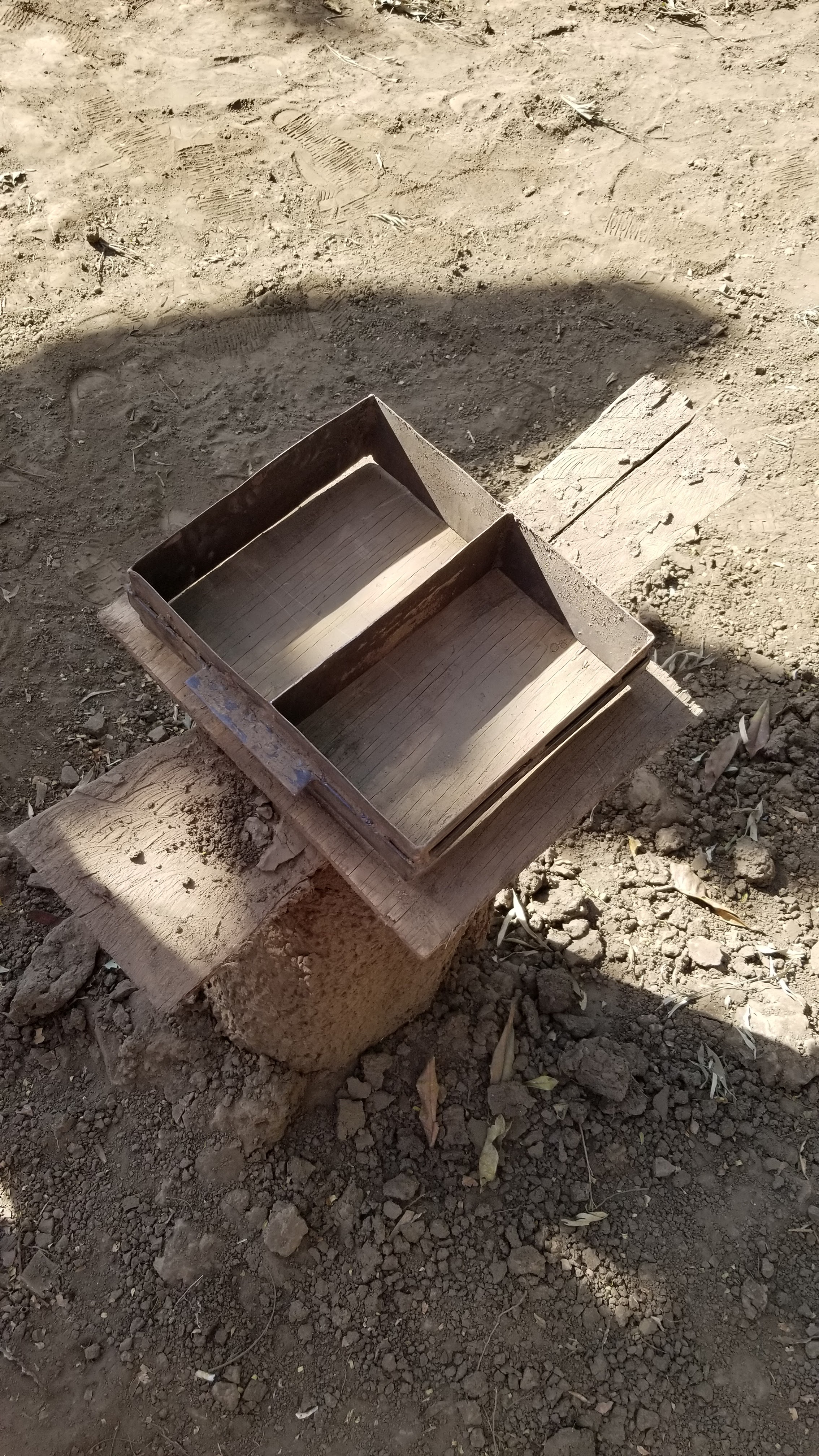
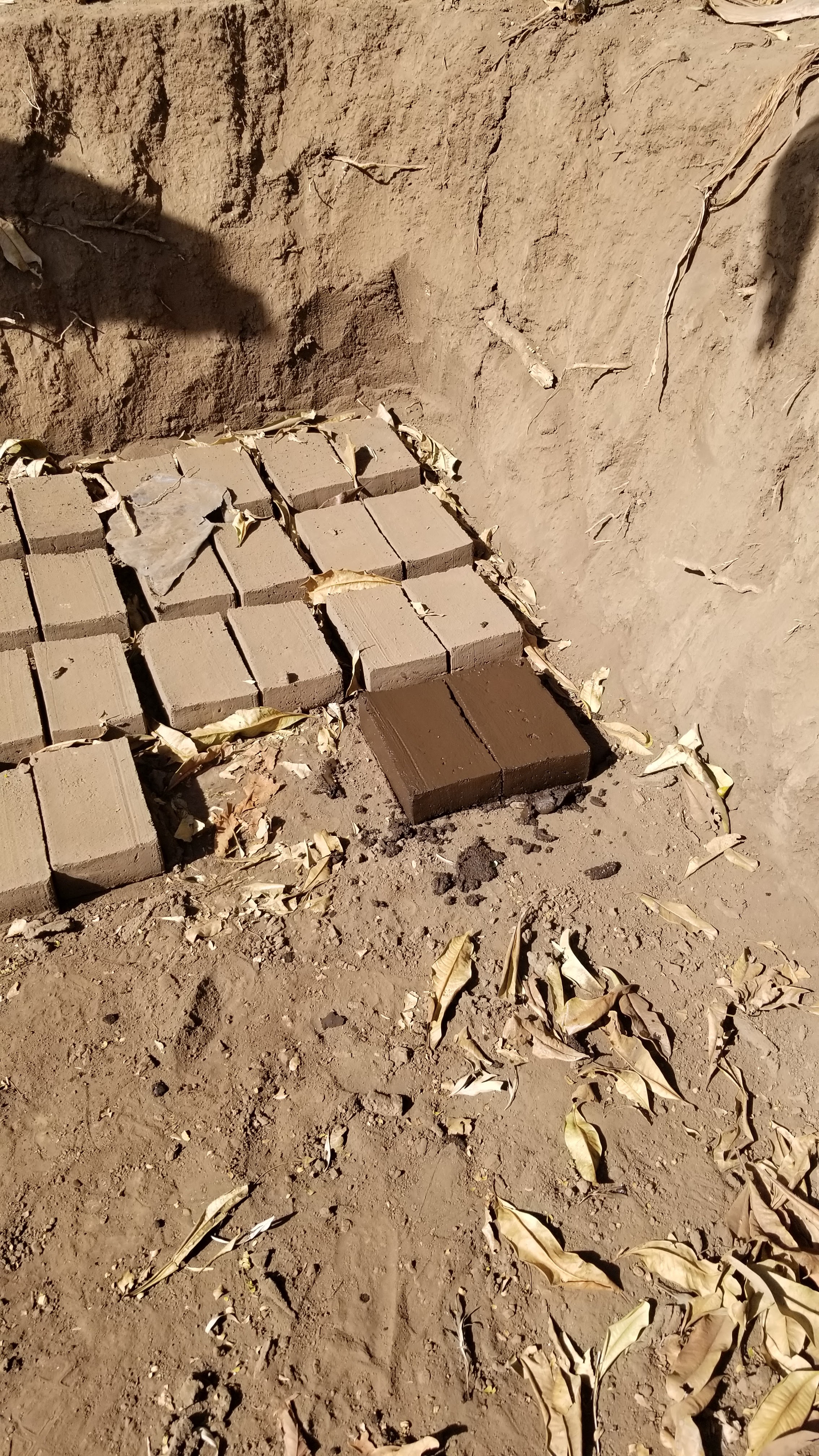
We started with Joseph, to see his brickmaking operation. The fun thing about the brickmaking is that it’s done mostly with materials on site. Local dirt (which is pretty fine) is mixed with imported sand and local water to make mud, essentially. Then, the mud is packed into a mold, and the resulting bricks are dried. After drying, they are stacked into an immense pile with sort of a tunnel (or more) passing most of the way through. The tunnel is filled with wood, and the bricks are fired. After that, imperfect bricks are removed and the remaining pile of bricks is the responsibility of the buyer to pick up. So, there’s plenty of labor for the brickmaker, but at least s/he doesn’t have to worry about transporting the bricks.

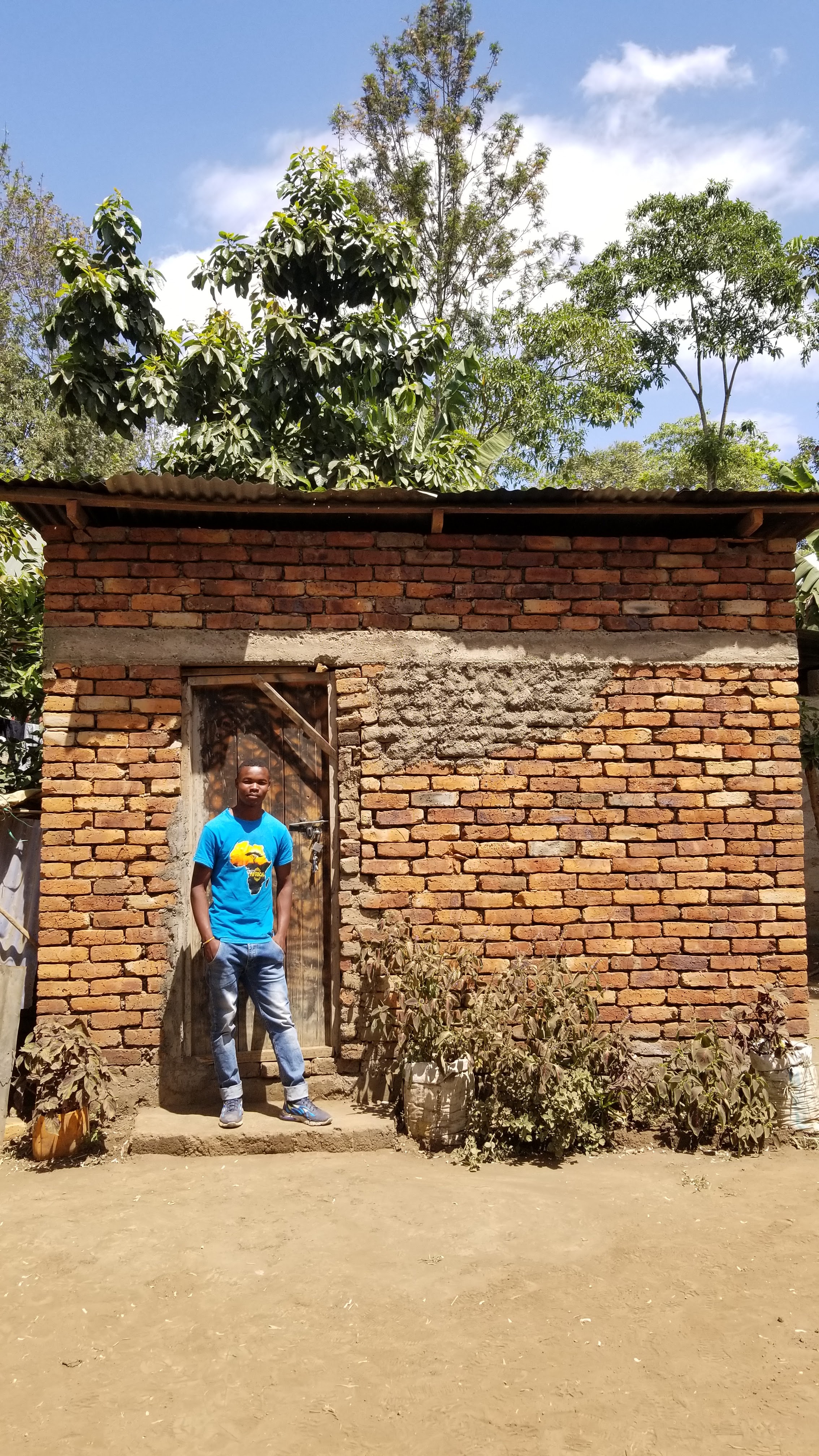
We also saw the new house he built for himself with some of his bricks, with the help of someone he hired (N.B.: in two years, these kids have transitioned from living at starvation level to having businesses profitable enough to allow them to hire others). He is still working on it, but he has a very nice space now.

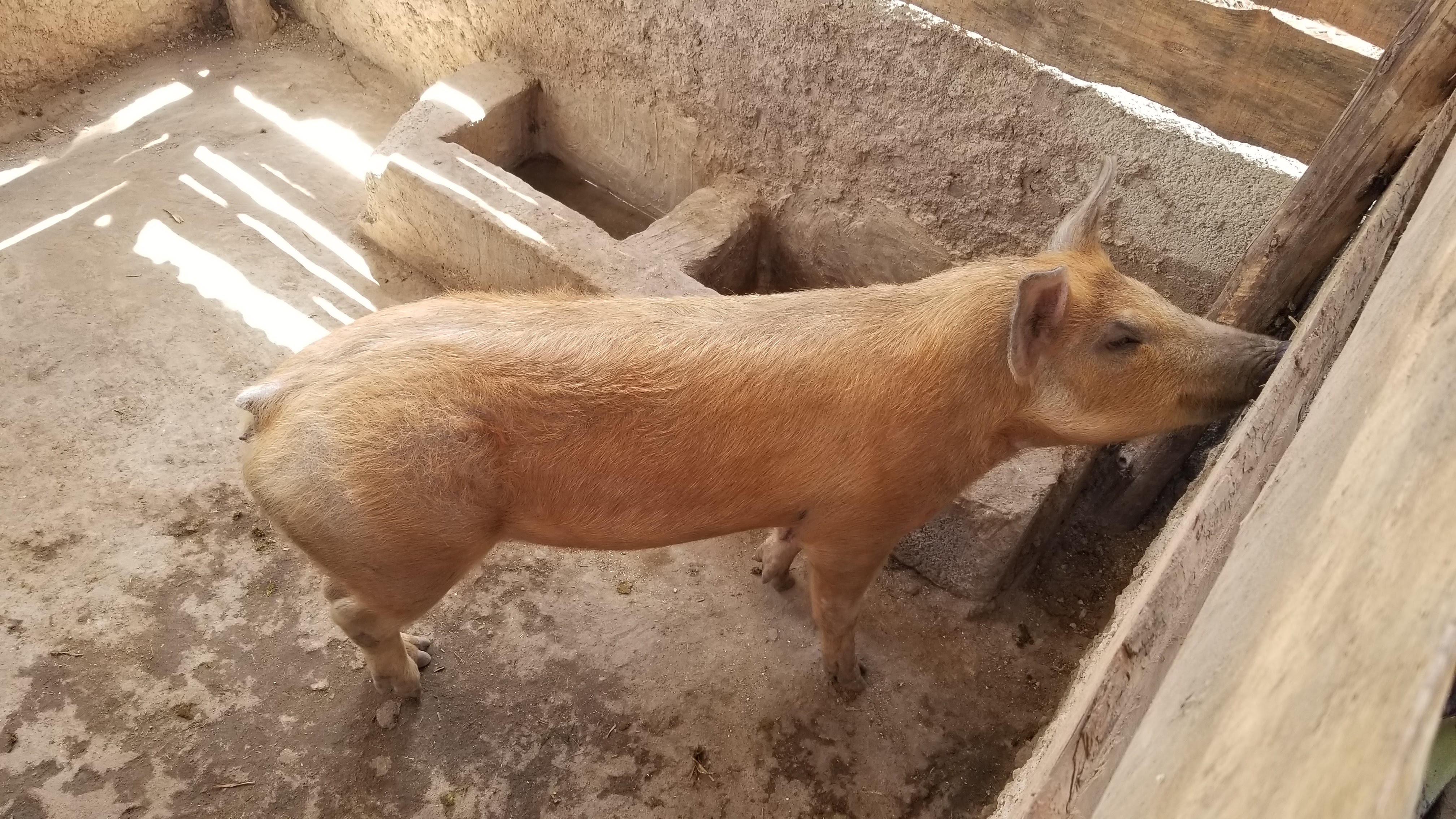
We walked to see Upendo group’s pig project. They have bought a 3-month-old female pig of a breed that bears at least ten piglets every three months for $200. They are raising it to breeding age (after training from a local agricultural extension agent), and then they will rent a male for $100 for a week (I think; although I might be wrong about the figure, apart from the fact that it’s not cheap). When she bears a litter, each member family of the group will receive one of the piglets. Obviously, there won’t be enough piglets for every family to get one, so the group will vote on who gets piglets. That gives everybody enough time to prepare a space for the piglet (and, eventually, pig). This represents good money for the families, since they will then eventually be able to sell pigs for $200 each, which is quite a lot of money. Or they could raise the pig to full maturity and sell to a butcher for a lot more.

We visited Dennis, who has a combination barbershop and movie/music “studio”. That means he downloads music and movies onto a USB drive his customers supply (or buy from him), for a fee.

Lightness has a salon, in which she braids or washes customers’ hair. She charges more for washing because she has to pay for water, shampoo, and the electricity to dry the hair. Part of her entrepreneurship training includes learning how to calculate what her expenses will be, and price the wash correctly.

Lebahati showed us his firewood and brickmaking business, and he demonstrated how he makes bricks. I have a series of videos which constitutes a mini-documentary, which I MIGHT get uploaded by the time I post this blog entry.

He’s been working on an 8,000-brick pile since July 15. It’s pretty immense. If every brick comes out perfect, he’ll earn (/ (* 8000 200) 2500) = $640, approximately $320/month and $10/day. That seems like pretty big money to me, although he has to pay for sand and (probably) water and firewood, and he has to pay himself a decent wage.

So, that’s about it for the day. (Sadly, the videos have not yet uploaded. It may take some time, so I’ll have to make a separate blog post containing them.)

Day One: Overview and Graduates

Today, we got an overall talk on Zoe from Trice. She opened by talking about Joseph. I had expected her to take the tack of speaking of how Joseph was the marginalized child that nobody liked (at least, among his brothers) and how he was able to provide value to his entire family in spite of that, but instead she said WE, the donors, were the ones adding value.

Some quick excerpts from my scribbled notes follow. This will be a bit disjointed because it’s late at night and I just want to get something out without spending too much time wordsmithing it.

The Tanzania program was started in 2019. It was very hard at first to convince the government of the model because the government kept expecting a relief model, or a model of some sort of corruption. The relief model asks, “how many children will you feed?” and the corruption model asks, “are you loaning these kids money with the expectation of a return with interest?”

The answer is, “neither of those. We are expecting to build relationships with these kids, and the return on investment is that they will (likely) never be beggars or need government support again.” The empowerment model gives these kids RESPONSIBILITY. And the Zoe program gets RESULTS. As a result of that, now, when government officials visit, the Zoe program is at the top of the list of things to visit, which is quite different from how things were when they started.

The population of Arusha is 600,000 and the Tanzania Zoe program has touched almost 7,500 kids, so that’s 1% of the population of Arusha.

The program is currently balanced between urban and rural kids. The difference is that the urban kids are sharp, but also unstable in that they sometimes fly hot and need to be talked down, or something in their life changes such that they miss some group meetings.

Another difference between urban and rural is that the urban kids don’t have the available land to plant crops, but they still do plant food for themselves in tiny plots or even containers of soil.

The rural kids are mostly Maasai, and there are some cultural issues that need to be overcome there (mostly having to do with things like forced marriage), but progress IS being made.

The Zoe program is constantly being adjusted as the staff see what works and what doesn’t; it doesn’t necessarily stay in a fixed format. However, the basics are still adhered to, and those are (skip this if you already know it):

  • Basic education on hygiene (in order to stay healthy, obviously);
  • How to grow your own food;
  • The basics of entreneuership and how to run a small business;
  • What each child’s legal rights are;
  • Some trade skill training (e.g., sewing, mechanics).

And finally:

  • These orphans and vulnerable children are formed into a social group, so they can support each other emotionally and with advice, group decision-making, and accountability.

(Ok, stop skipping.)

The facilitators took some questions:

“What is the most surprising thing to you, as a facilitator?”

Answer: Listening to the kids is important. Right speech to the kids is important. The facilitators are worried that they’ll do damage to the kids by saying something wrong. This is very different from relief programs (which many of them are familiar with and may have worked in), because in relief programs, there’s no chance to evaluate effectiveness (other than “how many kids did you feed?”) because you give a kid relief and then you may never see that kid again. The empowerment programs are about building relationships — the facilitators know their kids and can see them grow.

The mentors (community members who volunteer to mentor the kids regularly and frequently, since the facilitators can’t be present all the time) are really important.

“Why so many orphans?”

It’s hard to say, but Trice took a stab at it.

  • Poverty — parents die young;
  • Polygamy — a single mother may get sick and there’s no dad to help;
  • HIV — there is still some stigma around getting diagnosed, so people don’t get diagnosed in time;
  • Malnutrition — as in poverty, parents die young.

We went to visit some Zoe graduates. They are doing very well. Many of them run multiple businesses and/or have moved away from Arusha because they found better markets for their goods and services elsewhere. They have kept their siblings in school and several of them have hooked up their grandparents with running water. They have been out of the program for almost two years, so I was particularly impressed that they actually came back to present to us — it speaks to me of how important this program is to them.

We heard their report from an Islamic member of the group, and several members of the group were Islamic. I take pride in that personally because that means Zoe is open to all. It is a Christian organization and we are showing the love of Christ, but we’re not requiring anybody to convert, nor are we even pushing it. I think it is good enough that as many people as possible know that God loves them, full stop.

A quick run-down of some of the things the group did when they were still in their 3-year program: selling “chips” (fried foods like potatoes or a ground-bean-and-onion mixture, and usually extending to chicken); selling clothes; selling chicken; selling fish; selling maize, beans, and grains; selling shoes; selling jewelry (I think), selling fruit and other produce; vehicle repair.

Their achievements include: diversifying their businesses; better housing; more education; pit latrines (not sure what that’s a step up from); tailoring training; shifting to other locations to take advantage of better opportunities.

Then, about ten members of the group spoke of their individual achievements, which I won’t repeat here. Finally, their mentor spoke, and a couple of things she said were:

  • These kids were loved and supported (relationships were built); and
  • These kids had a “different spirit”. I believe that meant that they had a different “spirit” from other kids who were in relief programs, and this “different spirit” is a good thing.

Finally, Trice spoke again, and she spoke of the story of the ten lepers who were healed by Jesus, and only one turned back to thank him. I’ll have to think on that some more.

Made it to Arusha

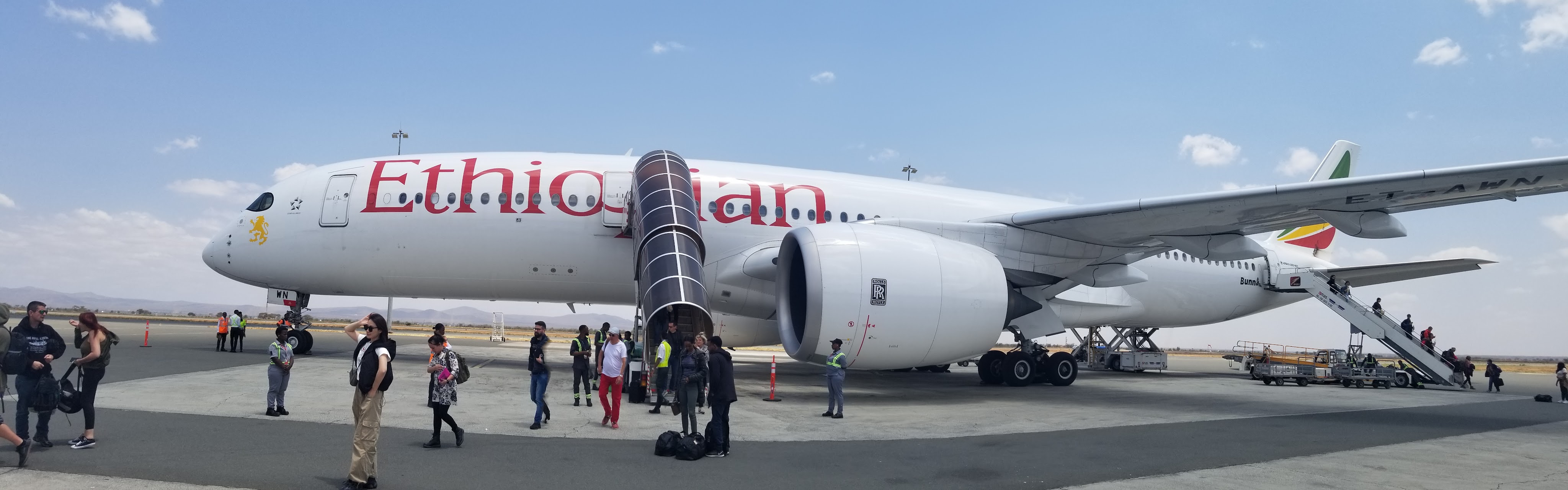
We made it to Arusha, and I made it onto the internet, finally. This is us, disembarking from the plane (Airbus A350) in Arusha. I just meant to take a snapshot, but the plane was too big, so: panorama.

We met Claudine, one of the facilitators (social workers) here, and also Trice (which comes from “Beatrice” but is pronounced like the second syllable of “Patrice”), the director for Zoe in Tanzania. (By the way, while on the topic of pronunciation: Tanzania is pronounced “Tahn-ZAHN-ee-ya” by the locals.) There will eventually be 14 of us, the last four arriving while the rest of us conk out. Apex UMC is the biggest contingent, I believe. For four of us, this is our first Zoe trip.

We had the chance to ask Trice some questions, so I asked about other expenses the Zoe kids have, other than food. The answer is “none”. When they start the program, they are living at starvation level, so any money they manage to get goes directly to food.

Then Claudine took us to change money (2,600 Tanzanian shillings to the dollar in denominations of 2,000, 5,000, and 10,000, so the money expanded in volume pretty quickly). After that, we took a stroll around downtown Arusha. I regret not taking pictures. I will try to be a better tourist in future. The population here is over 600,000, and it’s pretty busy with traffic and motorcycles and jitneys (three-wheeled, enclosed-ish cab). There’s not really a sidewalk (usually), so pedestrians just mix it up with traffic. There’s a lot of horn-blowing, but it works. We had a chance to walk around in a local market, but we passed it up, being pretty jet-lagged. People walk here much more than they do in the US, unsurprisingly.

After that, supper (which only some us barely stayed awake for) and then immediate crash into bed. Now it’s bright and early, 6:30 am. I’m not normally an early riser, so this may be the only early-morning post.