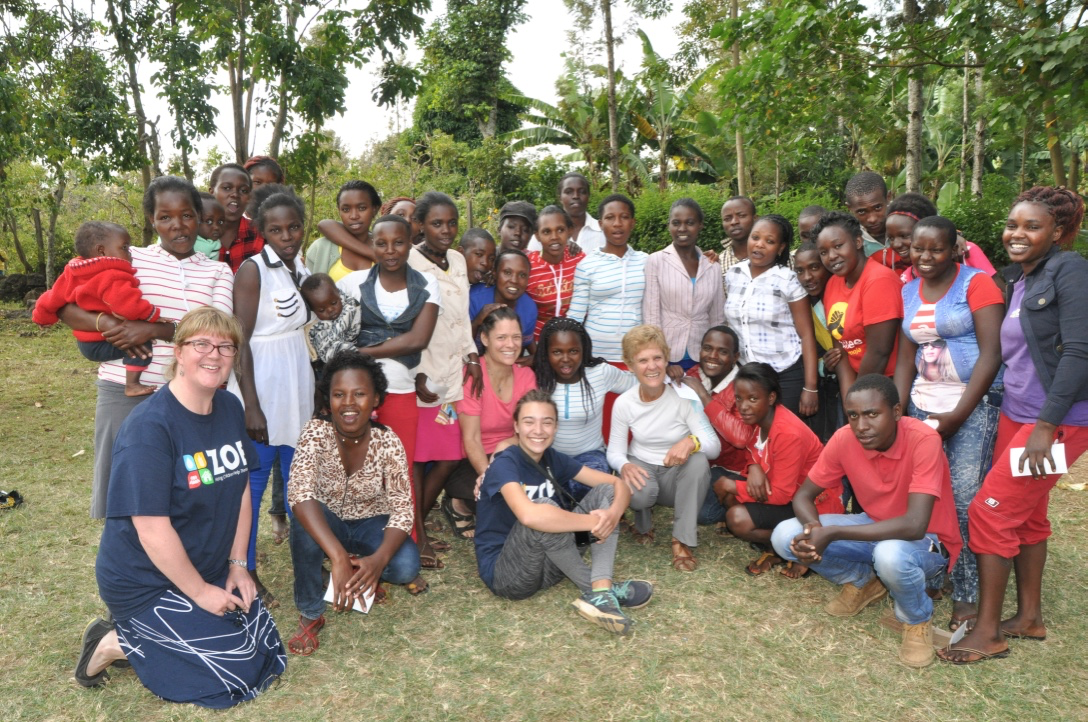
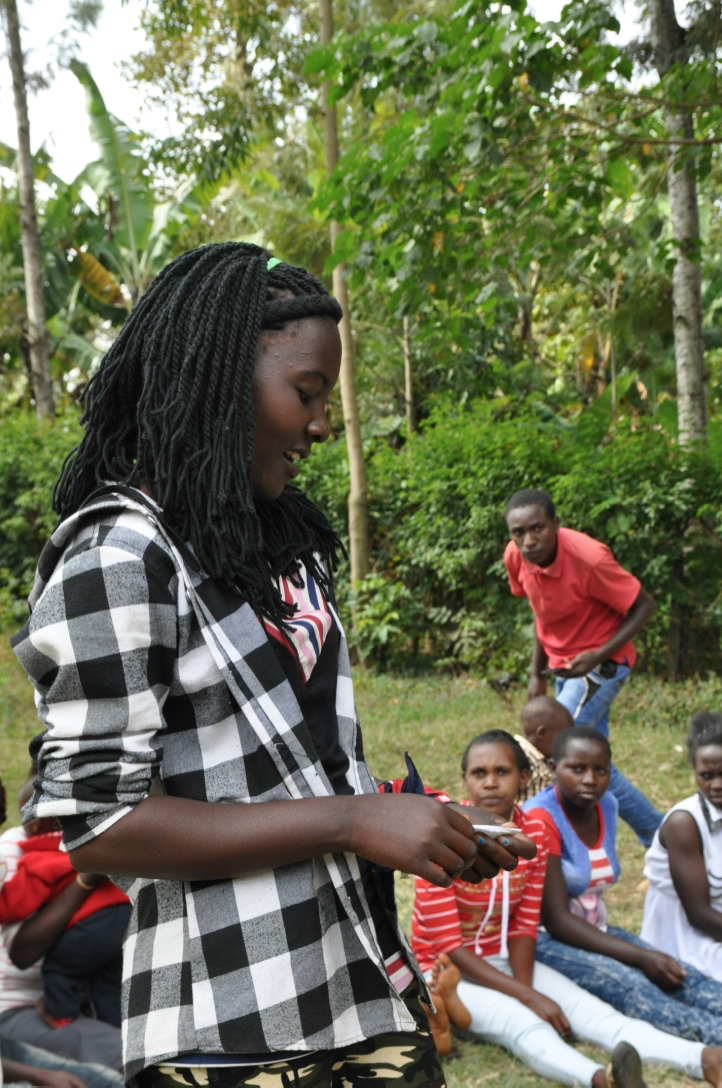
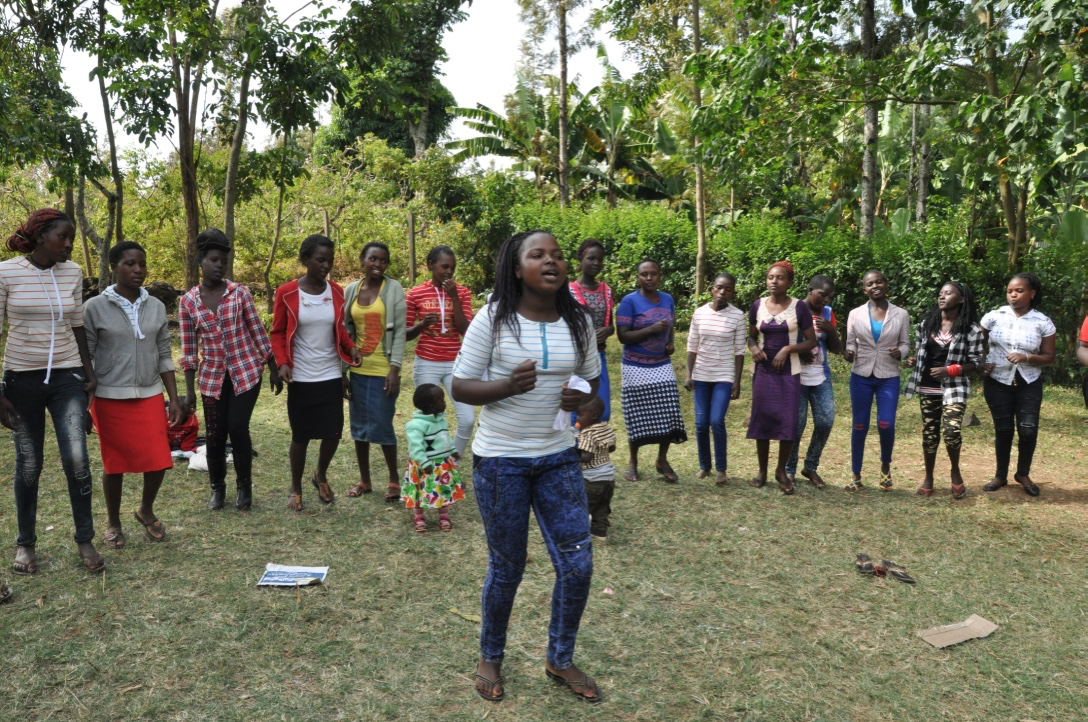
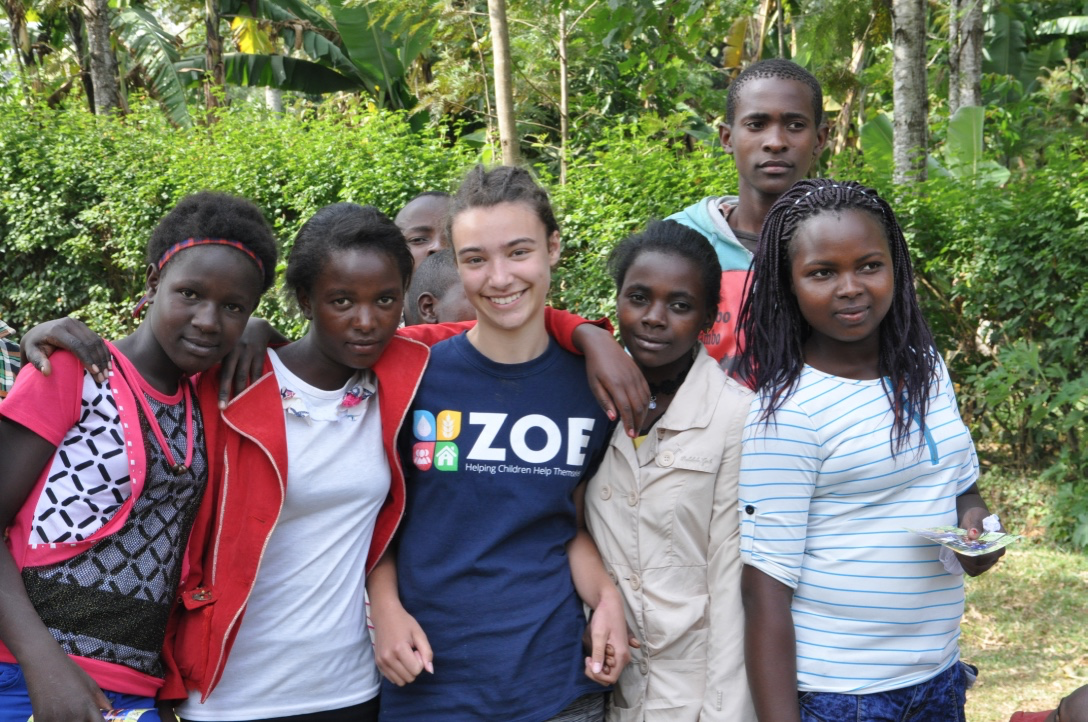
Day Three, 6/23, Icyerekezo Group, partnered with First UMC of Hendersonville NC

Erika’s notes on this day, since I seem to have taken none [with additions John makes in square brackets]:

Because the NC group arrived a day later than planned, Sunday, which was intended to be a day of church and rest, became a travel and group visit day.  Albertine, one of the Program Officers, joined us for the trip. (We found out later that Albertine was one of the three staff members who had worked with Epiphany before Zoe came into the picture.)  

On the way to Huye, we stopped in Ruhango, to visit the Icyerekezo Group.  This group is partnered with Erika’s parents’ church, First UMC Hendersonville.  

First we stopped at Charlotte’s house. [It’s a little bit unusual to stop by a single group member’s house because that visit can elevate that group member above the rest and cause resentment, but Epiphanie told us that it was ok in that particular area because they’re more easy-going about that sort of thing. The house is really more like an apartment in a larger collection of small adobe buildings arranged around a courtyard. The place where it was looked kind of like this:
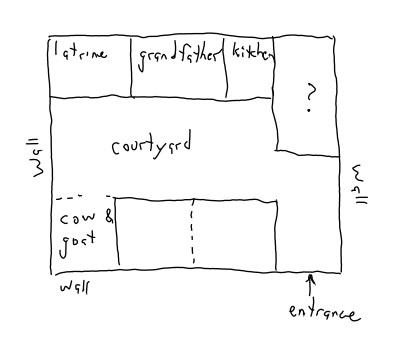
charlottes-house

Charlotte’s apartment was the one immediately to the left of the entrance. The courtyard and entrance were open, with the entrance being sort of a doorway/gateway into the courtyard. This structure originally belonged to her family or to her grandfather. I never got a look into the kitchen (or any of the other structures) but I heard other members of the group who did describe it as “rough”. There was a very smoky smell when they opened the door, and I was reminded of a story I read a while ago stating that smoke from indoor cooking is a major health hazard around the world. We saw plenty of houses with old tile roofs and no chimneys and smoke simply seeping up between the tiles.] 

Charlotte is 20 and is responsible for her grandfather [who has some unnamed debilitating illness], her brother, her daughter and another child she adopted after she joined Zoe.  Charlotte took us into her house to show us her storeroom and tell us her story. She lost her mother when she was 5 and her brother was just 5 months old.  She didn’t know how to take care of a baby, she had no milk for him and he cried a lot. She would sleep on her belly with him strapped to her back, just to get him to sleep.  She survived by begging.

At one point she was very hungry and hadn’t eaten.  She went to a man to beg for food. He gave her food, but over time, when she couldn’t pay him back, he asked her for sex in return.  She didn’t know she would get pregnant, but she did.  

Then Zoe came along and she felt like she had a mother again.  But she was quiet and hardly spoke. The Zoe staff encouraged her to talk, but she wasn’t ready.  Then one night she had a nightmare and called Albertine. She asked Albertine to come over, but to come alone.  She was finally able to share her story.  

Through Zoe she has learned about balanced meals, planting a kitchen garden and preparing food.  She had a dream to have a cow so she could have fresh milk.  

Charlotte loves that Zoe believes in them and values what they can do.  The staff doesn’t treat them like children. With Zoe they are valued and respected.

She grew up alone, feeling like a tree or an animal.  Now she knows she is a human, a girl and loved by God.  With Zoe she got parents and brothers and sisters. She loves the group because they come together to help anyone who needs help.  They all work together at each others’ farms.

Charlotte grows ground nuts [what we call “peanuts” here].  She sells some, keeps some as seeds and eats some.  People eat them roasted or as peanut sauce on rice, bread or potatoes.  She can harvest 2 times a year. 1kg of beans sells for 300-400 francs, but 1kg of ground nuts sells for 1,500 francs. [The exchange rate, in case we haven’t mentioned it already is approximately 1,000:1 francs:dollars, so that’s about $1.50.]

Before Zoe, she didn’t know what meat tasted like, but now she gets it about once a month.  

She also has a business selling bananas and she learned about the value of saving.  Her principal: Don’t eat all your profits. No matter how little your profits are, always save some.  She likes to invest in livestock and she saves in the group fund She started with rabbits, and had 30 after six months.  She took money from the sale of rabbits and from the group fund, took out a loan from the group and used the money to buy a cow. [We got to see the cow, a heifer, which she keeps in a neat, tiny stable (I use the word loosely) in one corner of the courtyard where she lives. There wasn’t much manure because the manure itself is a valuable fertilizer for crops.] In her second year she rented a plot to grow cassava. She will harvest her first crop in September. She has given each of the kids a chicken to take care of and now each has 4 chicks.  

The boy she took in was a total orphan with no family.  Now she feeds him and sends him to school. Now he has a family.  

There was a time when she would rather have died and even considered suicide.  Now she can smile and laugh and is happy to be alive. She wanted to give back as soon as she was able.

Her latest business is making baskets.  She buys simple baskets and decorates them by weaving papyrus on the outside to increase their value.  She’s now able to pay for electricity in her house. The electricity allows her to work on baskets at night and run her other businesses during the day. [She is justifiably proud of the electricity. We saw a brand-new meter box on the outside wall of her house and single, bare LED bulb in her sitting room.]

[By the way, the kids we see are very much about the value-add (have I mentioned this?). They buy something, add value to it, and then sell it for a profit. Wholesale to retail. (Many of them actually dream of becoming wholesalers instead of retailers, moving up the supply chain. They know what’s what.) What I call “bean arbitrage”: buy dried beans cheap when they’re in season, store them, and sell them at higher prices when they’re not in season. Whole cassava roots which they then grind into flour and sell at a profit. And Charlotte’s basket-decorating business.]

Each time Charlotte achieves a dream, she thinks about her next dream.  Next on her list is to buy a bicycle. She won’t ride it, as women don’t ride much, but she will hire a driver.  When she doesn’t need it for transporting her goods, she will use it as a taxi.  

She told us she had heard the saying about teaching a man to fish.  She very proudly said, “Now I fish for myself”. We then went out to see Charlotte’s goat, cow and chickens.  

Before heading to the group meeting, we stopped by Salimani’s house. [This is the story I told in my “Lost Child” post.] Salimani left the group early, but they kept looking for him and they brought him back into the group in January.   They welcomed him back and helped him build a house. Salimani showed us his house, his three bunnies and his goats.  He was very happy [and proud].  

We got to the government community center where the group meeting was to be held.  We stopped for a bathroom break and found… shopping next door!!!! Several members of the Icyerekezo Group, members from another group and some graduates gather at the center to sew and sell their fabric goods and baskets.  We did a lot of shopping. We then went to the group meeting. We had limited time because we had an appointment at the museum, but Etien, the MC for the group, told us a bit about the group. It is made up of 27 families with 87 individuals and is in its second year.  He told us how they work together and play together. He also told us that Zoe doesn’t discriminate. They include people with disabilities. At that, 8 of the young men came up to show us what they can do. Two held a net while the other six played volleyball. One of the members, Leo Pierre, has a permanently damaged left hand. Another child lost one leg above the knee. All six sat on the floor to play so that they were all playing on the same level. There wasn’t time for them to play a full game, but they were able to show off their skills and it was a joy to see them playing. [We saw some very serious spiking and defense. These kids were definitely playing for real.] 

After the game Leo Pierre, who is the Chairman of the group, told us his story.  Leo Pierre never knew his parents. They died when he was little and he moved from home to home.  At one point his hand was injured and he was not taken to the clinic, so it didn’t heal well and has permanent damage.  Now he is president of the Youth Center and conducts many trainings for other youth.  

Leo Pierre told us how Zoe has taught them to care for one another.  Siblings have been supported to start their own businesses and the group members have moved up an economic level [and they are proud of that].  (From level 1 to level 2/3.)  [As I understand from Epiphanie’s description, in Rwanda, level one is basically “extreme poverty and unable to feed oneself, requiring government support”, while levels two and three are basically some variant of “poor but self-sufficient” with maybe some measure of ability to be part of the (manual?) labor force.]

Epiphany said we had time for a couple of stories.  Salimani started with the group in July of 2017, but it was harder than he thought it was going to be.  As the program facilitators were leading the group through the dream process, Salimani said, “How can I eat dreams?” and he quit the group.  He went back to living on the streets, but the group wanted him back. When Charlotte found him she brought him back to the group and they welcomed him in.  He has been back with the group since January, he has a new house and he invested in bunnies and goats. (One more example of how the kids take care of each other, support each other through thick and thin, and never give up.)

Stephanie is 20.  She had an unwanted pregnancy when she was 17.  Both she and the baby suffered from malnutrition.  She was covered in sores and dropped to 40 or 45 kg.  Since she joined Zoe, she started a business selling doughnuts.  She is now healthy and weighs 80 kg. She has been saving and has enough to build a house in the next few months.  Then she will start saving for the education of her child. Before Zoe she had no parents, no siblings and no friends.  Now she has all three.

The group presented Erika with a tablecloth for Hendersonville FUMC, a bag for herself and a painting for her parents.  The painting is of a child drinking milk. Etiene said, “We were hungry children, but you have given us food and water.”  The group also presented the other women with small bags and the men with great hats!

Then Charlotte came in with one of her baskets and presented it to Erika for Hendersonville FUMC.  Not only is it a beautiful basket, but it was full of groundnuts!

After the group meeting we drove on to the Ethnographic Museum in Huye.  Epiphany had arranged for a cultural event for us with a group that presents traditional dances with singing and drumming.  We then had a guided tour of the museum, learning about pre-colonial times in Rwanda.  

We then checked in at Mater Boni Consilii, a hotel run by the Catholic church, had dinner and a group meeting and turned in for the night.
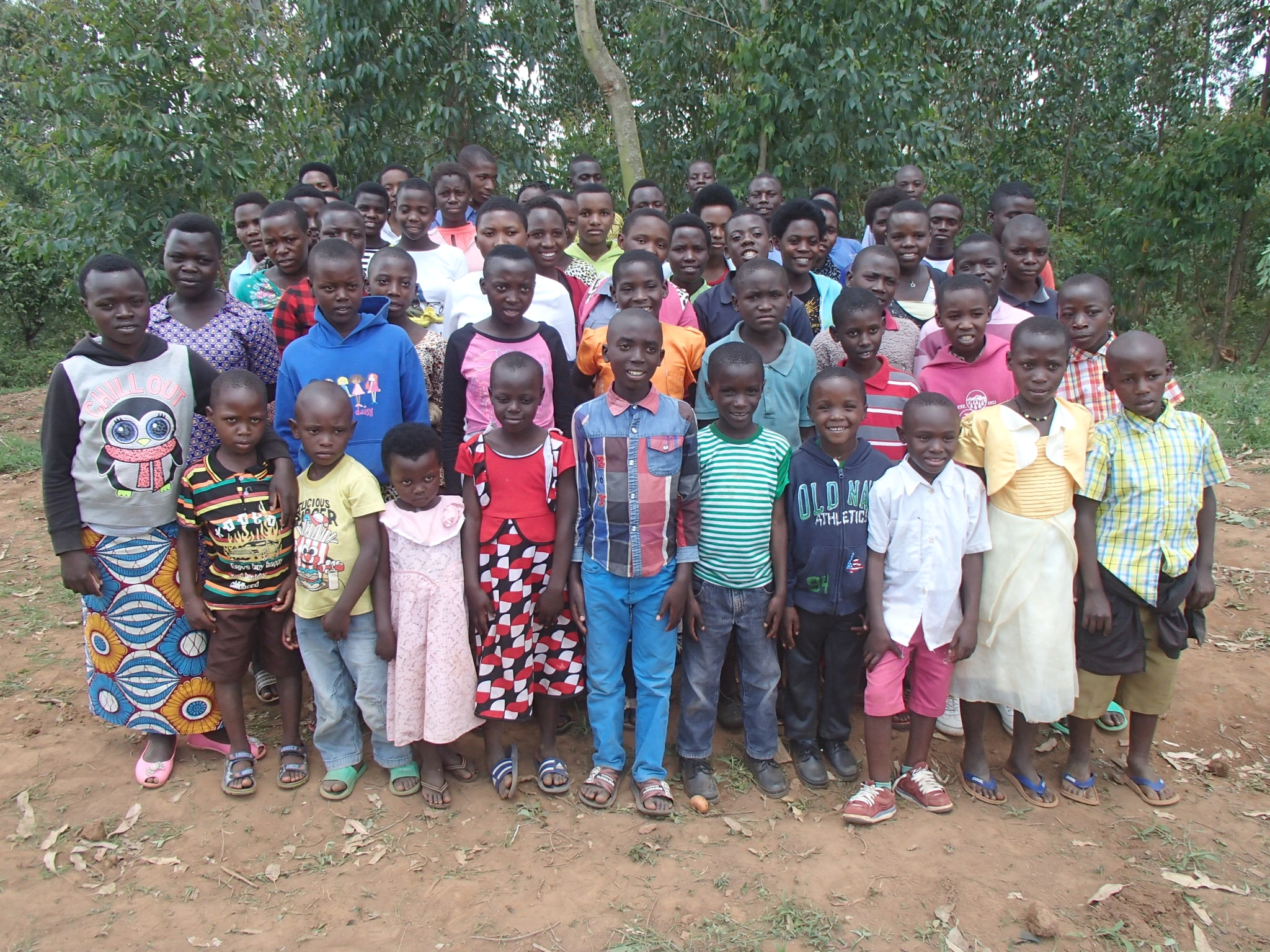
Day Two: Saw our (UUMC’s) Imbaraga Power group

Two days ago, Saturday (June 22nd), we visited with the group UUMC partners with, Imbaraga Power, in the Cyumba sector of the Gicumbi district. It was quite an affair.

Each member of the group (each family, that is) has by now demonstrated that they are motivated and willing to improve their situations, and have received some basics such as mosquito netting.

This “demonstrate their willingness” sounds harsh, but there have been problems in the past when relief organizations simply hand out mosquito netting to people who need them. Some of the people simply sold the netting. Others used them as fishing nets, and still others used them as a canopy to protect chicks from hawks. And of course, after that, some of them got malaria. So a better approach is to train them in hygiene and sanitation and see that they take concrete steps to improve, after some education. Then, they get the nets, and they know how to use them and how important they are. (Speaking of which, housekeeping has just come by to “refresh the room”, meaning, close the glass door and the curtains to the balcony to keep the mosquitos out. I, of course, am still sitting out on the balcony typing, because I am a crazy mzungu, a white person. Maybe I don’t deserve mosquito netting.)

(The same issue as above also applies to Bibles simply handed out. The pages get used as rolling papers. So, instead, Zoe children must buy Bibles, if they want them. Because they spend their own hard-earned (literally) money on them, they value them more.)

AT ANY RATE… the next step for the kids is to plant a small “kitchen garden” crop, which they all have done, using seed given to them by Zoe, frequently on rented land. (The initial seeds and land rent are fronted by Zoe in the form of a small grant.) They decide which crops to plant after receiving advice from a government horticulturist on which crops are appropriate and how to plant them.

These crops mature in a few months and supply sufficient food to nourish their families and have some surplus which they can sell. Half of the surplus goes into a group “table bank” or community bank, which both saves money for future group activities and makes funds available to group members for micro-loans used to undertake more income-generating activities. The dividends from the community bank are shared with the group members every six months.

While the crops mature, they also start another income-generating activity, which might be something like acquiring sandals at wholesale prices and reselling them at retail prices. Or starting a kiosk that sells sundries such as cassava flour, soap, seasoning spice packets, etc.

At the market stalls

We went to the stalls where they sell their wares, and took some pictures, which I have to upload later, when the wifi is better. We were there a few hours before the market normally opens, but they had gone ahead of us and gotten set up so they could show us what it looks like. They sell skirts, kids’ sandals (cheap, plastic ones, which they get at wholesale prices), produce and sundries such as amaranth leaves, salt, and cassava flour, and reusable shopping bags which they have woven from colored plastic strips. We bought several of those last ones because our favorite trendy cooperative grocery store (AND our CSA) do not offer plastic bags to carry groceries home in. (Plastic bags are also banned in Rwanda, by the way. [Alsø alsø, by the way, there is no litter in Rwanda. It’s pretty amazing.]) So, now we have a conversation piece about Zoe when we go shopping.

Other members of our group also bought vegetables from the kids. It’s possible to take these back to the hotel and get them to prepare them for us. A few days later, one of us (Josh, I think) suggested we buy cassava flour to try, and we did. Most people think it smells terrible and tastes about the same, but I actually didn’t mind it. It was prepared by simply mixing with hot water (or maybe boiling — I didn’t see), and it’s traditionally served with steamed amaranth leaves, which is kind of like spinach. (We had some of that, too.) Taken together, I think it’s actually pretty good.

For the curious, here’s the lowdown on cassava: https://www.medicalnewstoday.com/articles/323756.php. Quote: «It can provide more calories per acre of the crop than other cereals, which makes it a very useful crop in the developing world.»

We heard from several of the family heads in the group while we were at the market stalls:

Claudine (19, with two siblings) wants to buy (not rent) land for growing potatoes and beans (dried, probably).

Jean Nepo (20 years old, with two siblings):

  • Sells rides on his bicycle (so it’s a bicycle taxi — we’ve seen several of those; they have very nice padded seats for one or two passengers and footrests for the passengers so they don’t have to hold their feet off the road and away from the chain for the duration of the ride);
  • Makes money every day to provide for his family;
  • Uses the group fund to pay student fees and for health insurance for his siblings;
  • Has invested in farming beans and sorghum on rented land;
  • Hires neighbors to harvest his crops because he’s so busy with his bicycle taxi business.

All of this in his first year.

(Health insurance is $3 per year per person in Rwanda, so it’s pretty close to “socialized medicine” as we used to call it, or a super-cheap “government option” as we might call it today.)

Before they join a Zoe working group, orphaned heads of families are frequently unable to pay school fees for their younger siblings, or buy the materials needed for school, so their siblings drop out of school. Obviously not good for them or for the communities in which they live. Likewise, if anybody gets sick and has no money, they usually will receive no healthcare, unless they have insurance.

(Note: in the following micro-accounts, the numbers of siblings may be off. I think there may sometimes be off-by-one confusions in sibling counts. For instance, I have one sibling, but there are two siblings in my (childhood) family.)

Jonathan has planted potatoes on a rented plot of land. He expects to harvest them in August.

Jean Claude is 17 years old and has two siblings. He has bought a goat as an investment.

Yvette is 19 and has two siblings. She makes the shopping bags we bought. She has been able to buy a sheep, which has given birth to two lambs.

Denyse (17 years old) sells sweet potatoes. She is able to buy food for her family and put away some savings in the group fund. She expects to buy a sewing machine at the end of July. Since she already knows how to sew, having worked as a seamstress earlier, Zoe will match her funds to help her buy the sewing machine.

Note that Zoe emphasizes to each orphan that they should not eat all their profits. They must save at least a little bit from their profits, whenever they realize them.

Denyse (19 years old; we have several Denyses) lives with her grandmother. (As I may have mentioned earlier, sometimes these children will live with a grandparent or a disable parent.) She sells skirts. From her profits and savings, she has been able to buy a sheep for her grandmother, which has just given birth to two lambs. This gives her grandmother something to do (taking care of the lambs).

Denyse (21 years old) has two siblings. She sells cassava flour (cassava is a starchy root which gets dried and ground up), corn flour, potatoes, salt, and soap. She wants to add fish (a tiny anchovy-like fish from one of the nearby lakes) and peanut sauce to her inventory. She has also planted potatoes on rented land, and expects to harvest them this August.

Anet (19, with three siblings) has set up in a kiosk owned by a church, and strategically located between the church and a nearby school. She received a goat from Zoe, which then had kids. She kept the kids and sold the mother, and she expects her little flock to expand. She only eats a little of her profits, as she puts it. She says she was dying of hunger (this is not the hyperbole we normally use in this country) and now she is a successful businesswoman.

At the group meeting

The entire group greeted us with dancing and synchronized clapping and a song which translates as, “Come in, you are blessed. Sit down, and be welcome.” (I think I got parts of it on video, but there’s no way it’ll get uploaded over this hotel wifi, so that may have to wait until I get home.)

Yvette led a prayer, and then we introduced ourselves. They thanked us, and then there was lots more joyous dancing, to show how happy they were that God had answered their prayers.

Then the chairperson, Beatrice, spoke, introducing her own staff. (I’ll copy and paste from Erika’s notes from this point on.)

Victoire is the mentor, Yvette is the VP, Harriette is the secretary and Jean Nepo is the treasurer.

Beatrice told us about the group.  Before Zoe, most of the children were total orphans, meaning they had no parents. [The U.N. uses the term “orphans and vulnerable children” (OVCs) to encompass total orphans and children living with an adult who may be too ill to really help. — John.]  They were living in extreme poverty, were unable to attend school and were hungry. Most of the group lived on the street, begging.  They had poor hygiene. Then they met Zoe and their lives started to change.

For Beatrice, the first thing Zoe did was give her hope through the Jeremiah 29:11 scripture.  She began to believe in hope for the future so she committed to work hard and to live.

Each of the children got a life principle to help them achieve their dream.  The Zoe staff gave them an opportunity to choose what they wanted to do and to develop a business plan, and everyone got a grant to start a business.  Some of them are still in vocational school.

Now that they are earning money, their siblings are back in school and they have health insurance.  They went through nutritional training, earned vegetable seeds and have planted kitchen gardens. They helped each other clean their homes.  Before Zoe they were sleeping on floors, but they learned how to make beds and now they sleep in beds. [I think this is a health issue, having to do with pests in the soil. — John.] They’ve also build shelters so that their animals are not sleeping in the house anymore.

The group has been trained on birth control and sexual health.  Before Zoe, men could tell them all sorts of lies: that they wouldn’t get pregnant during the week, that they wouldn’t get pregnant if they were holding a specific talisman, etc.  Men would also abuse them and take advantage of them when they were trying to find work or food. Now the girls know how to protect themselves. Now they have the knowledge and strength to say, “no more sex until marriage” or to insist that men use condoms.

Epiphany talked to the group for awhile and we could tell she was asking them questions.  After a bit one of the girls spoke up and told us how men had previously taken advantage of her.  She then said, “Thanks to Zoe, no man can make me have sex for money because I can make my own money.”

Jonathan told us that before Zoe he was a “bad boy”.  He lived on the streets and sometimes people would give him money to run errands for them, but he would take the money and run away to another place.  It was not in his nature to be a thief, but he was hungry.

Now he no longer has to steal for food.  He can earn his own money. Once he started earning money and learned about Jesus, he went back to his home village to ask for forgiveness.  He intended to pay back all the money he had stolen, but when he asked for forgiveness and took responsibility for what he had done, his former neighbors forgave him his debt. [This really blew me away. — John.]

Henriette is 20.  Before Zoe she was very poor and had to beg her neighbors for food.  She would ask to do work, but they said she was not strong enough. She would go 2-3 days without eating.  Now she watches every day and is able to care for her two siblings. She sells fruits and veggies and attends sewing vocational school in the mornings. Now people who wouldn’t help her ask her for money and she shares. [More amazingness. — John.] She rents a plot in the valley and hires 4-5 women to work on her farm. She had never eaten veggies before, but now she grows her own and eats them every day!

Some of the older kids took 4 of the younger kids outside the building.  When they came back in, each of the young kids was carrying a basket with a bunny in it as a gift for the UUMC visitors (along with some greens for the bunnies to munch on).  Lots of oohing and aahing ensued, and many pictures were taken. In the end, Epiphany translated Erika’s thanks to the group, told them that as much as we loved the bunnies we had a very long trip home and wouldn’t be able to take them on the airplane with us.  We asked that they keep them for us and that we looked forward to seeing how they multiplied next time we visited. They took the bunnies back, but left the baskets for us to take home as gifts. They then gave each of the US team members bracelets they had made which say Thank You.  John shared a few words with the group and told them how proud we are of them and how impressed.

One of our other group members, Kelly (from Bayside Church, near Sacramento, California), blessed us all with a beautiful prayer and the meeting broke up.

As we were leaving the room, I opened the sheet with the picture of the group and the members names.  Some of the kids gathered around fascinated by a picture of themselves. More and more of the kids came up to see.  It was fascinating to watch. (John was also able to show some of them the blog page with the picture of the group on his phone at the market, earlier, but the paper picture was a little bigger and worked without internet.)

We then moved outside for a group photo.  Afterwards we headed back to the hotel for showers, dinner, and a group meeting.  It was a long day.

[The next time I blog a Zoe trip, I’m just going to slap out a half-baked blog entry every day instead of reaching for completeness.]

A powerful story from today’s group (the lost child)

A very quick note I want to get out in the 15 minutes between arriving at tonight’s hotel and leaving for supper.

The group we visited today was sponsored by Hendersonville (First?) UMC. We heard the story of one of the boys in the group, Seliman. His mother was a single woman with mental problems. He never met his dad. His mom led kind of a nomadic life, so he was probably never able to put down roots or form friendships, and it affected his own thinking and behavior. Eventually, she died, and he became a homeless orphan. He had no house or toilet, and was living in the bush, basically.

As the early activity of each child drawing a picture representing their dream, and learning about hygiene, he was impatient and decided that a picture of a dream and mosquito netting wouldn’t feed him. I think it was overwhelming for him, to be faced with the prospect of being in one place for three years and working for food instead of begging and stealing; the change was too much. It’s not that his character was flawed and he wanted to continue in the way he had been, but he just wasn’t able to make the transition, apparently. This happens with Zoe kids sometimes; they leave the program. He bolted, and went back to his old life.

One of the other kids in his group, Charlotte, ran across him in the city, and (apparently), all the Zoe kids convinced him to come back. They built him a house, using materials donated by Zoe. They built him a toilet. Because they already knew the value of the program, and they knew enough about him to know that he really did want to be a member, but just wasn’t quite able to clear the first hurdle. And that first hurdle does take a personal commitment. You need to be ready for change, I think, because Zoe is such a new thing in these kids’ lives. And they knew.

So, they went and brought him back. And now he tells this story himself. This is the sort of community we make possible.

Arrived in Kigali

We have arrived at our hotel room in Kigali, having left the house around 3:30 am on Thursday and travelling for about 36 hours. Rwanda is six hours ahead of Chapel Hill, and there is no daylight savings time.

We were actually supposed to arrive here yesterday, but American Airlines cancelled our flight to JFK around 12:30 a.m. the morning we were supposed to catch it. Word has it they cancelled the flight due to the recent grounding of all the world’s Boeing 737 MAX airplanes, but there was a big storm in Dallas earlier this week that caused 200 flight cancellations and a labor “action” at LAX the week before that that resulted in more cancellations. I’m guessing the Dallas storms put an additional strain on an already stressed system, and we saw the consequences.

We were planning on a leisurely three-hour layover at JFK, but we spent an additional two hours getting the plane’s engines started at RDU. And the layover on Qatar Airlines (which was a very nice airline; my first experience with it) was also short (about an hour in Doha). Late departures make for stressful transfers, but we made it and nobody had to run.

And now we’re at Villa Portofino hotel in Kigali, on a balcony overlooking the pool, blogging and catching up on the hotel wifi. There are kids are playing in the pool, mellow reggae (-ish) music with an African flavor (as opposed to Caribbean) is playing and chefs are preparing a meal over a large bed of charcoal, so we can smell the smoke. The weather is cool and dry, and there’s a slight breeze. It’s 100% relaxing (apart from the DJ who keeps injecting video-game sound effects and switching songs in the middle of a song — oh well, I guess party time is warming up). :) Supper will be served in an hour and a half as I type this. (Maybe the picture I took off the balcony will eventually finish uploading and I’ll be able to put it in this blog post, but, if not, I’ll post it later.)

An interesting occurrence when we left Entebbe, Uganda, was that the stewarding crew walked up and down the plane’s aisles, spraying an insecticide into the air. They advised us to cover our mouths and noses. People take mosquito-borne illnesses seriously here.

When we arrived, the airport in Kigali had a sleepy, relaxed feel, in spite of Kigali being Rwanda’s largest city and capitol. People who were moving were strolling. It had a nice feel. I was reminded of the concept of “Africa time”, although I did see one guy trotting to get somewhere (not a tourist, I think).

On the flight from Doha, we got a chance to talk to the two men in the seats behind us, who were flying to Kigali. One of them, Sam, lives in Belgium with his wife and comes home to Kigali every year, to spend time with family and work a little bit as a guide in the national forest that straddles the Rwanda-Uganda border. The other, Isaac, was a small businessman bringing electronics and shoes from China (presumably for sale in Kigali). They seemed impressed with Zoe’s approach (by the way, wearing the Zoe T-shirts is a great conversation-starter and advertisement). They liked that Zoe’s direction comes from local people who know what the problems on the ground are, along with approaches that might work.

One of the things that Sam said that I found interesting is that tourism to Rwanda is good and a desired thing. (He asked us to bring more people next time, and we talked a bit about tourism as one aspect of Rwanda’s economic development.) I had always felt like these trips shouldn’t be considered tourist trips, and I felt a little guilty at the touristy aspect of it, but: our tourist-y dollars are also a contribution.

Flights delayed :(

So, quick update for those awaiting updates with bated breath: American Airlines cancelled our RDU –> JFK flights around midnight last night. (I understand it’s because of the issue with the grounding of the 737 MAX airplanes, and American’s need to cover flights with suddenly a lot fewer airplanes.)
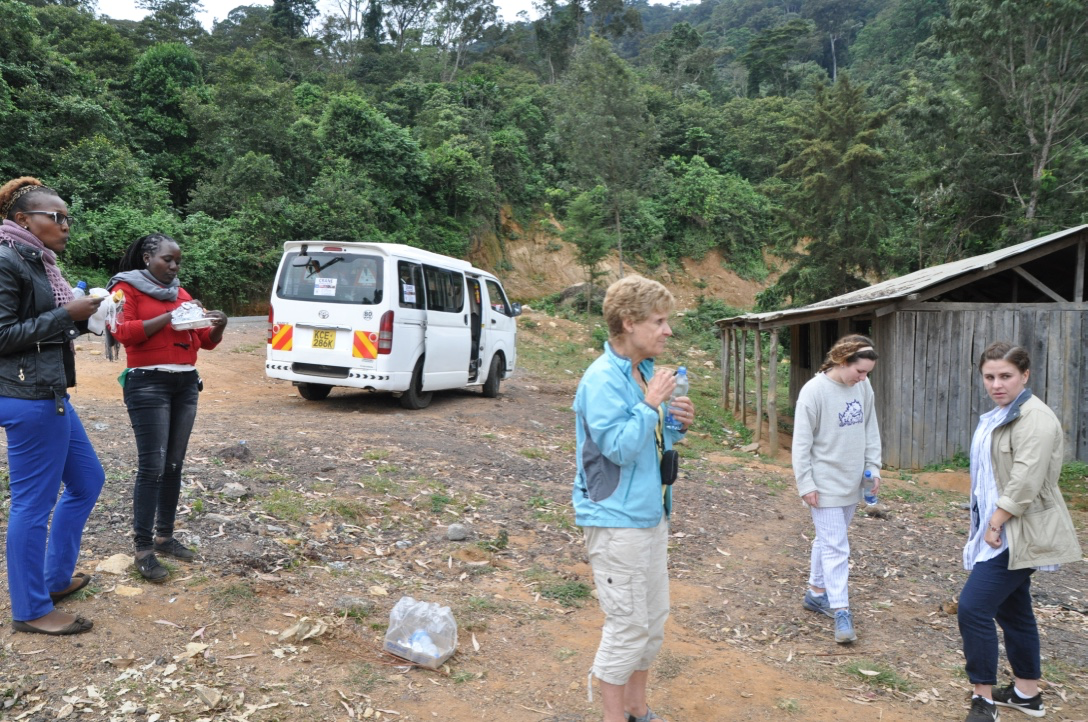
At any rate, one of our co-travellers, Ginny, reacted really fast to the cancellation and got all three of our reservations rescheduled to the same flights but 24 hours later.

Go, Ginny! :D

On global extreme-poverty trends and Africa

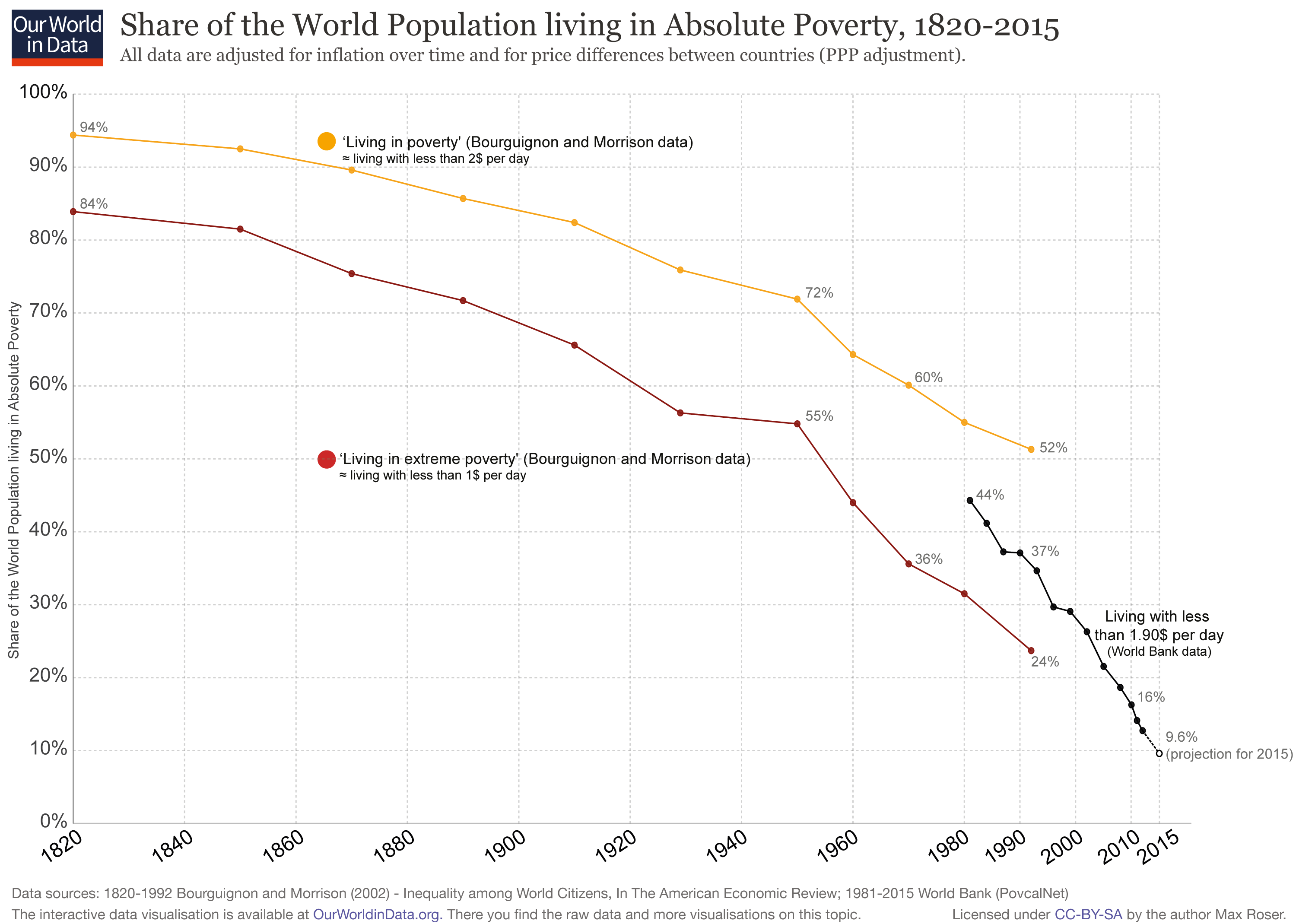
Many people may have seen a graph like the following, showing a dramatic decline in extreme poverty, which is defined as “living on less than two dollars per day”, over the last two centuries:

world-poverty-since-1820

The temptation might be to think that the war against extreme poverty has been won and we can now turn our attention to other matters.

However, since 1981, the decline in global extreme poverty is really a Chinese, Indian and Asian success story. In sub-Saharan Africa, the level of extreme poverty (by absolute number of people) has not changed significantly.

There is still plenty to be done, probably on multiple fronts.

Here’s the link to the whole story, in exhaustive detail (which I’ve only skimmed a bit):

https://ourworldindata.org/extreme-poverty

One note, though: poverty seems worst among children.

The members of our 2018-2020 group in Rwanda

Ladies and gentlemen… Imbaraga Power.  Family heads in bold.

Anet (f) 20 Denyse M. (f) 18 Henriette (f) 20 Protais (m) 20
Josiane (f) 14 Denyse U. (f) 17 Jacques (m) 20 Devota (f) 16
Hakim (m) 7 Patrick (m) 15 Mariette (f) 15 Janvier (f) 12
Assumpta (f) 20 Joselyne (f) 13 Amon (m) 8 Ratifa (f) 9
Eric (m) 8 Diane (f) 18 Jean Nepo (m) 20 Seraphine (f) 18
Eduard (m) 6 Albertine (f) 13 Innocent (m) 14 Jean Baptiste (m) 13
Beatrice (f) 20 Lona (f) 12 Fiona (f) 12 Marc (m) 11
Theoneste (m) 18 Yusufu (m) 11 Jeanette (f) 19 Benjamin (f) 5
Chartine (f) 16 Izaac (m) 10 Francine (f) 11 Olivier (m) 18
Benita (f) 13 Afisa (f) 8 Janviere (f) 7 Violette (f) 20
Moise (m) 6 Shamira (f) 3 Florence (f) 3 Jeanette (f) 19
Claudine (f) 19 Zabania (f) 2 Jean Claude (m) 16 Aline (f) 15
Damascene (m) 17 Shukurani (f) 2 Jeanette (f) 18 Amos (m) 11
Delphine (f) 16 Emmanuel (m) 20 Clemence (f) 16 Yvette (f) 20
Cyomugisha (f) 20 David (m) 19 Damascene (f) 11 Delphine (f) 14
Pamela (f) 18 Charlotte (f) 18 Florence (f) 11 Samuel (m) 12
Denyse Tw. (f) 20 Jeanette (f) 16 Vestine (f) 3 Benjamin (m) 7
Denyse N. (f) 19 Eric (m) 17 Jonathan (m) 20 Zipora (f) 20
Denyse Tu. (f) 20 Pamella (f) 19 Emmanuel (m) 18


Imbaraga-Gatuna Empowerment Group

Glory

After visiting the Peace Gitura businesses, we spent Tuesday afternoon visiting with Glory Karurune. Lydia, the secretary, greeted us and the pastor gave a prayer to open the meeting. Then Lydia gave the group report. They were formed in July 2016 and registered the group with the government in August. They elected officers, and Calvin is the chairperson, Lydia, the secretary and Winnie, the treasurer.

The group’s first distribution was goats for each family. All were trained in health and hygiene. They learned about hand washing, making a compost pit for household waste and digging a latrine. They were rewarded with water tanks to store their boiled water for drinking and cooking. After agriculture training and learning how to prepare the land, plant and harvest, they were given hoes, machetes and seeds. They were also trained in HIV-AIDS prevention.

They bought school uniforms for eight siblings and paid the school fees for two to attend secondary school. Four members were sent to vocational training for hairdressing. All were given start up kits. Other businesses are three kiosks, five grocery stores, three fruit and vegetable sellers, two clothes sellers, one dressmaker and a cell phone kiosk.

They started Table Banking in May and the fund already has KS 9600, which is out in the group being used for business improvements. The group project is a field of collards and arrowroot and a tree nursery on land they have rented.

Tabitha, the mentor, thanked us and reported that the group had made much progress. She talked of how the group members are now able to support their families through their businesses and they are cleaner and more well groomed than before ZOE.

Then some of the members spoke:

Irene said they were trained in health and hygiene and preparing the land for farming. She earned a hoe and machete which enabled her to prepare her land and maize seed which she planted. The crop did not do well because of the lack of rain. Because of the poor season, the group supported her with more seeds and she has planted collard greens and sweet potatoes which are doing well.

Winnie reported that when the group formed, members visited each other to see what their needs were. They also determined who already had skills. Before ZOE she had done some hairdressing but did not do well. The group provided her with a start-up kit for her salon and now her business is better. She used the profits to help her mother open a grocery business in another village and together they make enough money to support the family. Her dream is to open a big salon and be able to hire another orphan to work. She also wants to expand her business to sell cosmetics and ladies’ shoes.

Lina reported that when the group was formed, many had health issues. They have practiced what they learned in health and hygiene training and were rewarded with blankets.

Hildah reported that she now has a national identity card, which is very important for orphans–for getting health insurance and opening a business, for example. She told how the group was trained in children’s rights. They were taught that a child has rights to education, to a balanced diet, to an identity, to life and to play. They taught about the importance of education and have become ambassadors for education in their village. She said, “I have learned so much from ZOE. I went to training for hair styling and received a start up kit for a hair salon. I have bought 2 chickens. Now my family eats a balanced diet.”

Christine is the group’s pastor. She reported that when the group was formed, many of the children felt abandoned by God or did not about know God. They can now attest to the power of God. They have gone to revivals as a group and they now pray and go to church. They visit members who are sick and pray together.

Kelvin, the chairperson, has two siblings. He has a barber shop. “I can support my siblings and have bought three chickens and have three chicks. We can now buy nice shoes and clothes.” He told that the children have grown individually and as a group.

Hildah did a dramatic recitation (in English) about ZOE and child rights with four of the girls holding up signs about their rights for play, education, etc.

Then the group entertained us with singing and dancing.

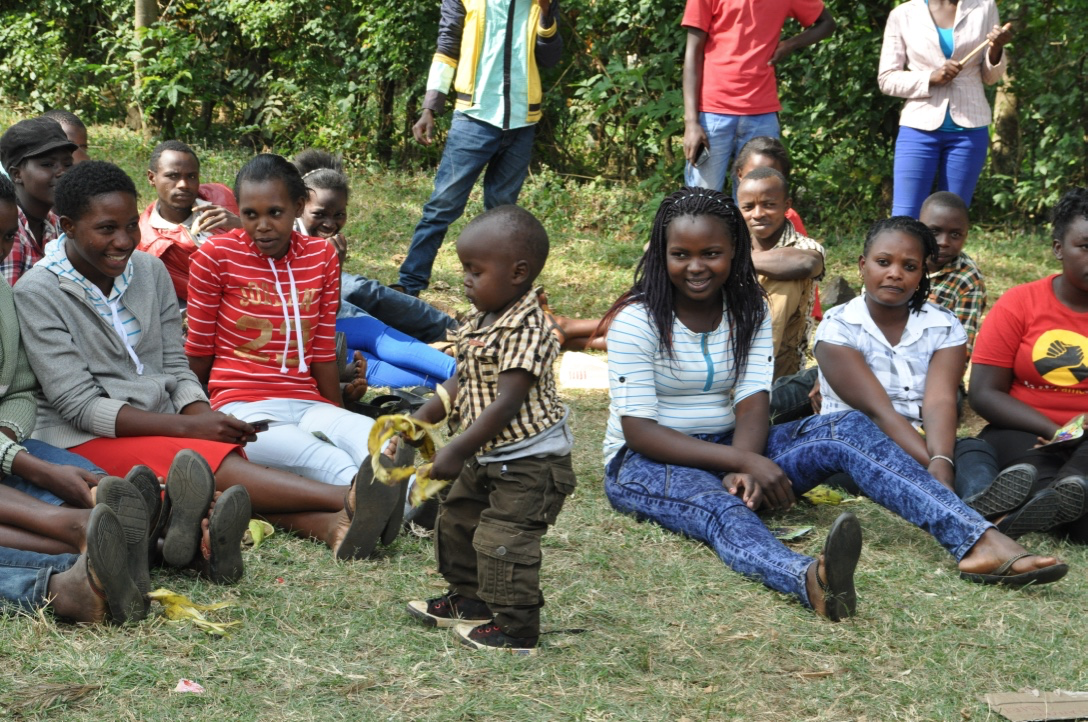
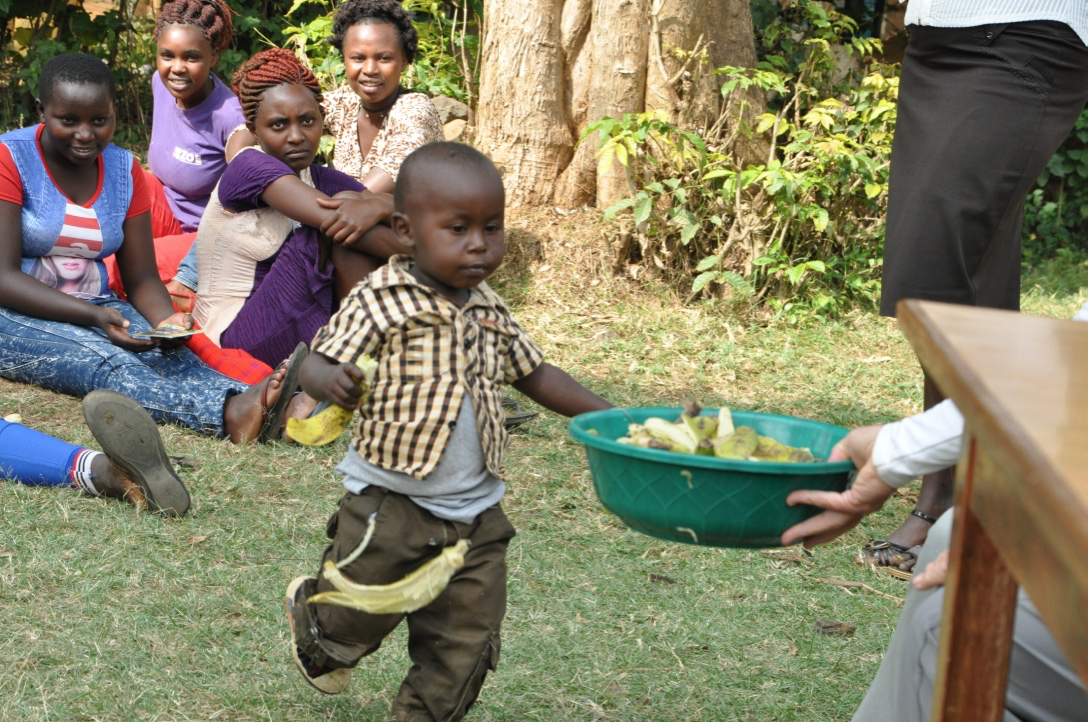
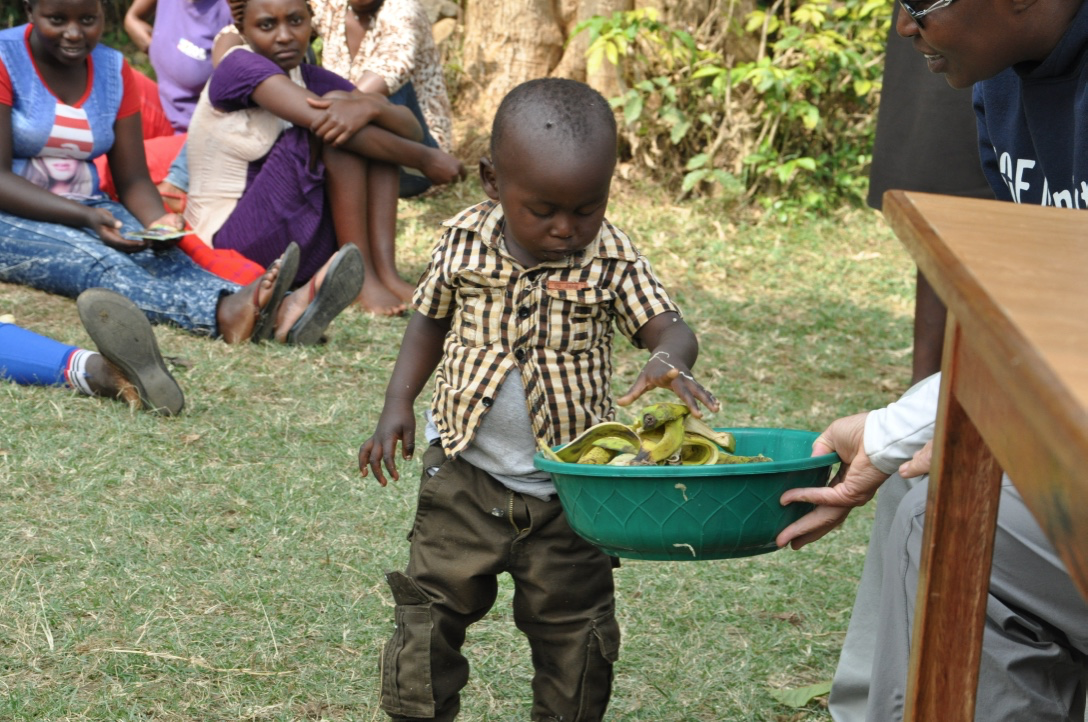
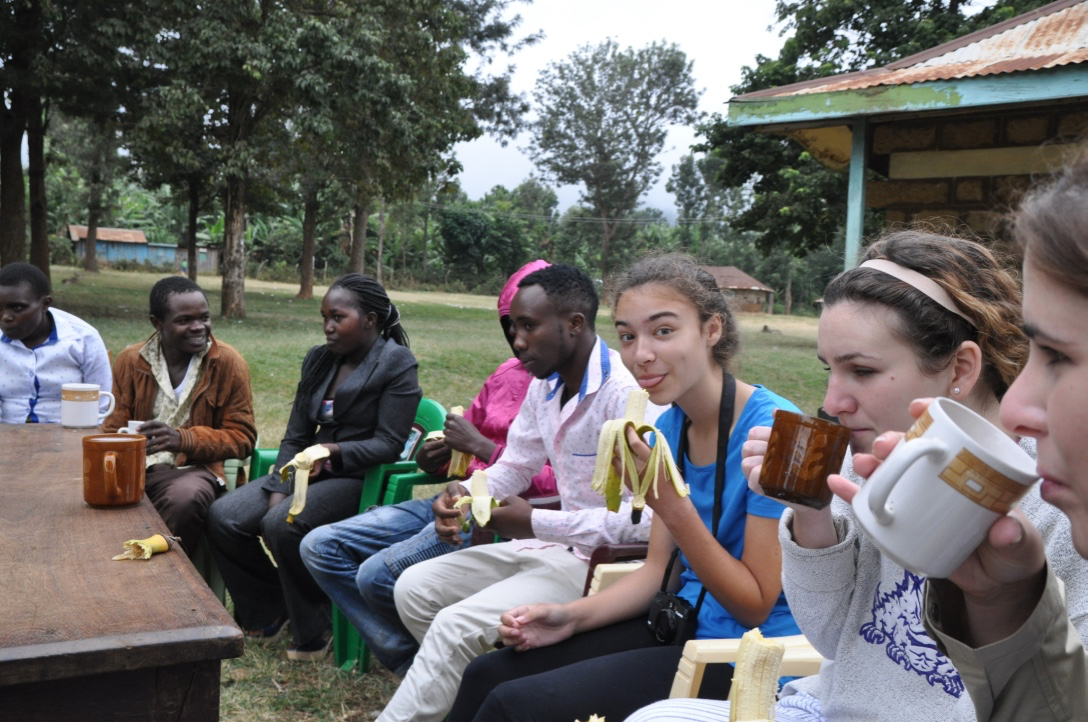
Carol gave them each a group picture that Pam had taken when she visited in February. They were thrilled and remembered Pam. They fed us bananas. One toddler, Vanvikar, gathered up banana peels and brought them to deposit in a bowl where we were sitting. He was intent on his work and did not seem to be afraid of us at all.


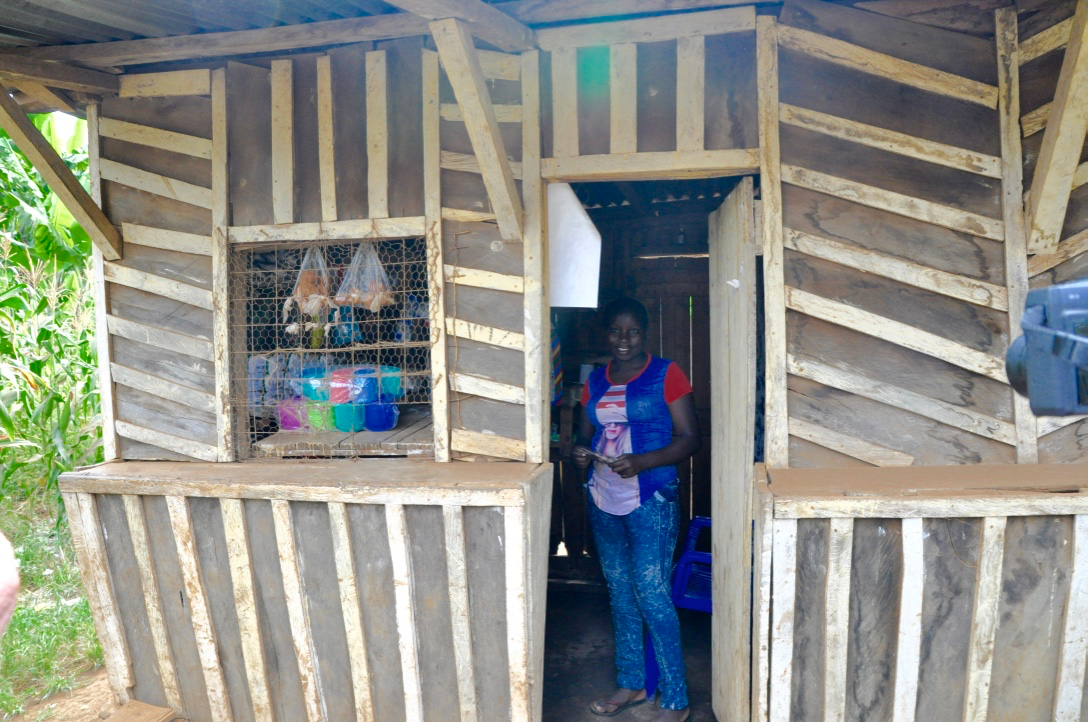
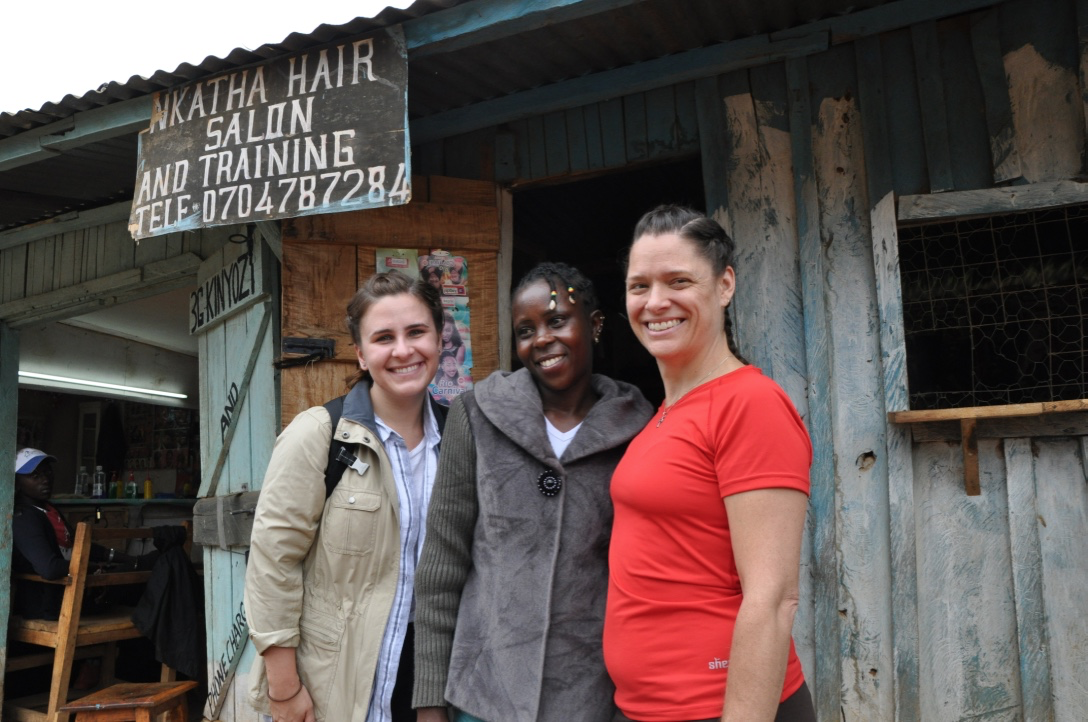
Then we visited businesses. We saw Rhoda’s kiosk and Lydia’s hair salon and clothing business.


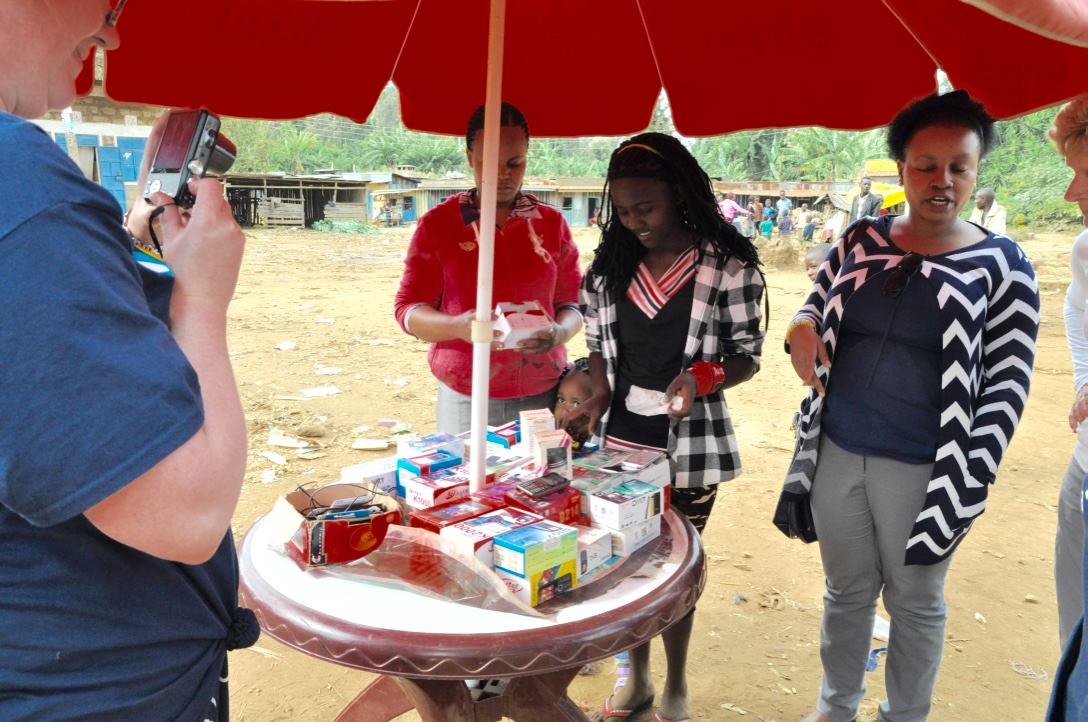
We visited Hildah’s cell phone kiosk which she just opened a month ago. She literally sells off of a round table covered by a large umbrella in the market, carrying her stock around in a large suitcase. She hoped to get into a building soon because the rainy season is coming. Her goal is to be trained in cell phone repair so that she can both sell and repair phones.


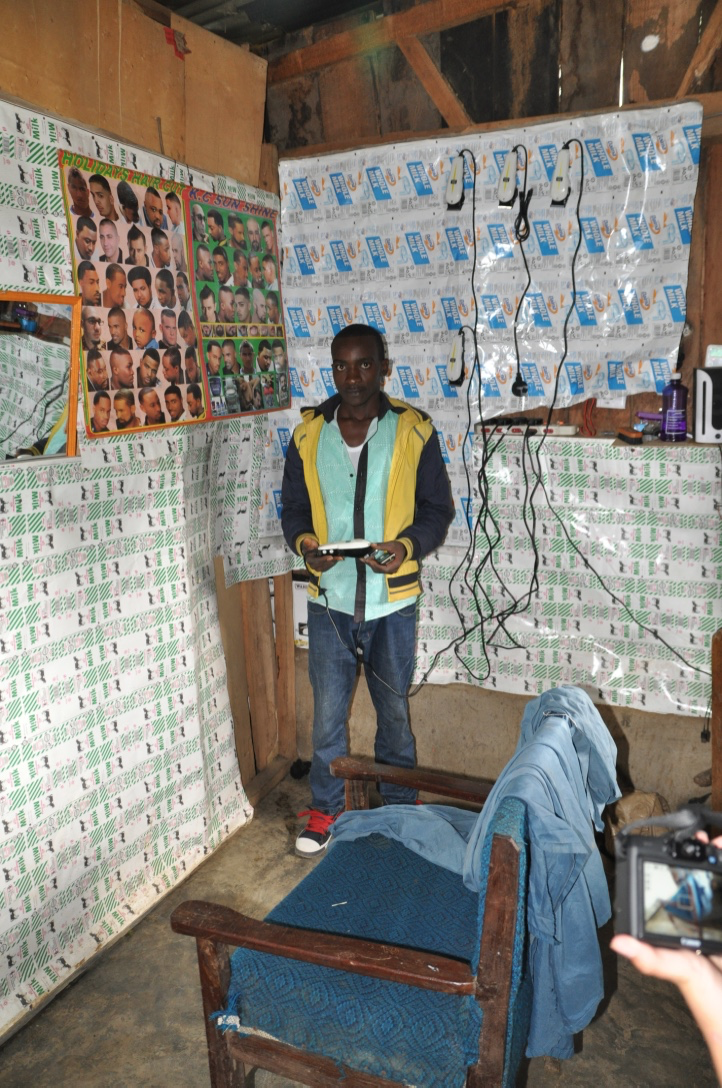
We visited Kelvin’s barber shop, which was very large. He shares it with Dennis who is an electrician and does barbering when he has no electrical work. Dennis was not part of the original group. His older sister, Winfred, joined ZOE. When she graduated from high school, she went off to college, leaving the younger siblings at home. Dennis had been working and living on a farm. He returned home to take care of the siblings and the Glory group adopted him into the group.

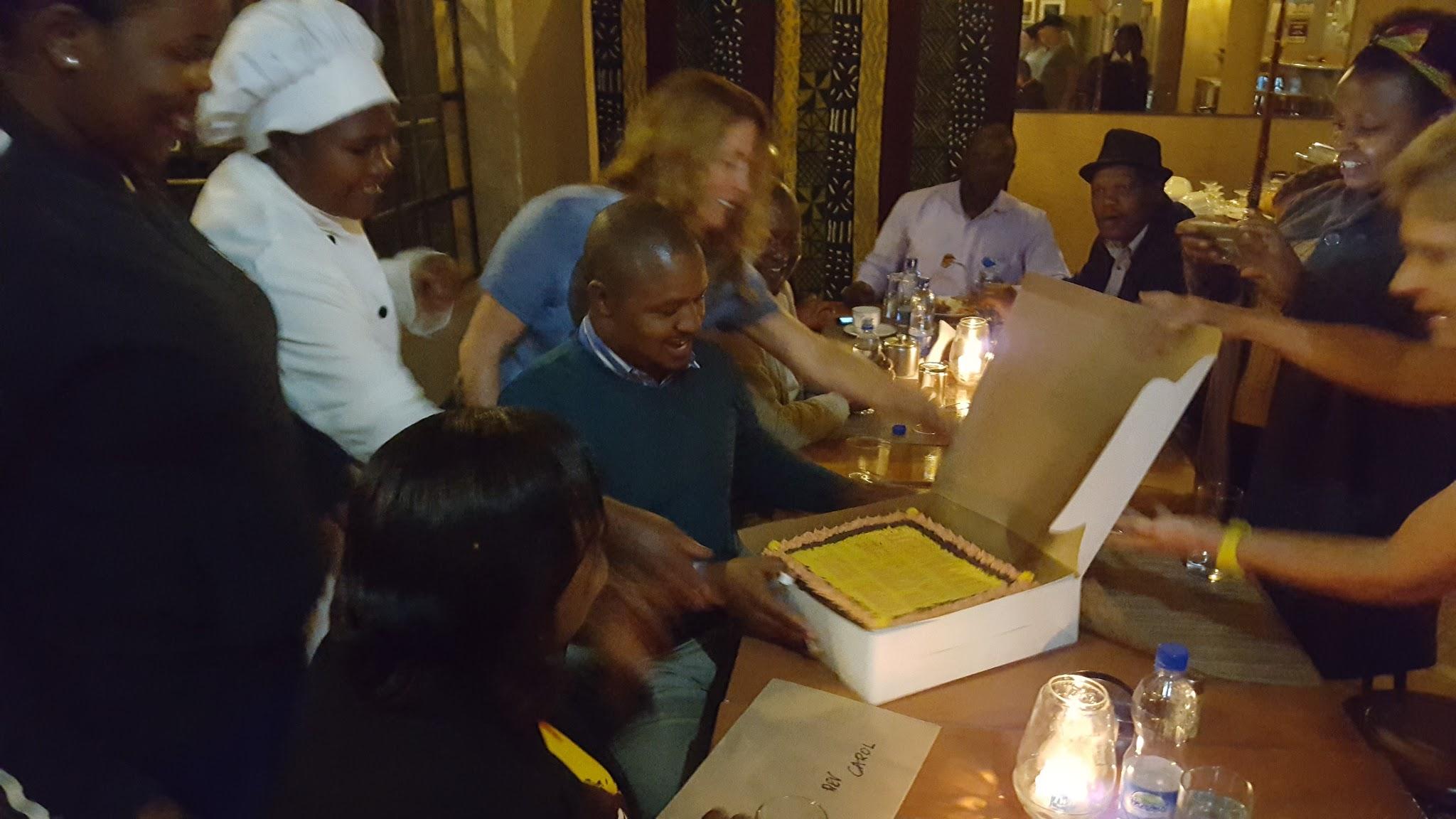
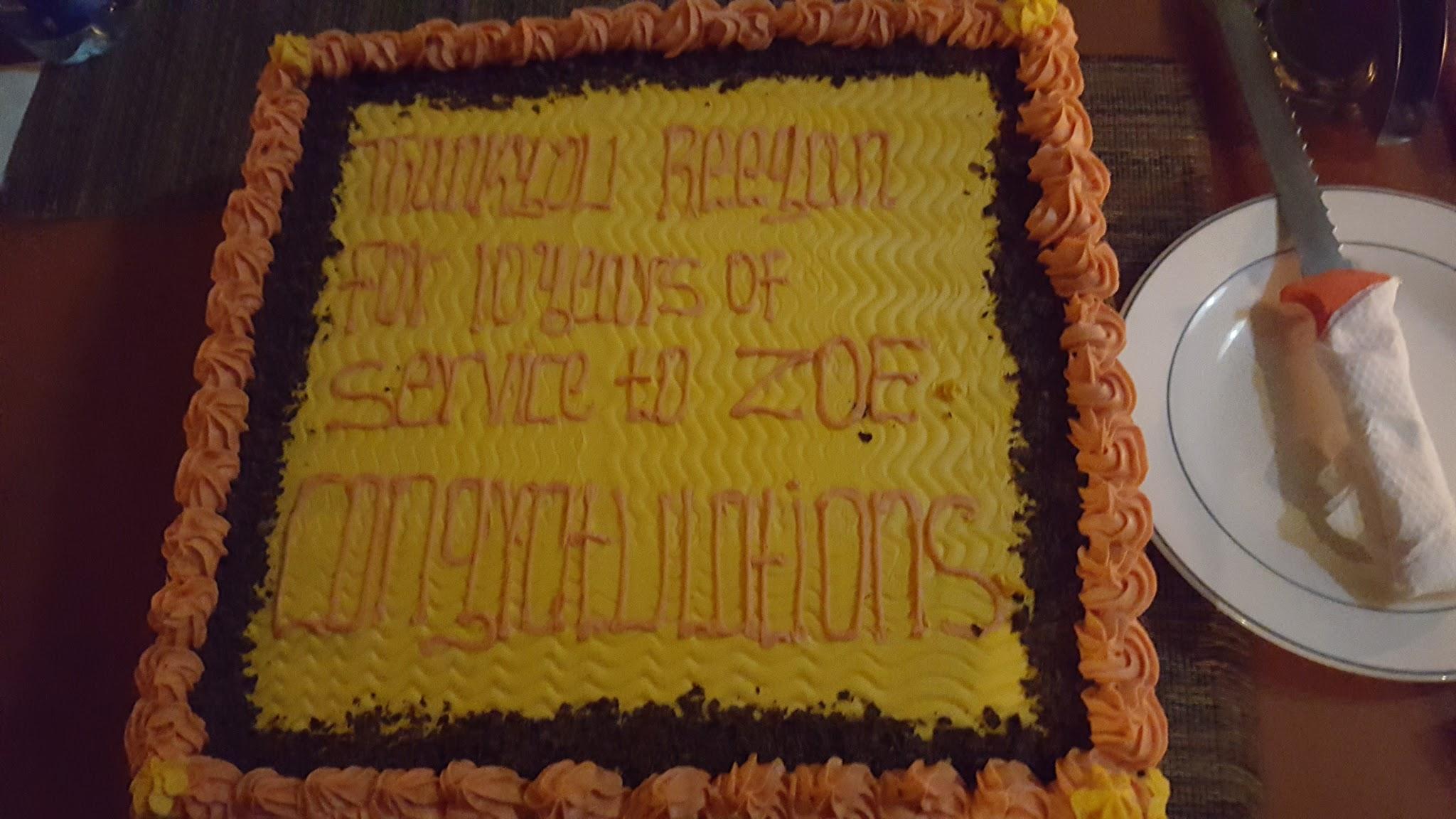
We all returned to the hotel where in the evening we celebrated Reegan’s 10th year of working with ZOE. We surprised him with a cake, which left him almost speechless.  20170704_193848.jpg20170704_194040-jpg.jpeg20170704_194205.jpg

Monday’s visit to Action WG

Monday morning, half of our group (Jeannne Marie, Anne, Corinne, Savannah, Carol and Erika) went with two ZOE facilitators (Mercy and Caroline) to visit Action Kigucwa working group. After our trip to Kenya in 2015, I was moved to crowdfund one of the un-partnered groups in Kenya and this was the group I was partnered with. They are now in their third year of the program and are set to graduate in December.

These children live and work in a village about an hour’s drive from Maua, further up in the mountains in an area filled with tea plantations. When we were here two years ago, the road was paved about halfway to their village, but now the main road is paved all the way which made for a much smoother ride. Unfortunately the morning was very foggy, and visibility was low. Our time with the group was quite chilly, not at all what one associates with Africa.

When we reached the place where the group holds their weekly meetings, about half of the group greeted us with singing and dancing. We then sat down and chatted while waiting for the rest of the group to join us. When they did, we were told that they were going to serve breakfast as most of the group had walked a long way. They served us hard boiled eggs from their chickens (provided by Bonface), bananas from their fields (provided by Catherine and Justice) and milk tea (with milk from Bonface’s cow). It was delicious and even more so because we knew that everything came from the fruits of their labor. These children, who three years ago may have been lucky to have one meal a day were generously sharing a lovely, well balanced breakfast with us. Amazing.

While we ate we asked a few questions. They told us that before they joined ZOE, their diets consisted of beans and maize, boiled with no spices. Boiled plantains and boiled cassava. Not only did they not have fruit, vegetables or meat, but the often were lucky to have one meal a day.

When asked about what they like to do for fun, they told us they play football (soccer) and volleyball and many like to perform in church skits.

Catherine, the group secretary, then shared the group report:

  • The group started in 2015 with 30 members. Their first activity was to start a Merry-Go-Round. They collect 100 Kenya shillings (KS) from each member at the weekly meetings. (Note: 100 KS is approximately $1) On the first round, the fund provided each member with a chicken, on the second round each member received a plastic chair, and on the third round each member received a piglet. (Pigs are a great investment as they are cheaper and easier to raise than goats, they have multiple litters in a year and larger litters (6-10 piglets in a litter). If they get a 3 month old piglet, it will be able to reproduce within 6 months. Now they are working to provide each member with a goat. (Goats are traditional livestock in Kenya and have prestige associated with them.)
  • The children then received business training and learned how to start a small Income Generating Activity (IGA) and how to write business plans. They presented these business plans to the group and the group granted money to start businesses or to go for training. They were taught to save money weekly to fund house repairs and to grow their businesses. Training on farming, preparing the land, harvesting and preserving seeds post-harvest was provided and the kids were given homework to prepare their land. As a reward for doing the training and homework, they received seeds for planting.
  • Health and hygiene taught the kids about hand washing, sterilizing their drinking water, keeping themselves and their homes clean. As homework, they were required to build a compost pit, build a drying rack for their dishes, and make a handwashing station for their home. As a reward, they received blankets and mosquito nets. They also bought their own water tanks for safe water storage.
  • The girls in the group were trained on the importance of avoiding Female Genital Mutilation (FGM). They are now spreading that knowledge within the community. All have learned about avoiding HIV/AIDS and that HIV/AIDS is not a death sentence. They have been able to guide people in their community to accept their status and to get help.
  • Prior to joining ZOE, most siblings had dropped out of school and had lost hope. Once they joined ZOE, the working group helped send the siblings back to school, providing them with school fees and uniforms.

ZOE helped Catherine start a kiosk. Every week she saves 200KS ($2). After the first year, she was able to enroll for training in tailoring. ZOE initially supported her brother with fees, but as her business grew, she was able to assist him and he has finished 12th grade and is set to go to university.

Pamela had many challenges before ZOE but now she realizes that nothing is impossible with God. She had a passion for farming and land inherited from her parents, but didn’t have the knowledge or money to get started. With ZOE’s training, she planted maize and had a good first harvest which she was able to store and sell when prices went up. She then had the opportunity to go for training in hairdressing and was able to start a salon. Savings from her salon business allowed her to hire more land and increase her farming. She enrolled her siblings back in school (12th and 8th grades) and the piglets she raises pay for uniforms and school fees. She was also able to support her brother through the process/celebration of passing from childhood to adulthood and is now building him a house. Before ZOE she was an outcast in her community, but now she is invited for parties, weddings and fundraisings.

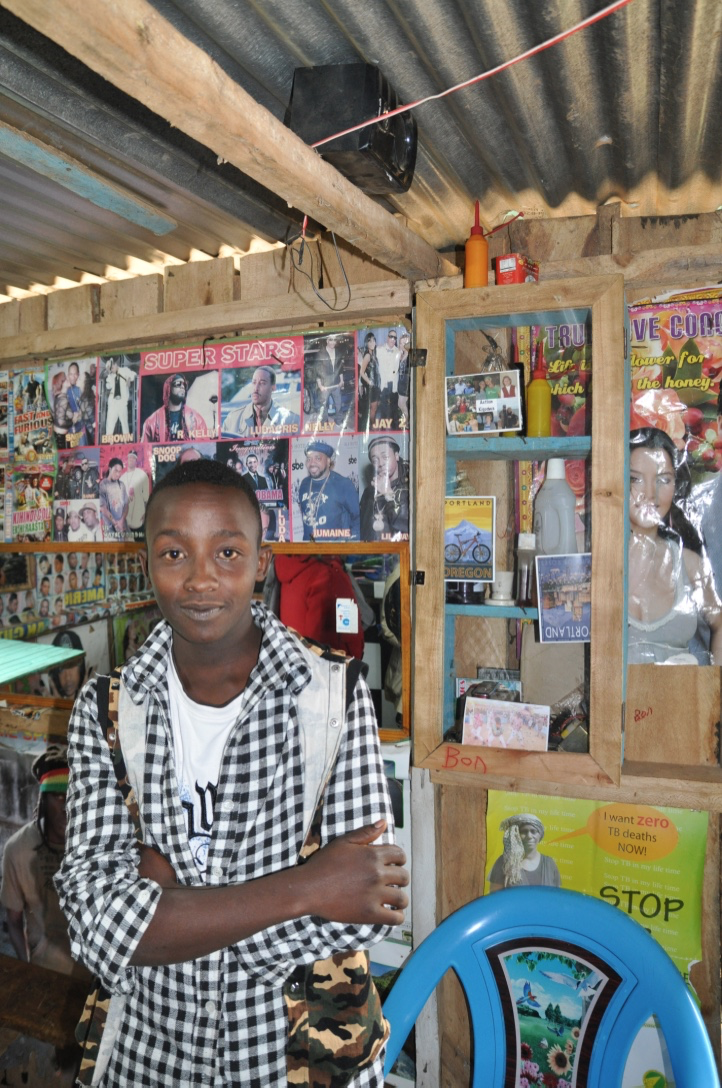
Bonface was adopted into the group after its formation. He has one brother who is in 7th grade. He was initially supported with planting seeds. As he also knew how to do barbering, he was supported with a start-up kit. His business was successful, and he was able to join savings groups in the community. He has learned about loaning money and profiting from collecting interest and has now started his own loan business. From his earnings, Boniface has been able to build his own shop so he no longer has to rent. He has also built a home. His other businesses include renting coffee and tea plantations and harvesting the crops and fish farming. We were able to see his fish pond where he raises tilapia to sell to restaurants in Maua and Meru.

Philip had never worn shoes before he joined ZOE only bedroom slippers (<$0.50). Now he is able to interact with people who have been to school and are learned. There is nothing they use that he cannot afford. He is now able to interact with the community because he is no longer shy and he has money so he is not ashamed. Through ZOE he has learned how to live in Christ. Initially he started a kiosk, where he earned ~$3 a day. He used the profits to act as a broker, buying and selling chickens. Some of his profits went in the bank and some went into village saving. He supports his cousins and extended family. He was able to fulfill one of his dreams when he bought a bota bota, which he uses as a taxi. He was also able to buy a small piece of land.

Alex did not know about God or about personal grooming before he joined ZOE. ZOE provided him with carpentry training and now he is able to support some of his cousins whose mother left them, paying for school fees and buying their clothes. He has also been able to repair his house. Alex rents tea plantations and he was able to buy a cow with the proceeds he made from the harvest.

Lack didn’t know anything about God before ZOE and he never had a blanket. Through ZOE he earned a blankets and mosquito nets. He came to ZOE with barbering skills, so the group provided him with a start-up kit. He used the profits from his kinyozi (barber shop) to support his siblings in school. In addition, the group helped send one brother, now in 12th grade, to high school. Lack also saved money to purchase a goat which he later sold to build a house.

Before ZOE, Hellen got a job as a housegirl to support her siblings. She and a houseboy got into an arguement and he cut off her left hand. Her employers chased her off, telling her to go home. When she got back to her home though, no one would take her to the hospital so she had to beg for the money to pay the doctors. A year later she was asked to join ZOE. She started a business selling boiled eggs, and is able to support her siblings. She has been able to expand their home and now they have beds to sleep in. She also has bought two sheep.

Eunice says that now her house is so clean that even rich people can visit. She has a business selling clothes and the profits from her business support her sister in high school. She also is able to by supplies and uniforms for her younger siblings. She has received training in hairdressing and now employs someone in her salon.

Linda didn’t know much about God before ZOE, but now she is saved. She realized she couldn’t do much without God based on the teachings of ZOE. She has a business selling plastics (buckets, mugs, cookware). Through her savings she enrolled herself in hairstyling training. Now she can afford more expensive clothes and is so respected she has been invited to attend a graduation party in Nairobi. She wants to share her success by supporting other children.

Eunice (20) couldn’t dress well, couldn’t attend community functions and didn’t know how to wash her clothes. Her neighbors despised her and her siblings because they often didn’t have food and had to beg. She was able to learn hairstyling from the village and now has a successful salon. She has bought a cow with her savings and trains others in the community, especially orphans.

Edna was supported with training and start-up funds and runs a salon. She supports her siblings in school. She has joined a village savings and loan and saves $5 a week. She has bought 3 goats and is planning to install electricity in her home.

Ruth is the Mentor for Action Kigucwa. She said that before ZOE, the children were despised by the community. Now the community looks at them in a different way. There is a noticeable positive change in them and their families now that they have started businesses. Now they are invited to events in the community.

At the end of the meeting, the group provided a snack of boiled corn, also from their garden. Corinne handed out postcards to each member from Portland (her hometown). Then lots of pictures were taken, especially selfies with the younger ladies.

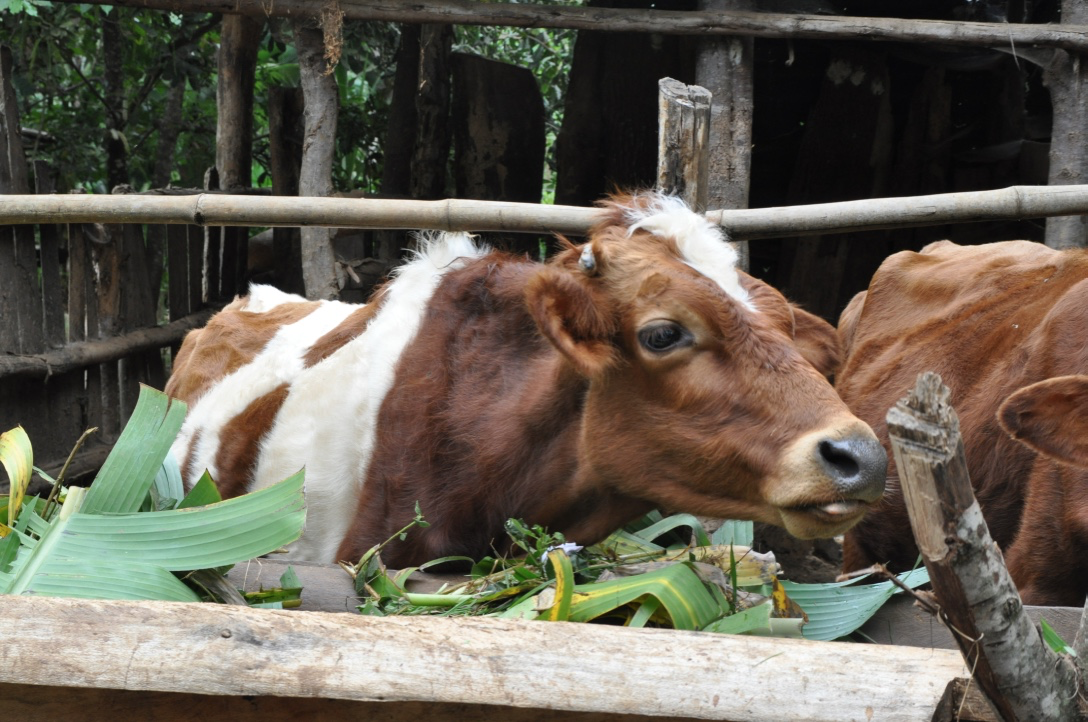
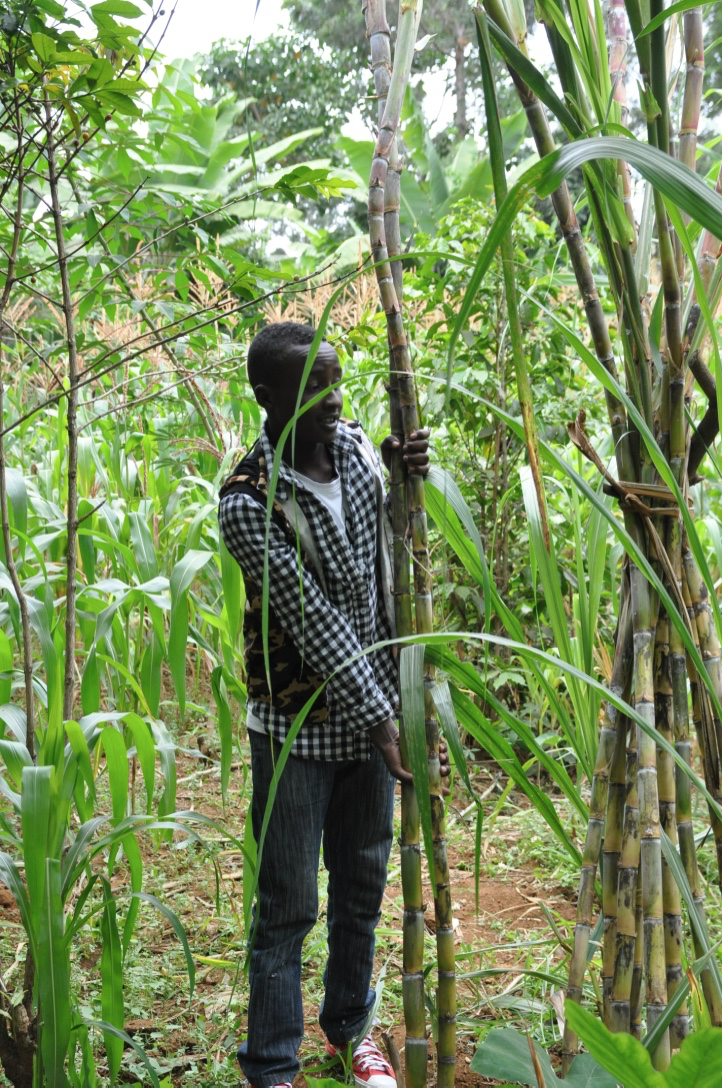
The meeting was held very close to Bonface’s shop and home, so we walked over and visited. Bonface’s barber shop was spacious and nice. It was obvious he was proud of building and owning his own shop. Once he joined ZOE, started his first shop and was earning money, his aunt invited him and his brother to build a shop and home on her land, so they share a compound. We visited his cow and his tilapia pond, and he gave us sugar cane which we all tried, as well as bringing some back to share with the group.

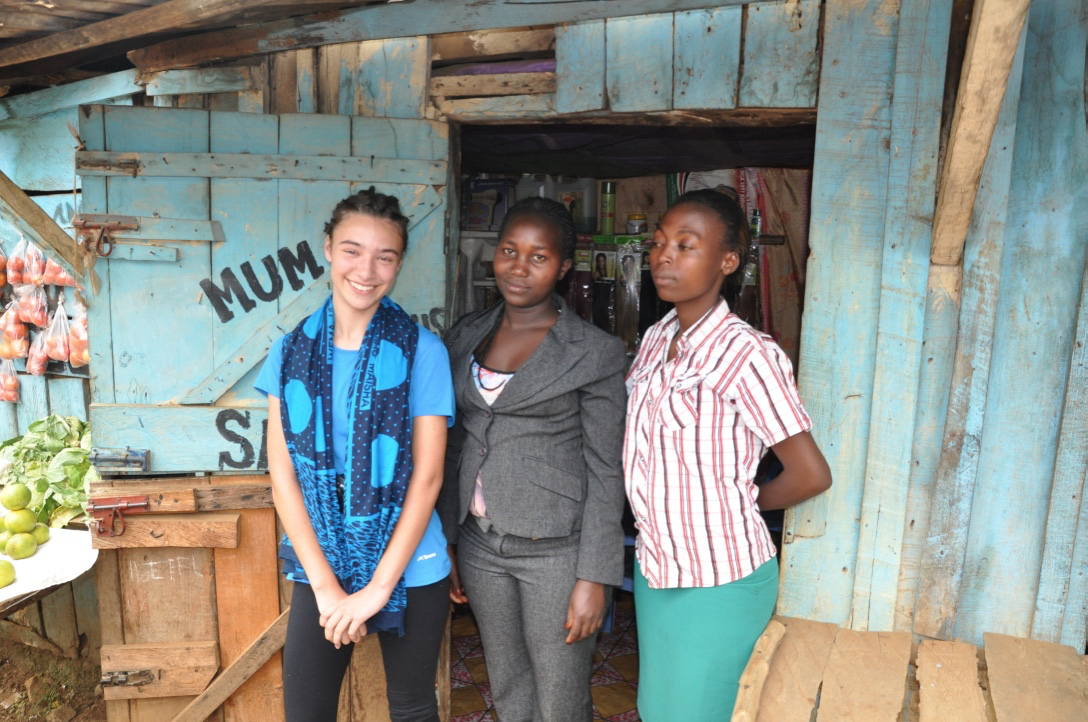
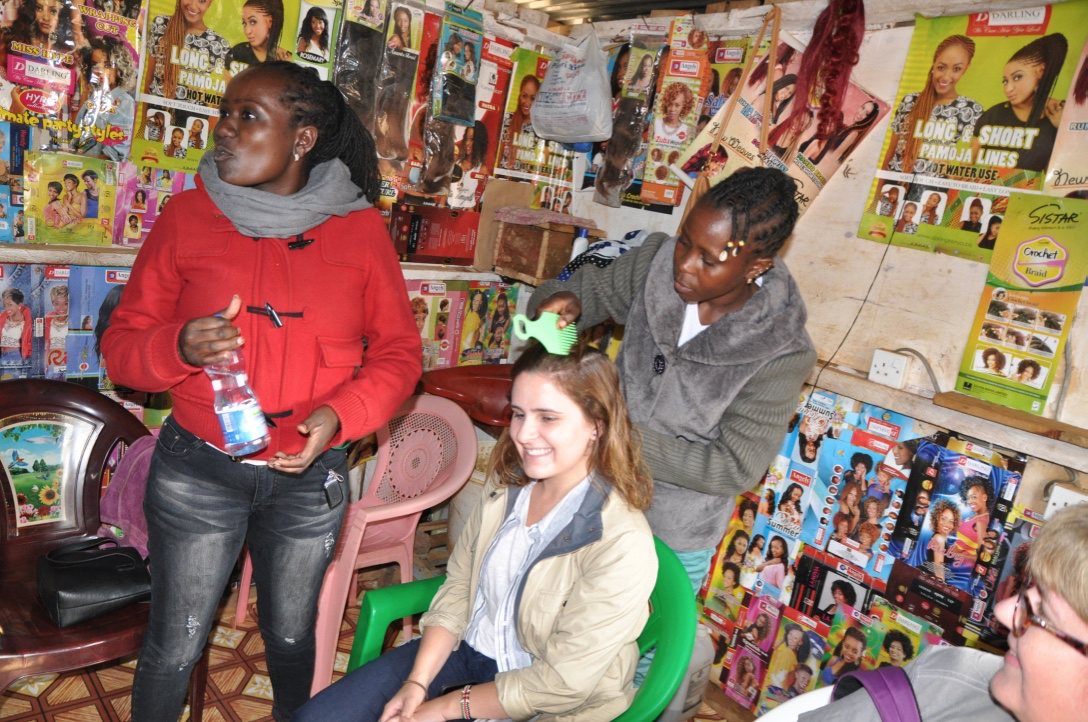
Next we visited Pamela’s shop and she braided Savannah’s hair. She had some trouble with it because it is so different from what she’s used to, so Linda helped out.

We also stopped by Eunice’s kiosk where she sells clothing.

Finally we went to the other Eunice’s salon where Anne and I had our hair done.

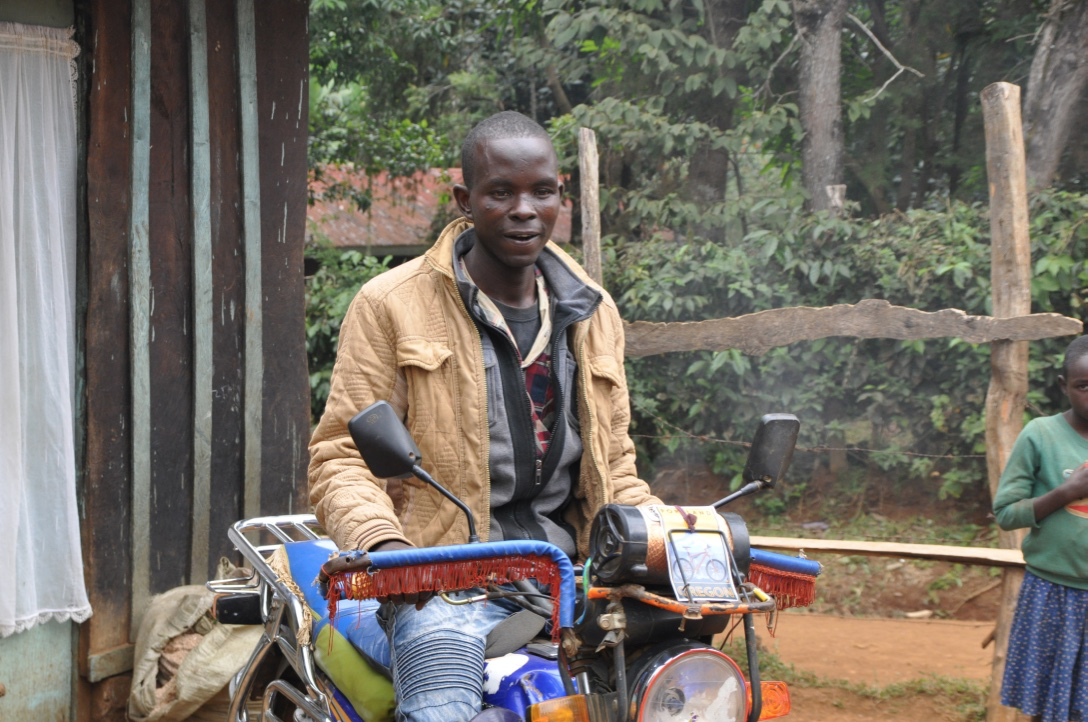
On our way out of town, we stopped by Phillip’s kiosk and bought some tea. Here he is, outside his shop on his bota bota.

We piled back in the van for the drive back to Maua. The fog had cleared and the views were magnificent.

We even stopped along the way and had a picnic of the lunch the hotel had packed for us.

It was a long but very fulfilling day. After dinner, the full group gathered to share our experiences.